Return to diving after a year or more: step-by-step plan
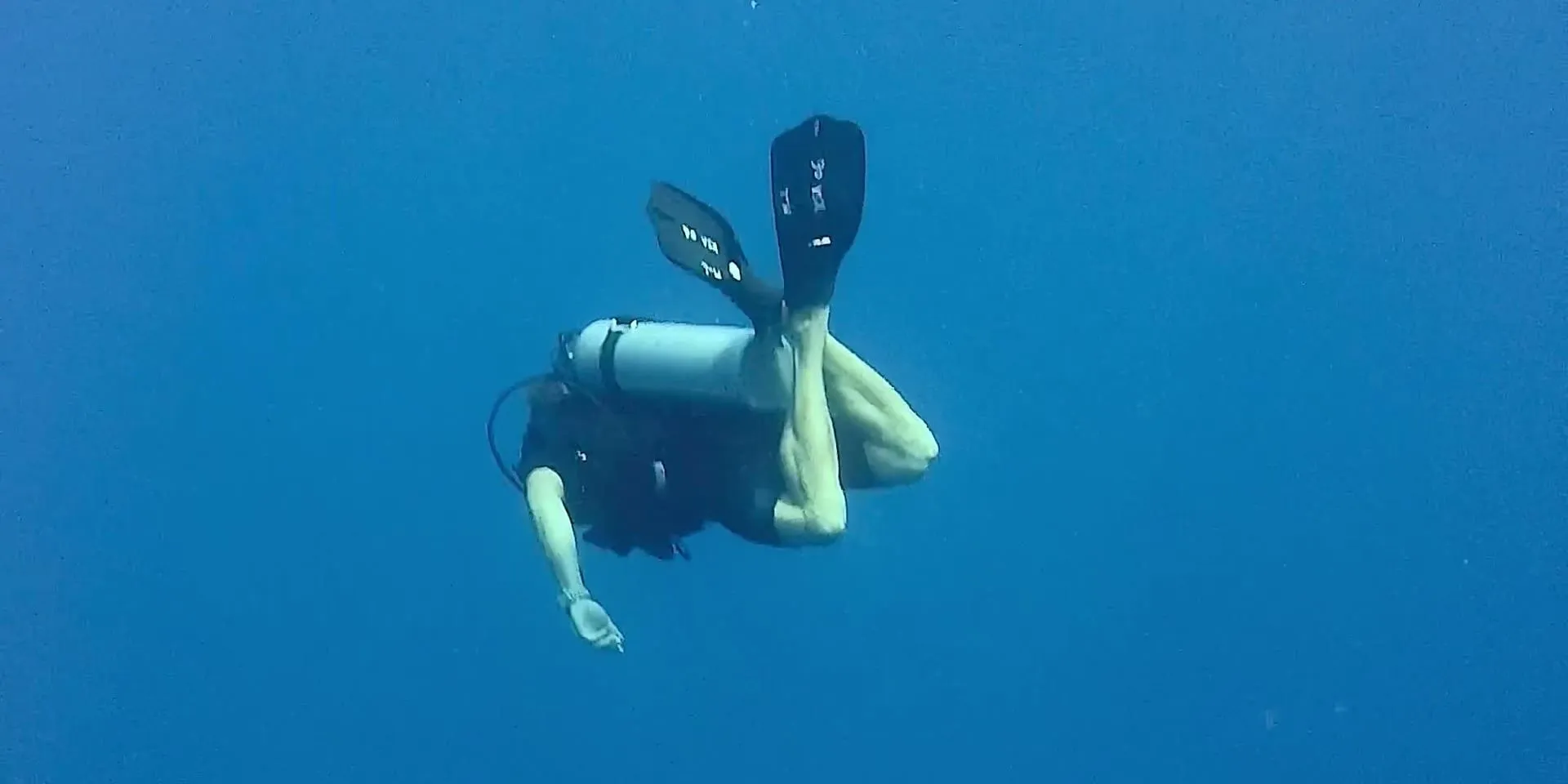
After a year or more without diving, no single official rule requires you to take a refresher. The benchmarks come from the organisations. For DAN, skills start to fade after six months of inactivity, and most instructors consider a refresher justified after one to two years. In France, the dive director (directeur de plongée) has the final say: they may assess your skills over one or more dives. This guide takes you through to your first dives in five steps. The sources were re-read between 1 and 7 November 2026.
Your break: which refresher do you need?
The longer the break, the more complete the refresher should be. The thresholds below are advice from organisations and centres, not rules.
| Time since your last dive | What the sources say | What we advise you to ask the instructor |
|---|---|---|
| Less than 6 months | Subaqua, the FFESSM magazine (May 2026): a readaptation dive is desirable after a break of a few months, such as returning after winter; some recommend it from 30 days without diving. | An easy first dive in good conditions, telling them the date of your last dive. |
| 6 to 12 months | DAN: skills fade slightly from 6 months. PADI blog (2024): some centres offer a refresher from 6 months, mainly under 20 dives; with long experience proven by the logbook, not before a year. | Under 20 dives, a supervised refresher. Above that, an easy return dive, accompanied. |
| 1 to 2 years | DAN: most instructors consider a refresher justified after 1 to 2 years; most instructors and organisations advise one after a year without diving. | A refresher: theory review and shallow-water exercises before going to sea. |
| 2 to 10 years | DAN, without a specific duration: after a prolonged break, consider retaking the entry-level course; DAN strongly recommends theory and practice in the water. | A full refresher, then the three-dive plan. Ask the instructor whether they advise more. |
| More than 10 years | PADI blog: beyond ten years, a simple refresher may not be enough; you can retake the Open Water Diver course as many times as you wish. | A frank discussion: refresher or retaking the first level, depending on your number of dives. |
Sources: DAN pages and PADI blog (20 February 2024), re-read on 1 November 2026. In every case, the centre or club applies its own policy.
Returning to diving after 5 years
Five years falls in the “2 to 10 years” row of the table. DAN does not set a duration, but advises that after a prolonged break you consider retaking the entry-level course, and strongly recommends reviewing the theory and the practice in the water. Plan a full refresher with an instructor before going to sea, then the three-dive plan from step 5.
Returning to diving after 10 years or more
Beyond ten years, the PADI blog (20 February 2024) considers that a simple refresher may not be enough, especially with few dives in the logbook. A PADI certification remains valid: the agency writes that a certification does not expire. At the FFESSM, we found no validity period, and the federation provides a procedure for an old diploma without a card (see below). The choice between a refresher and retaking the first level is made with the instructor, after an assessment session.
What changes your case
- Your number of dives. According to the PADI blog, some centres offer a refresher from 6 months without diving, mainly under 20 dives in the logbook. One centre cited by PADI even advises a full course for a diver coming back after 15 years with about ten dives.
- Your level. An FFESSM Niveau 1 diver dives supervised, down to 20 m. If you were autonomous, autonomy remains a decision for the dive director (Code du sport, art. A322-73): nothing guarantees that you will dive autonomously on your first dive back.
- Your age. The DAN table by age group advises a refresher course from age 46. At 66 and over, it adds a full medical evaluation, as for a beginner, and a physical fitness test under medical supervision, and recommends avoiding dives with mandatory decompression stops.
- The planned dive. DAN advises checking the fitness that the type of dive you have in mind requires, and preparing for the conditions expected on site.
Has your certification expired?
Not at PADI: according to the agency’s blog (20 February 2024), a certification never expires. At the FFESSM, we found no validity period for certifications on the pages we consulted. The federation’s FAQ even provides a procedure for an old diploma without a card: take out a licence again in a club, then send a copy of the certification and a payment of €16 by post. See how to recover a lost or old certification.
Does your card carry an old name? The FFESSM publishes the history of its certifications (page of 20 July 2019). The 1958 Brevet élémentaire has been called Niveau 1 since 1989. The brevet de plongeur autonome 1er échelon became Niveau 2, and the plongeur autonome qualification created in 1982 became Niveau 3.
A valid certification says nothing about your recent training. For a card from another agency or another country, see the equivalence between PADI, SSI and FFESSM levels.
Step 1: bring your papers up to date
Certification and logbook
In France, the diver proves their skills to the dive director. They present in particular a certification or diploma and, where applicable, a logbook that makes it possible to assess their experience. Without this proof, the dive director arranges an assessment of your skills over one or more dives (Code du sport, art. A322-77, in force since 18 April 2012). The director also sets the characteristics of each dive (art. A322-72).
Before calling a club or a centre, note the date of your last dive and your total number of dives. See the dive logbook, paper or digital.
Lost card. At PADI, the centre can check your certification with the agency (PADI blog). At the FFESSM, reissuing a certification card costs €20 (2026/2027 rates) and is paid online. The federation’s page of 15 July 2024 says “Allow 3 to 5 working days”, without saying which case this delay applies to: if the date matters to you, ask licences@ffessm.fr.
Digital logbook. Are you an FFESSM licence holder? Upload your medical certificate to your personal area: it syncs with your digital dive logbook, whose QR code can be checked on the boat (FFESSM, 14 June 2026).
Licence and medical certificate (FFESSM club)
The medical certificate. For scuba diving, the certificate of no contraindication (CACI, certificat d’absence de contre-indication) is compulsory when the licence is issued. It must be less than a year old and, as a rule, any doctor can issue it (federal medical regulations, art. 8-1). It is valid for one year. It lapses if your state of health changes or after a diving accident (art. 8), and its validity is suspended under art. 8-8 and the 2026 template. The FFESSM offers this 2026 CACI template for your doctor to complete. For other special cases, see the diving CACI: form, doctor, validity.
After a diving accident, the CACI must be signed by a federal doctor, a doctor holding a DU in underwater medicine or a DIU in underwater and hyperbaric medicine, or a sports doctor (art. 8-4). With a condition marked with an asterisk in the medical commission’s indicative list (June 2025), the certificate “can only be issued by a specific doctor”. For any other chronic condition, long-term treatment or any other return to diving, we advise a federal doctor or one trained in diving medicine, even though the regulations do not require it: they point out, moreover, that this option remains open even when any doctor may sign (art. 10-2). The medical commission keeps a directory to find a federal doctor.
The licence. It costs €50.00 for an adult (16 and over) for the 2026/2027 season, whose rate grid applies from 1 September 2026. The FFESSM does not issue it itself: you take it out in a non-profit club or an FFESSM commercial structure. The other items are detailed on our page on the prices of the licence and of training.
Dive centre or trip
Outside a federal club, each centre applies its own requirements: ask for them before booking. DAN refers to the Diver Medical Questionnaire, the standard recreational diving form, updated by the UHMS with DAN. If it tells you to see a doctor, do so. DAN specifies that self-assessment is not enough after an illness, in the presence of certain risk factors or after 65.
Insurance
All FFESSM licence holders are covered for civil liability and legal assistance, worldwide. Individual accident insurance, which covers your own bodily injury, chamber treatment costs included, is optional but “strongly recommended” by the federation. It costs from €25 (Loisir 1) to €51 (Loisir 3) for the 2026/2027 season.
DAN advises up-to-date diving accident insurance and travel insurance suited to your trip. If you are a DAN member, remember that membership is renewed every year (Alert Diver, 2020). To compare policies, read our guide to choosing diving insurance.
Step 2: assess your health and fitness
If you have been ill, or away from diving for a long time, see your doctor before diving again: it is DAN’s first piece of advice. An illness and prolonged bed rest reduce cardiovascular capacity and muscle mass. Even once recovered, return gradually to your previous level of activity, which can take weeks or more (DAN). The magazine Subaqua (2020) adds: arrive in good general health, with a recent annual medical check-up, and rested. If you are just over a cold, see diving again after a cold.
Divers have got older. According to figures presented to the FFESSM and repeated by Subaqua, the 41-60 age group went from 20% of divers in 1982 to 40% in 2018, and those aged 61 and over, almost absent in 1982, made up 15%.
For fitness, a DAN researcher offers simple benchmarks, to be tested in a pool (Alert Diver, Pollock, 2012). Swim 200 m with a snorkel in under seven minutes, with no difficulty or pause at the finish. Duck-dive to 4 or 5 m, retrieve your mask and snorkel there, put them back on and clear the mask without taking another breath. Passing them does not prove that you are ready. Failing them clearly is a signal to train before resuming.
Step 3: get your kit back in shape
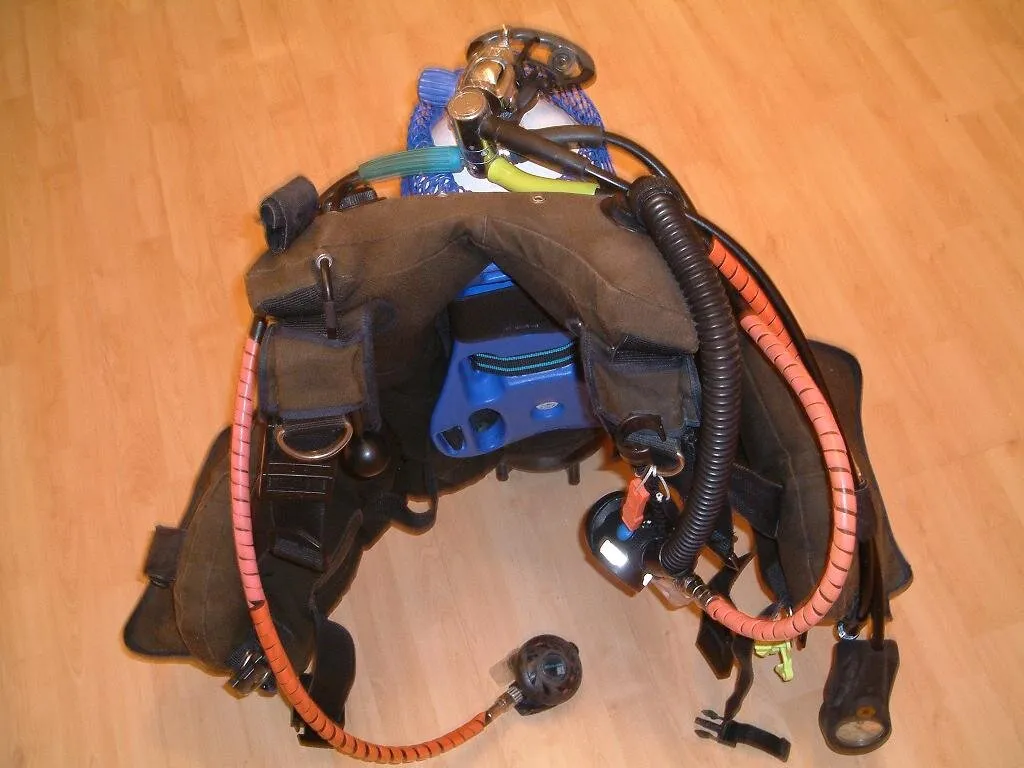
Have your kit serviced by a professional according to the manufacturer’s recommendations. Then assemble it and test each item. If you bought kit during the break, get used to it before going to sea (DAN). For the detail, see servicing, inspection and maintenance after a long break.
| Item | What you check | Benchmark from the source |
|---|---|---|
| Regulator and hoses | first stage clean, inlet filter included; second stage with no crack, leak or free flow; breathing and purge test | DAN: service by a qualified workshop if due. Alert Diver, Dovenbarger (2012): purge a regulator that has been sitting unused before breathing from it |
| BCD | tears, seams, buckles, inflator and dump valves; bladder inflated to check that it holds air | DAN: service at least once a year, or before returning after an absence |
| Dive computer | case, battery or charge, backlight, strap; re-read the manual | DAN. Alert Diver (2020): plan for spare batteries |
| Wetsuit | zips, tears, flexibility, seals, size | DAN. Alert Diver, Pollock (2012): check that you still fit into it |
| Mask, fins, snorkel | cracks, flexibility of straps and skirt, buckles, valves | DAN |
| Weighting | to be redone in a pool, fully kitted: see how to redo your weighting, step by step | Alert Diver, Pollock (2012): weight gain may call for more lead |
Also keep a small spares kit: seals, a mask strap, a spare mask. If your kit is too old, read what to service, buy or hire. If your computer no longer switches on or you no longer know how to read it, see which dive computer to choose. If you are thinking of buying new, read why to wait before buying new kit when you return.
Step 4: choose your refresher
PADI and SSI each sell a refresher programme; at the FFESSM, the return to diving takes place in a club. A refresher is not a new certification.
| Programme | What the official page says | What it does not say |
|---|---|---|
| PADI ReActivate | online review, free for PADI Club members; the “ReActivated” card requires in-water practice with a professional | price, duration, recommended length of break |
| SSI Scuba Skills Update | no fixed duration (the sheet gives a suggested duration of “2-3”, with no unit); 5 theory sessions and 1 pool or confined-water session, 5 m at most; from age 10; the compulsory in-water practice is charged extra by the centre | price applicable in France |
| FFESSM | no national refresher programme found on the federal sites consulted; in a club, readaptation dive (Subaqua) and assessment by the dive director (art. A322-77) | not applicable |
Pages re-read on 1 November 2026. For prices, durations and choosing a centre, see our page to compare the PADI ReActivate, SSI and FFESSM refreshers. If you hesitate between the two certification systems, also read our page to compare PADI, SSI and FFESSM.
When to start again from scratch
After a prolonged break, DAN suggests considering retaking the entry-level course: you do not know what you have forgotten. The PADI blog goes the same way beyond ten years without diving, especially with few dives in the logbook. This choice is made with the instructor, after an assessment session. If you start again from the first level, follow the steps to start scuba diving.
Step 5: the three-dive plan
This plan is a proposal from our editorial team, to be validated with your instructor. No source publishes a standard plan: this one brings together the guidance of DAN, SSI, Alert Diver and the federal magazine Subaqua.
| Session | Aim | Where and with whom | Reference depth | To validate before moving on |
|---|---|---|---|---|
| First of all: a shallow-water session | review the skills listed by DAN: pre-dive check, weighting, buoyancy, mask clearing, mask removal and replacement, regulator recovery and purge, ascent sharing a single air source, emergency ascent according to your organisation | pool, dive pit or confined water, with an instructor | 5 m at most in the SSI programme | correct weighting; each skill done without hesitation |
| Dive 1 | rediscover the feel | familiar, shallow site with little or no current, no major hazard, not isolated; with a guide or an instructor (DAN); from the shore if possible (Alert Diver) | shallow (DAN), set by the supervisor; Subaqua: 15 to 20 m at most for a readaptation dive | stable buoyancy; normal air consumption; no stress |
| Dive 2 | consolidate buoyancy and air management | easy conditions, supervised | same ceiling, until the supervisor has validated the next step | stop held without effort; slow ascent |
| Dive 3 | move back towards your usual diving | according to the dive director | within the limits set by the dive director and by your certification | the supervisor’s go-ahead for what follows |
For the federal magazine, no precise definition sets the depth, duration or profile of a readaptation dive. Its benchmarks: a dive with no mandatory decompression stop, in the mid-range (15 to 20 m at most), with a slow ascent of about 10 m per minute and a safety stop in principle of 3 minutes at 3 or 5 m (Subaqua, May 2026). This is a magazine’s opinion, not a rule. As for pace, do one to two dives a day, with a substantial surface interval (Subaqua, 2020). Alert Diver (2020) considers three dives a day probably excessive, even for a diver who has already resumed.
The criteria for moving to the next step
These criteria are ours; the instructor may add others.
- Buoyancy: you hold a stop without clinging on or finning constantly.
- Air: your consumption stays within what the supervisor expects, and you surface with the planned reserve. See how to assess your air consumption when you return.
- Mask and regulator: you clear the mask and recover the regulator without rushing.
- Stress: no breathlessness, no urge to surface.
- Communication: you understand the signals and respond to them.
What never to do when you return
- Dive alone. For the first dive after a break, DAN asks you not to dive alone and advises a divemaster or an instructor.
- Resume at your previous depth. Subaqua (2020) cites the case of a man in his forties with Niveau 4, a victim of decompression sickness after resuming straight away with a dive to 50 m, with a long stop, after several months out of the water.
- String dives together to make up for lost time. Two a day at most, according to Alert Diver.
- Dive with kit you have never tried. Get used to it first (DAN).
- Rush. Alert Diver, Dovenbarger (2012) reports the case of a competent diver, with no dive for several months, who jumped in over-weighted, with his cylinder valve closed. His companions found him on the bottom, at 4 m, and could not revive him. The pre-dive check with your buddy is not a formality.
Who to resume with
In an FFESSM club, every dive takes place under the authority of a dive director. For your return, ask to dive with a supervisor. In a centre, ask for an instructor or a guide for yourself alone or for a small group. Tell them how long your break has been when you book: the PADI blog insists on honesty towards the centre, whose choice of sites depends on it.
You do not need our guide to resume: the essentials are on this page. It is for you if you want a more detailed framework.
Returning before a trip or a liveaboard
Do the refresher before you leave, or on the first day at a sheltered site. SSI presents its Scuba Skills Update as a course to take just before a diving holiday. The PADI blog suggests doing the online part and the practice near home, to keep more time underwater during the trip. DAN advises asking the operator which refreshers it offers, what its safety procedures are and what fitness the local diving requires.
The federal magazine considers a readaptation dive relevant for a first dive on a tropical liveaboard, after the fatigue of a long journey (Subaqua, May 2026). The pace of a liveaboard can be intense. On the author’s liveaboard trip to the Similan Islands (Thailand) in December 2025, the whiteboard on the third day announced five dives. That is more than the two dives a day advised on your return: plan to sit some out, and tell the guide as soon as you board. If it is your first stay on board, see returning before a first liveaboard.
To prepare for this kind of trip, read our guide to choosing a dive liveaboard safely, then compare your certification with what each destination requires: dive liveaboards: the level required by destination. If you are travelling without a boat, our page on the best dive sites in the world and our benchmarks for a return to diving reminds you to check the depth announced by the operator. The time to wait before flying after a dive is not covered here: ask your instructor. Is someone close to you coming back to diving? See what to give a diver who is returning.
After your return: getting back into a routine
Every year, at the start of the season, the federal magazine notes a peak in diving accidents, notably among experienced divers (Subaqua, May 2026). So do a readaptation dive every time you resume, even after a simple winter. DAN advises continuing training at the level recommended by your organisation. Log every dive in your logbook: it allows the dive director to assess your experience (art. A322-77).
“Back in the water” checklist
Before you book your first dive:
- Your certification card or its reissue, and your logbook up to date (last dive, number of dives).
- A CACI less than a year old and a valid licence, if you dive in an FFESSM club.
- The questionnaire or medical documents requested by the centre, if it is not a federal one.
- Up-to-date insurance: individual accident cover, and travel insurance if you are going away.
- Kit serviced, assembled and tried out, with spare batteries for the computer.
- Weighting redone in a pool.
- A refresher booked with an instructor, and your break announced.
- A programme of no more than two dives a day for the first days.
To print it or keep it on your phone, download the free “Back in the water” checklist (PDF), no sign-up needed.
PDF guide
Getting Back Into Scuba Diving: The Complete 8-Step Guide
PDF guide in 8 chapters for diving again after a year or more: return score, paperwork, theory, skills to revisit, a 3 to 8-week plan and 15 sheets to fill in.
€29
See the guideFrequently asked questions
How long a break means you need a refresher?
No official rule sets a time limit. DAN estimates that skills start to fade after 6 months without diving, and that most instructors consider a refresher justified after a break of 1 to 2 years. The PADI blog (February 2024) mentions centres that offer one from 6 months without diving, mainly for divers with fewer than 20 dives. In France, the dive director decides case by case.
Do I have to redo my course after a 10 or 20-year break?
Not necessarily. At PADI, a certification does not expire (agency blog, February 2024), and the FFESSM registers an old certification without a card for €16, after you take out a licence in a club. But beyond ten years, PADI considers that a simple refresher may not be enough. In France, the dive director may assess your skills over one or more dives (Code du sport, art. A322-77). Decide with the instructor.
What papers do I need to dive again after a break?
In an FFESSM club, you need a licence (€50 for an adult in 2026-2027) and a certificate of no contraindication less than a year old, which as a rule any doctor can sign. After a diving accident, you need a federal doctor, a sports doctor or one holding a diploma in underwater medicine (medical regulations, art. 8-4); with a condition marked with an asterisk in the June 2025 indicative list, the certificate is reserved for a "specific doctor"; for any other chronic condition or long-term treatment, we also advise a federal or diving doctor. Take your certification card and your logbook: in France, the dive director may ask for them (Code du sport, art. A322-77); elsewhere, the centre checks your certification. Also check your insurance: the individual FFESSM accident cover costs €25 to €51 in 2026-2027.
At what depth should I resume diving?
Shallow, and it is the supervisor who sets the figure. For the first dive, DAN advises a familiar, shallow site with little or no current. The FFESSM magazine Subaqua (May 2026) gives 15 to 20 m at most for a readaptation dive, with no mandatory decompression stop and a 3-minute safety stop at 3 or 5 m. These are ceilings, not targets.
Can I resume diving straight away on a trip?
It is possible if the centre accepts it, but do the refresher before you leave, or on the first day at a sheltered site. SSI presents its Scuba Skills Update as a course to take just before a diving holiday. DAN advises asking the operator which refreshers it offers. At the start, limit yourself to two dives a day (Alert Diver, 2020).
Should I have my kit serviced before diving again?
Yes. DAN advises having your kit serviced by a professional according to the manufacturer's recommendations, then assembling it and testing each item. According to DAN, the BCD should be serviced at least once a year, or before you return after a long absence. Also check the dive computer battery and redo your weighting in a pool. Get used to any new kit before going to sea.
Sources
- Code du sport, article A322-77 (proof of skills to the dive director), version in force since 18 April 2012, Légifrance, accessed
- FFESSM, Technical Training Manual: extracts from the Code du sport, articles A322-71 and following (June 2026 version, PDF), accessed
- FFESSM, The medical certificate (page of 14 June 2026), accessed
- FFESSM, Federal medical regulations, articles 8 to 8-8 (PDF linked from the medical certificate page), accessed
- FFESSM, CACI 2026 template, June 2026 version (PDF), accessed
- FFESSM medical commission, Contraindications to scuba diving, indicative list, June 2025 version (PDF), accessed
- FFESSM medical commission, Returning to diving after a diving accident (2 February 2021), accessed
- FFESSM, 2026/2027 season rates, valid from 1 September 2026 (PDF), accessed
- FFESSM, Getting your licence (page of 23 January 2026), accessed
- FFESSM, Frequently asked questions (certifications, old diploma without a card), accessed
- FFESSM, I have lost my licence or my level card (15 July 2024), accessed
- FFESSM, Technical Training Manual and regulations: history of certifications (20 July 2019), accessed
- FFESSM, Plongeur Niveau 1 (24 February 2022), accessed
- Subaqua (FFESSM magazine), Readaptation diving, Frédéric Di Meglio (11 May 2026), accessed
- Subaqua, Returning to diving after the lockdown, Olivier Clot-Faybesse (29 April 2020, modified 18 September 2024), accessed
- DAN World, Return to Diving Safely, accessed
- DAN World, Period of Inactivity, accessed
- DAN World, Evaluate Your Skills (refreshing your skills), accessed
- DAN World, Health status overview, accessed
- DAN World, Fitness : Refresher Tips By Age Group, accessed
- DAN World, Diving equipment, accessed
- DAN World, Travel risks, accessed
- DAN, Return to Diving, one-page guide (PDF, in English), accessed
- Alert Diver (DAN Europe), A safe restart: the 10 commandments for the slightly rusty diver, Claudio Di Manao (24 June 2020), accessed
- Alert Diver (DAN Europe), Practical thoughts on fitness and returning to diving, Neal W. Pollock (15 January 2012), accessed
- Alert Diver (DAN Europe), Preparing for the diving season, Joel Dovenbarger (15 July 2012), accessed
- PADI, official blog: 8 Signs You Need a Scuba Refresher (updated 20 February 2024), accessed
- PADI, ReActivate: official programme page (© PADI 2026), accessed
- SSI, Scuba Skills Update: official course page, accessed