Best Dive Sites in the World: Ranking and Criteria
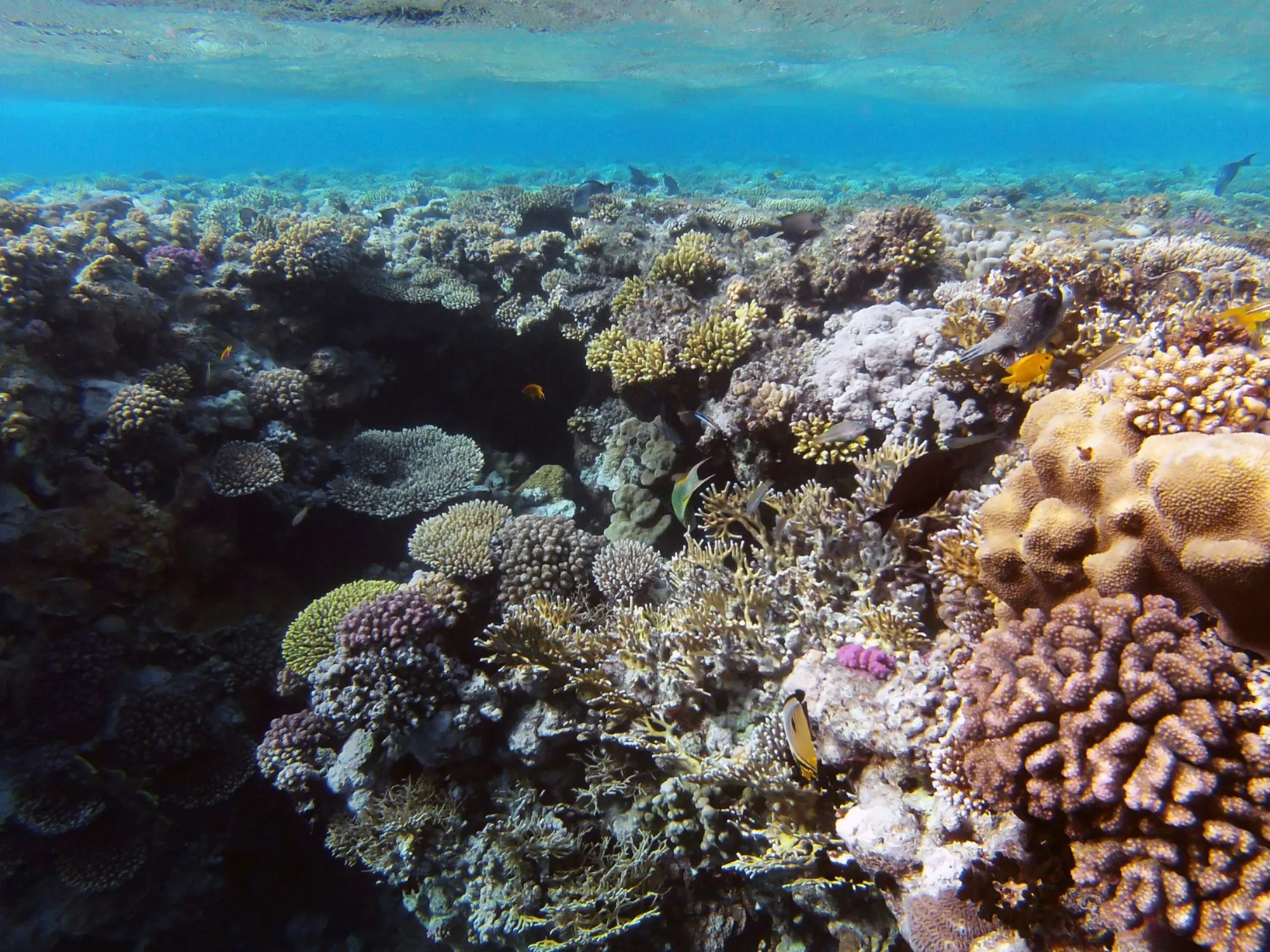
No site can claim the title of best dive site in the world: nothing makes it possible to compare, on a single scale, an Australian reef and a Mexican freshwater sinkhole. We therefore cross-checked eight French-language rankings, re-read on 2 November 2026. Twelve sites appear in at least four of them. For each, we noted what a diver should check before booking: the mode of access, the entry cost, the protection status and the cautions published by the authority that manages it. When an authority publishes nothing, we say so instead of taking a figure from a blog. Read the table first, then the sheet for the site that interests you, and have your level confirmed by the operator before you pay.
How this ranking is built
Cross-checking 8 rankings
On 2 November 2026, we recorded the entries of eight French-language pages that rank dive sites, including the top three Google France results for the query on 1 November 2026 (pages A, B and D). A site enters our selection if it is a full entry (a heading or a list line) in at least 4 of the 8 pages. A mere mention in the text does not count.
| Page | Publisher | Visible date | Number of entries | Type of publisher |
|---|---|---|---|---|
| A | Ultramarina, “Top 30” | undated | 30 | dive travel agency |
| B | SSI, “15 destinations” | undated | 15 | training agency |
| C | SSI, “20 best sites” | undated | 20 | training agency |
| D | Kazaden, “Top 10” | undated (footer 2014-2023) | 10 | trip provider |
| E | PADI, “10 best sites” | 10 January 2023 | 10 | training agency |
| F | PADI, “15 best destinations” | 23 September 2023, updated 1 February 2024 | 15 | training agency |
| G | Generation Voyage, “13 spots” | 15 January 2020, updated 26 April 2025 | 13 | travel media outlet |
| H | vvanat.fr | 28 June 2025 | 10 | travel blog |
None of these pages publishes its criteria or its sources. We count them as a signal of fame, not as proof of quality. The entries mix specific sites (Blue Corner), regions (Red Sea, Maldives) and countries: page F, for example, is organised by country, and we linked each country to the sites its text names. For page H, only the detailed sections count, not its final “other destinations” list.
Two counting choices are worth knowing. Page A does not cite the Similan Islands, but Richelieu Rock, which it links to the Surin archipelago. As the Thai tourist board presents “the Similan and Richelieu Rock circuit” as a single dive programme, we counted it with the Similan, which drop to 6 rankings without it. South Africa appears in 5 pages, 4 of them for the Sardine Run, a seasonal phenomenon. It is neither a fixed site nor a place run by a single authority, and we found no primary source to describe it: we left it out of the table.
Six criteria, all verifiable
| Criterion | Expected source | Limit found on 2 November 2026 |
|---|---|---|
| Level required | the park or the operator | none of the authorities consulted publishes a minimum level: only the operator can answer |
| Season | the park’s calendar | only one authority, the Similan one, publishes an opening period |
| Mode of access | the park authority, UNESCO | gives the distance and the transport, not the comfort |
| Entry cost and permit | the official scale of fees | excludes flights, liveaboards and extras; conversions at the ECB rate of 30 October 2026 |
| Protection and conservation status | UNESCO (year of inscription), the IUCN World Heritage Outlook (2025 assessment), AIMS for the Great Barrier Reef | covers only 5 of the 12 sites |
| Safety caution | the guidance published by the authority | rare, and does not replace the briefing or an instructor |
The IUCN rates the conservation status of natural World Heritage sites on a scale that runs from “good” to “critical” (in English: good, good with some concerns, significant concern, critical). We use the rating from its latest assessment, finalised on 11 October 2025.
What we do not rate
We rate neither beauty, nor average visibility, nor the number of sharks. None of these measures exists in a sourced form that is comparable from one site to the next. The condition of a reef also changes from one year to the next: according to NOAA, the fourth global coral bleaching event, from early 2023 to mid-2025, exposed 84% of the world’s reef area to bleaching-level heat stress, and mass bleaching was observed in at least 83 countries and territories (article of 2 June 2026).
Most beautiful dive spots: the 12 most-cited sites
The rank follows the number of rankings that cite the site, with ties. “Not recorded” means we found no official page on this point, not that the answer is “no”.
| Rank | Site or destination | Country | Rankings | Access | Protection (UNESCO; IUCN 2025) | Entry fee recorded |
|---|---|---|---|---|---|---|
| 1 | Red Sea (Thistlegorm, Ras Mohammed, Brothers) | Egypt | 7 of 8 | Ras Mohammed next to Sharm el-Sheikh (IUCN) | Ras Mohammed: national park, IUCN Green List certificate received in 2018, UNESCO tentative list 2002 | no official amount recorded |
| 1 | Similan Islands and Richelieu Rock | Thailand | 7 of 8 | liveaboard from Khao Lak, or day-trip boat (TAT) | national park (DNP); UNESCO and IUCN not recorded | electronic ticket; amount absent from the official pages consulted |
| 1 | Cenotes of the Yucatán | Mexico | 7 of 8 | overhead cavities: guide and training | not recorded | not recorded |
| 4 | Sipadan | Malaysia | 6 of 8 | 45 min by boat from Semporna; permit booked by an operator | marine park since 2004 (Sabah Parks) | MYR 100 + MYR 350 per person |
| 4 | Maldives | Maldives | 6 of 8 | resort, hotel, guesthouse or boat | not recorded | green tax of USD 12 per day (USD 6 in a small establishment on an inhabited island) |
| 4 | Great Barrier Reef | Australia | 6 of 8 | licensed operator, by day trip or liveaboard (GBRMPA) | UNESCO 1981; IUCN: critical | AUD 8.50 per day |
| 4 | Belize Barrier Reef (Blue Hole) | Belize | 6 of 8 | not recorded | UNESCO 1996, on the danger list from 2009 to 2018; IUCN: significant concern | entry fees mentioned by UNESCO, amount not recorded |
| 8 | Cocos Island | Costa Rica | 5 of 8 | 550 km off the Pacific coast (UNESCO) | UNESCO 1997; IUCN: significant concern | not recorded |
| 8 | Raja Ampat | Indonesia | 5 of 8 | not recorded | marine protected areas run by a dedicated authority | entry ticket sold by the authority; price shown only at checkout |
| 8 | Galápagos | Ecuador | 5 of 8 | about 1,000 km from the mainland (UNESCO) | UNESCO 1978, on the danger list from 2007 to 2010; IUCN: significant concern | USD 200 |
| 11 | Rangiroa | French Polynesia | 4 of 8 | diving in the Tiputa and Avatoru passes (Tahiti Tourisme) | “Nature Reserve” label (Tahiti Tourisme); legal status not recorded | not recorded |
| 11 | Palau (Blue Corner) | Palau | 4 of 8 | not recorded | Rock Islands Southern Lagoon, UNESCO 2012; IUCN: good with some concerns | USD 100 per international departure; Rock Islands permit |
The 12 sites in detail
Two remarks apply to all the sheets. None of the authorities consulted publishes a minimum diving level: ask the operator, in writing, for each site in the programme. And only Similan National Park publishes an official season.
Red Sea, Egypt (7 rankings of 8)
The rankings mainly cite three names there: the Thistlegorm wreck, Ras Mohammed and the Brothers Islands. Only Ras Mohammed has official sources online.
Protection. Ras Mohammed, next to Sharm el-Sheikh, is Egypt’s oldest national park, created in 1986 according to the IUCN. It received the IUCN Green List certificate on 24 November 2018, and more than 340 km² of sea there are closed to any extraction. Egypt placed it on its World Heritage tentative list on 22 January 2002: this is a candidacy, not an inscription.
Good to know. In 2018, the IUCN noted up to 90% live coral in places in the reserve, and more than 65% on average, against 20 to 30% generally outside the reserve.
Entry. We found no amount published by an Egyptian authority as of 2 November 2026. Ask the operator whether the park fee is included in the price.
Caution. For offshore sites such as the Brothers, rely on the safety criteria for choosing a dive liveaboard. See also where to dive in the Red Sea by season.
Similan Islands and Richelieu Rock, Thailand (7 of 8)
The Thai tourist board recommends diving “the Similan and Richelieu Rock circuit” (TAT, 20 October 2026). Richelieu Rock lies further north than the archipelago.
Season. Similan Islands National Park is open from 15 October to 15 May and closed from 16 May to 14 October every year (Department of National Parks). According to the official announcement of 15 May 2025, this annual closure lets the marine environment recover and avoids damage from monsoon bad weather. For the dates, see the opening of Similan National Park.
Access and entry. Liveaboards leave from Khao Lak and, according to the TAT, reach sites out of range of day-trip boats. The entry fee has been paid by electronic ticket since October 2025. None of the official pages consulted gives the amount.
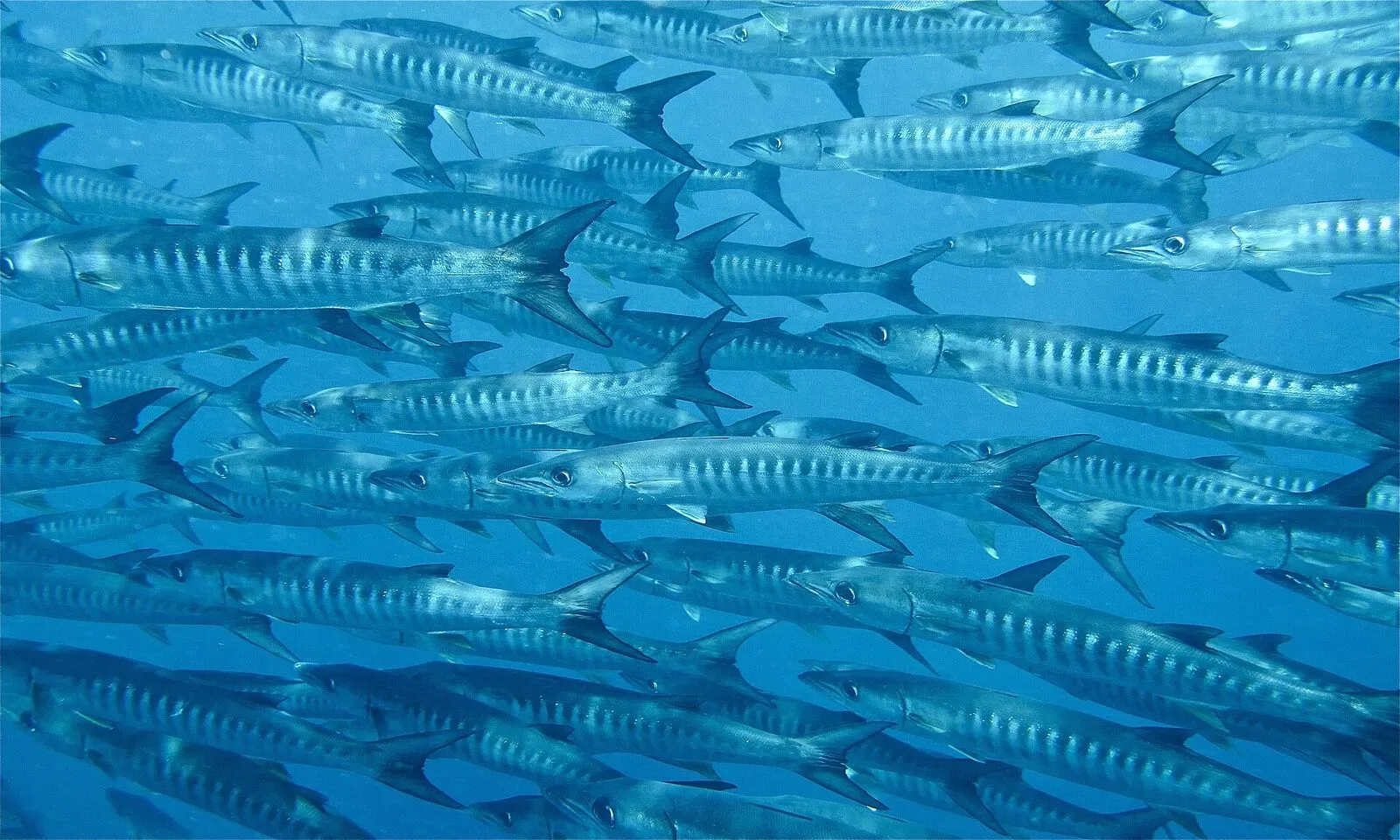
What our media show. The author made a liveaboard trip from Khao Lak in December 2025; his photos are dated 4 to 9 December. They show the briefing screens for Elephant Head Rock, North Point, Koh Bon, Koh Tachai and Richelieu Rock, and a third-day board that schedules dives 9 to 13. His videos show granite boulders, schools of snappers and fusiliers, sea fans and, according to our identifications, still to be confirmed, barracudas and trevallies. No manta ray or shark appears in them. The detail is in our guide to diving in Thailand: Similan, Richelieu Rock, Koh Tao.
Cenotes of the Yucatán, Mexico (7 of 8)
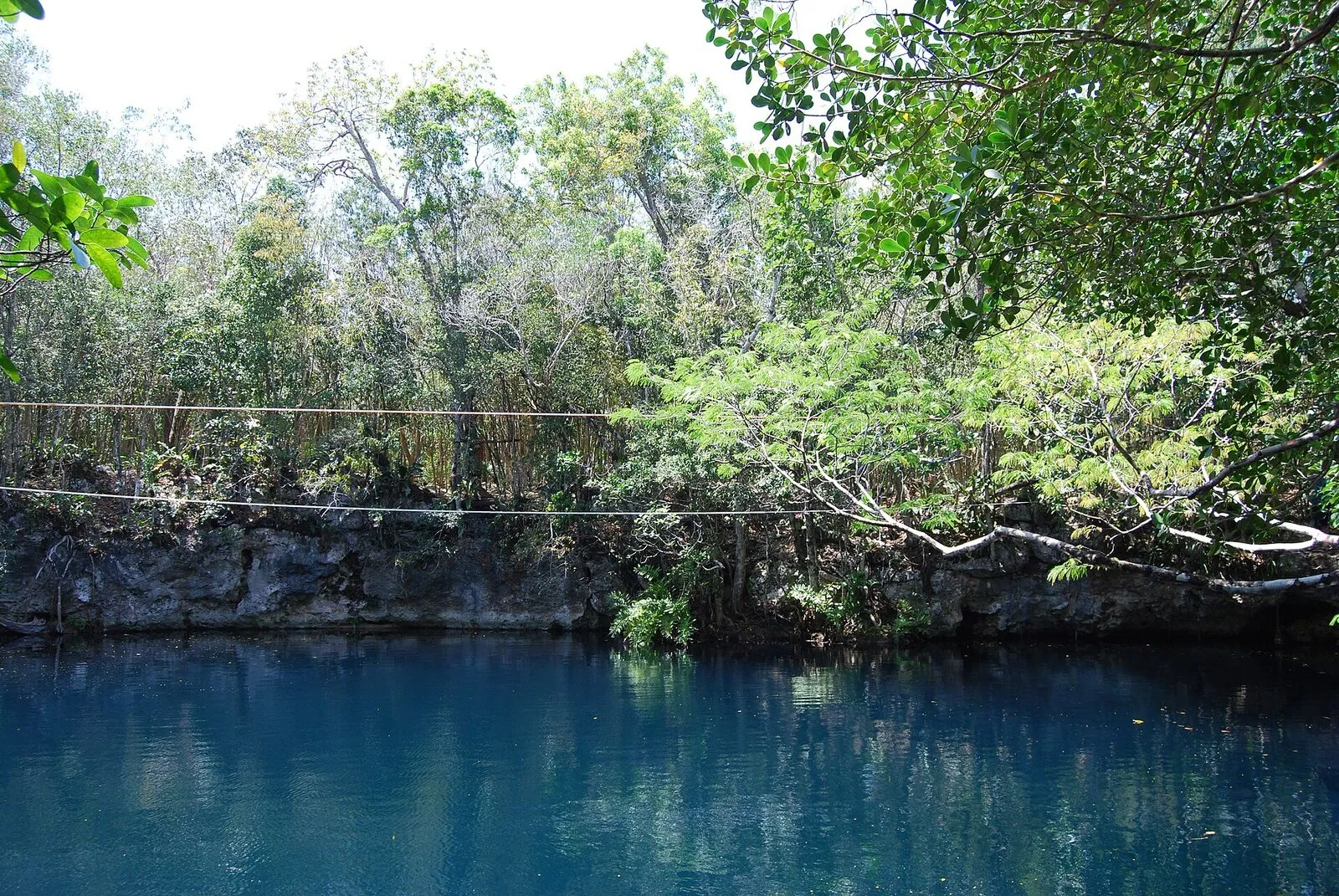
Cenotes are natural sinkholes of the Yucatán peninsula; the rankings cite Dos Ojos and Angelita in particular. Diving there is under a rock ceiling, which changes the safety rules.
Training. PADI reserves its Cavern Diver course for Advanced Open Water divers aged at least 18. This course stays within the lit zone, to keep an easy exit to open water. PADI describes caverns as dark, “potentially dangerous” spaces.
Entry and protection. We recorded no common official entry fee and no protection status for these cenotes. Ask the dive centre for the price.
Caution. Never enter under a ceiling without specific training or a local guide, even for a few metres. The choice of cavity and route is down to the guide and your training, not to a list of “best sites”.
Sipadan, Malaysia (6 of 8)
Sipadan is Malaysia’s only oceanic island: it rises 600 m above the seabed, off the east coast of Borneo (Sabah Parks).
Access. Allow about 45 minutes by speedboat from Semporna, in calm seas. Nobody sleeps on the island: it became a marine park in 2004, and all its accommodation closed.
Permit. An operator books your dives with Sabah Parks, up to six months in advance. It pays a 50% deposit, then the balance two weeks before the date; the official page lists 42 operators. In case of cancellation more than two weeks ahead, Sabah Parks keeps 10%; less than two weeks ahead, everything is lost. A foreign visitor pays MYR 100 conservation fee and MYR 350 diving fee. These pages publish no numerical daily quota.
Caution. Sabah Parks warns of strong currents. At Barracuda Point, they can pull downwards and away from the island; at Midreef, they sometimes push upwards. The entrance to Turtle Cavern, a network of connected caverns, is at about 22 m. Sabah Parks reminds divers that cave or overhead diving requires specific training and equipment, and operators further require a local divemaster to accompany every diver who goes in. Sabah Parks advises beginner divers against the deep side of the drop-off and asks them to stay close to the divemaster when the current is strong.
Maldives (6 of 8)
The rankings cite the Maldives as a destination, sometimes an atoll (Ari, Malé) or a site such as Maaya Thila.
Entry cost. We recorded no park fee. The Maldives tax authority (MIRA) levies a green tax per day of stay, collected by the operator of the accommodation or the boat. Since 1 January 2025, it is USD 12 per day in a resort, a hotel or on a tourist vessel, and USD 6 in a hotel or guesthouse of at most 50 rooms located on an inhabited island. Children under 2 on arrival are exempt. Ask your accommodation whether it is included in the price.
Protection. We recorded no UNESCO property and no IUCN assessment for the sites cited.
Caution. The official pages consulted give no diving guidance. Put the questions in the “Before you book” box, further down, to the operator. See also how to choose a Maldives liveaboard.
Great Barrier Reef, Australia (6 of 8)
Inscribed on the World Heritage list in 1981, the Great Barrier Reef is rated “critical” in the IUCN’s latest assessment.
State of the reef. AIMS, which carries out the reef’s long-term monitoring, counted in 2025 the sixth mass bleaching event since 2016. Its report of 11 August 2026 describes the start of a recovery: between 2025 and 2026, hard coral cover went from 30.0 to 35.1% in the north and from 28.6 to 31.6% in the centre. In the south, it remains stable (26.9 then 26.4%), below its long-term average of 29.3%.
Access and tax. Divers generally go with a licensed operator, by day trip or liveaboard. The operator collects the environmental management charge: AUD 8.50 per day, AUD 4.25 for a trip of less than 3 hours. On a liveaboard, the charge is due only for the first three days, unless you then join another operator’s trip. The same GBRMPA page cites a cap of AUD 24.00, which is below three days at AUD 8.50: have the operator confirm the amount. On 1 April 2027, the charge will rise to AUD 9.00 and AUD 4.50.
Caution. The marine park authority publishes no minimum level: ask the operator.
Belize Barrier Reef (6 of 8)
In 1996, Belize had a set of seven protected areas inscribed, including the Blue Hole natural monument. UNESCO describes there the largest barrier reef in the Northern Hemisphere, and cites the large hammerhead sharks of the Blue Hole.
Protection. The property was on the list of World Heritage in Danger from 2009 to 2018. Its latest IUCN assessment is “significant concern”. According to the IUCN, the Blue Hole and Half Moon Caye receive about 15,000 visitors a year.
Entry. UNESCO states that entry fees fund the country’s protected areas. We found no official amount.
Caution. Neither UNESCO nor the IUCN gives the depth of the Blue Hole. Do not rely on figures from blogs: the depth of your dive is that of your training, set with the guide, whatever the depth of the site.
Cocos Island, Costa Rica (5 of 8)
Cocos Island, a national park inscribed on the World Heritage list in 1997, lies 550 km off the Pacific coast of Costa Rica. It is the only island in the tropical eastern Pacific covered by humid tropical forest (UNESCO).
What you dive there. According to the IUCN, divers rank it among the best places in the world to see large pelagic fauna: sharks, rays, tuna and dolphins. No encounter is guaranteed.
Protection. Its latest IUCN assessment is “significant concern”, and illegal fishing is still rated a high threat there.
Access and entry. At this distance, remoteness comes before everything else: see the liveaboard diving destinations ranked by level. We found no entry fee on an official Costa Rican page.
Caution. Before booking, ask how a medical evacuation is organised from the island, and where the nearest recompression chamber is.
Raja Ampat, Indonesia (5 of 8)
The rankings cite Raja Ampat, and sometimes a site: The Passage or Cape Kri. The archipelago’s marine protected areas have their own management authority. It reports to the marine and fisheries agency of Southwest Papua province, and its headquarters is in Waisai.
Entry. A “tourism” entry ticket is sold on the authority’s official site, kkprajaampat.id, in orders of up to 10 visitors. The price appears only after an identity document has been submitted for each visitor (official form, read on 2 November 2026). The amounts circulating online cannot therefore be checked on an official page: ask the operator or the authority for the price.
Protection. We recorded no UNESCO property and no IUCN assessment.
Caution. The authority publishes a guide to good travel practice and asks visitors to read it before leaving.
Galápagos, Ecuador (5 of 8)
The Galápagos have been on the World Heritage list since 1978. The archipelago is about 1,000 km from the mainland (UNESCO). Its marine reserve covered 138,000 km², and the Hermandad marine reserve, created in 2022, added 60,000 km² to it (IUCN).
Protection. The property was on the list of World Heritage in Danger from 2007 to 2010. Its latest IUCN assessment is “significant concern”.
Entry. The national park entry fee is USD 200 for a foreign tourist over 12 and USD 100 for a child under 12 (scale of 14 April 2026). Nationals of the Andean Community and Mercosur pay USD 100 (USD 50 for under-12s), and children under 2 are exempt.
Access and caution. Darwin and Wolf, the islands the rankings cite, are reached by boat: rely on the safety criteria for choosing a dive liveaboard, and ask how an evacuation is organised.
Rangiroa, French Polynesia (4 of 8)
Rangiroa is the largest atoll in the Tahiti islands: 240 islets over more than 177 km (Tahiti Tourisme). Diving there is mainly in two passes. At Tiputa, the incoming current attracts barracudas, trevallies and surgeonfish; at Avatoru, a strong current in a narrow pass attracts fish, manta rays and sharks.
Depth. The official sheet for the Tiputa Pass announces a dive of 12 to 46 m. Compare these figures with the limits of your certification, detailed on our page about the equivalence of PADI, SSI and FFESSM levels.
Access and entry. According to Tahiti Tourisme, the atoll’s centres offer courses, guided dives and boat trips “for all levels”. That does not mean every pass suits everyone. We recorded no entry fee. The Tahiti Tourisme sheet for the Tiputa Pass classes it as a “Nature Reserve”, without specifying a legal status.
Caution. A pass dive is done in the current. Ask for the experience required, and follow the guide’s briefing.
Palau, Blue Corner (4 of 8)
Palau has one mixed World Heritage property, the Rock Islands Southern Lagoon, inscribed in 2012: 100,200 ha, 445 uninhabited limestone islands, more than 385 coral species and at least 13 species of sharks and manta rays (UNESCO). It lies in Koror State.
Protection. Its latest IUCN assessment is “good with some concerns”. The IUCN does note, however, damage caused by diving at some of the busiest sites.
Entry. Law RPPL 10-02, adopted on 27 March 2017, provides for an environmental tax of USD 100 per international departure, due from age 13, at most once per 30-day period; it may be included in the price of the plane ticket. We found no current official Palauan page on its collection: ask the airline whether it is included in your ticket. For the Rock Islands, foreign visitors also buy a permit valid for 10 days (IUCN), whose amount we did not record.
Caution. Ask the operator whether these fees are included in its price.
Which site for your level and your project
We place a site in a category only if the park or the operator states the level required. As of 2 November 2026, no authority for the 12 sites does so on its pages. The lists below are therefore short, and deliberately so. The depths allowed by each certification are in our page on the equivalence of PADI, SSI and FFESSM levels.
If you hold a first-level certification (Niveau 1, Open Water)
No site on the list is announced by its authority as open to the first level. Check the depth the operator announces for each dive: at Rangiroa, the Tiputa Pass runs from 12 to 46 m (Tahiti Tourisme). If a site attracts you beyond your certification, take the next level first: see the price of dive training in 2026.
If you have a level 2 or an Advanced
Your certification opens access to training that is useful for some sites. PADI reserves its Cavern Diver course for Advanced Open Water divers aged at least 18: it is the training that teaches you to move under a ceiling, in the lit zone of a cavern. For remote sites, such as Cocos Island (550 km from the coast) or the Galápagos (1,000 km from the mainland), level is not enough: how rescue is organised matters just as much. To know what an N2 covers, see the prerequisites and content of the FFESSM Niveau 2 (a French certification).
If you have not dived for more than a year
Do not head to a site with current or depth without having regained your touch with an instructor. Read our guide to getting back into diving after a year or more, and ask the operator for a refresher dive at the start of your stay.
If you are not certified yet
These 12 sites are dived with a certification. Start with training near home or on site: at Rangiroa, for example, Tahiti Tourisme indicates that the centres offer courses. The steps are in our guide to the steps to start scuba diving. Without a certification, at the surface, see for example snorkelling in Guadeloupe.
What entry costs: taxes, permits and bookings
These fees come on top of the flight, the accommodation or the liveaboard, and extras. We kept only the amounts read on an official page. The conversions use the ECB reference rates of 30 October 2026: €1 = USD 1.1172, AUD 1.5904 and MYR 4.5325.
| Site | Nature of the fee | Amount | In euros (ECB, 30 Oct 2026) | Recorded | Source |
|---|---|---|---|---|---|
| Great Barrier Reef | environmental management charge, collected by the operator | AUD 8.50 per day (AUD 4.25 trip of less than 3 h); on a liveaboard, first 3 days only (cap cited: AUD 24.00); AUD 9.00 per day from 1 April 2027 | €5.34 per day (€2.67); €15.09 (cap cited) | 2 Nov 2026 | GBRMPA |
| Galápagos | national park entry fee | USD 200 (foreigner over 12); USD 100 (under 12) | €179.02; €89.51 | 2 Nov 2026 | Galápagos National Park, scale of 14 April 2026 |
| Sipadan | conservation fee + diving fee, foreign visitor | MYR 100 + MYR 350 per person | €22.06 + €77.22, i.e. €99.28 | 2 Nov 2026 | Sabah Parks |
| Palau | environmental tax, per international departure | USD 100, from age 13 (amount set by law) | €89.51 | 2 Nov 2026 | law RPPL 10-02 of 2017 |
| Maldives | green tax per day of stay, collected by the accommodation | USD 12 (USD 6: hotel or guesthouse of at most 50 rooms on an inhabited island) | €10.74; €5.37 | 2 Nov 2026 | MIRA, Green Tax FAQ |
| Raja Ampat | marine areas entry ticket | price shown only after an identity document is submitted | cannot be calculated | 2 Nov 2026 | Raja Ampat MPAs Management Authority |
For the other sites, we read no official amount. That is the case for Similan, where the park confirms that an entry fee exists without giving the price on the page consulted. We therefore do not name a “cheapest destination”: the data are not comparable.
For the full cost, see the budget of a dive liveaboard, taxes and extras included. Always ask the operator which fees its price includes: the Great Barrier Reef charge, for example, is collected by the operator.
Current, depth, ceiling, remoteness: what makes a site demanding
A certification attests to training, not to fitness for a given site. Four factors, taken from official sources, make a site demanding.
- Current. At Sipadan, Sabah Parks reports currents that pull downwards and away from the island at Barracuda Point, and upwards at Midreef. At Rangiroa, Tahiti Tourisme describes a strong current in the narrow Avatoru pass. Drift diving takes experience, a local guide and a briefing; the technique is learned with an instructor. See drift diving and the surface marker buoy.
- Depth. The Tiputa Pass is dived from 12 to 46 m. At Sipadan, the entrance to Turtle Cavern is at about 22 m. Never go below what your training allows, even if the site goes deeper.
- Ceiling. Caverns and cenotes are dived under a rock roof, with no direct ascent possible. At Sipadan, Sabah Parks reminds divers that cave diving requires specific training and equipment, and operators require a local divemaster for Turtle Cavern. PADI offers dedicated training, Cavern Diver.
- Remoteness. Cocos Island is 550 km from the coast, the Galápagos about 1,000 km from the mainland. An evacuation takes time there: check the oxygen, the radio and the nearest recompression chamber before leaving. The detail is in the safety criteria for choosing a dive liveaboard.
At all these sites, do not touch, feed or chase the animals. The IUCN already notes damage caused by diving at some very busy sites in Palau.
When to go
Only one of the authorities consulted publishes a calendar: Similan Islands National Park, open from 15 October to 15 May. For the other 11 sites, we found no official period. The season for each destination is covered in our page when to go diving by destination and month. Also check for fee changes on your dates: the Great Barrier Reef charge rises on 1 April 2027.
Count grid and survey dates
The eight rankings were re-read on 2 November 2026. The letters refer to the table of rankings, above. The addresses are in the sources, at the bottom of the page.
| Site or destination | A | B | C | D | E | F | G | H | Total |
|---|---|---|---|---|---|---|---|---|---|
| Red Sea | x | x | x | x | x | x | x | – | 7 |
| Similan Islands and Richelieu Rock | x (Richelieu Rock) | x | x | x | – | x | x | x | 7 |
| Cenotes of the Yucatán | x | x | – | x | x | x | x | x | 7 |
| Sipadan | x | x | x | x | – | x | x | – | 6 |
| Maldives | x | x | x | x | – | x | – | x | 6 |
| Great Barrier Reef | – | x | x | x | – | x | x | x | 6 |
| Belize | – | x | x | x | – | x | x | x | 6 |
| Cocos Island | x | x | – | x | x | – | x | – | 5 |
| Raja Ampat | x | x | x | – | x | x | – | – | 5 |
| Galápagos | x | x | x | – | – | x | x | – | 5 |
| Rangiroa | x | – | – | x | – | – | x | x | 4 |
| Palau | x | x | – | – | x | x | – | – | 4 |
| South Africa (outside the table) | x | – | – | – | x | x | x | x | 5 |
For South Africa, pages A, E and G cite the Sardine Run, page F cites the Sardine Run among other sites, and page H cites other sites on the coast. Costs, statuses and rules were recorded on the same day from the official pages listed in the sources. We will repeat this survey at least twice a year. For the rules we apply to every figure, see how we verify information.
Further reading
PDF guide
Liveaboard Diving Guide: Choose, Budget, Book
10-chapter PDF guide and spreadsheet to choose the boat, destination and season, work out the real budget and book a dive liveaboard without surprises.
€49
See the guideFrequently asked questions
What are the 10 most beautiful dive sites in the world?
Beauty cannot be measured. By cross-checking 8 French-language rankings re-read on 2 November 2026, the 10 most-cited sites are the Red Sea, the Similan Islands and the cenotes of Mexico (7 rankings of 8), Sipadan, the Maldives, the Great Barrier Reef and Belize (6 of 8), then Cocos Island, Raja Ampat and the Galápagos (5 of 8).
What are the best diving destinations in the world?
The destinations that come up most often are Egypt (Red Sea), Thailand (Similan), Mexico (cenotes), Malaysia (Sipadan), the Maldives, Australia (Great Barrier Reef) and Belize: each appears in at least 6 of the 8 rankings cross-checked on 2 November 2026. This count measures their fame, not the quality of the diving.
What is the best place to go diving?
The one that matches your level, your dates, your budget and the kind of access you accept. Check the level the operator requires, the season (Similan National Park closes from 16 May to 14 October), access by day trip or liveaboard, and entry fees: from AUD 8.50 a day on the Great Barrier Reef to USD 200 in the Galápagos in 2026.
What are the best dive spots for beginners?
None of the authorities that manage these 12 sites publishes a list for beginners. Stay within the limits of your training and choose a dive that the operator announces for your level. Check the stated depth: the official sheet for the Tiputa Pass, in Rangiroa, indicates a dive of 12 to 46 m (Tahiti Tourisme, page read on 2 November 2026).
What is the best dive spot in Europe or in France?
No European site reaches our threshold of 4 rankings out of 8. The Mediterranean appears in only 3 of the 8 pages cross-checked on 2 November 2026, with Gozo, Malta, the Costa Brava and the Medes Islands. We therefore do not name a "best spot" in Europe or France without a source to back it.
What is the best island for diving?
Among the 12 most-cited sites, several are islands: Sipadan, Cocos Island, the Galápagos, the Maldives and the Similan. Access differs a great deal. At Sipadan, the permit is booked through an operator, up to six months in advance (Sabah Parks, page read on 2 November 2026). Cocos Island lies 550 km off the coast of Costa Rica (UNESCO).
Sources
- UNESCO, World Heritage Centre, Great Barrier Reef (inscribed 1981), accessed
- UNESCO, World Heritage Centre, Galápagos Islands (inscribed 1978, on the danger list 2007-2010), accessed
- UNESCO, World Heritage Centre, Cocos Island National Park (inscribed 1997), accessed
- UNESCO, World Heritage Centre, Belize Barrier Reef Reserve System (inscribed 1996, on the danger list 2009-2018), accessed
- UNESCO, World Heritage Centre, Rock Islands Southern Lagoon (inscribed 2012), accessed
- UNESCO, Egypt's tentative list, Ras Mohammed (submitted 22 January 2002), accessed
- IUCN World Heritage Outlook, Great Barrier Reef (2025 assessment, finalised on 11 October 2025), accessed
- IUCN World Heritage Outlook, Galápagos Islands (2025 assessment), accessed
- IUCN World Heritage Outlook, Cocos Island National Park (2025 assessment), accessed
- IUCN World Heritage Outlook, Belize Barrier Reef Reserve System (2025 assessment), accessed
- IUCN World Heritage Outlook, Rock Islands Southern Lagoon (2025 assessment), accessed
- IUCN World Heritage Outlook, Understanding ratings (rating scale), accessed
- IUCN, Ras Mohammed National Park receives Green List certificate (3 December 2018), accessed
- Great Barrier Reef Marine Park Authority, What are the charges? (environmental management charge), accessed
- AIMS, Annual Summary Report of Coral Reef Condition 2025/26 (11 August 2026), accessed
- AIMS, Annual Summary Report of Coral Reef Condition 2024/25 (6 August 2025), accessed
- NOAA NESDIS, World's fourth mass coral bleaching event likely ended in 2025 (2 June 2026), accessed
- Parque Nacional Galápagos, Tasa de ingreso por conservación (PDF of 14 April 2026), accessed
- Sabah Parks, Diving at Sipadan (permit booking), accessed
- Sabah Parks, Sipadan Island Park (entry fees), accessed
- Sabah Parks, Sipadan Island Park, Activities & Facilities (dive sites), accessed
- Raja Ampat MPAs Management Authority, Marine Park Fee (official ticket sales), accessed
- Raja Ampat MPAs Management Authority, Legal Basis, accessed
- Raja Ampat MPAs Management Authority, Visitor Guide, accessed
- Palau, law RPPL 10-02 adopted on 27 March 2017 (Pristine Paradise Environmental Fee), text published by FAOLEX, accessed
- Department of National Parks, Wildlife and Plant Conservation (Thailand), Mu Ko Similan National Park, accessed
- Government Public Relations Department (Thailand), closure of the Similan and Surin Islands from 16 May to 14 October 2025 (15 May 2025), accessed
- TAT Newsroom, The Andaman Opens Its Doors Again (20 October 2026), accessed
- Tahiti Tourisme, Diving in Rangiroa, accessed
- Tahiti Tourisme, Tiputa Pass, accessed
- PADI, Cavern Diver course (prerequisites), accessed
- DAN, Guidelines for Flying After Diving, accessed
- MIRA (Maldives Inland Revenue Authority), Green Tax FAQ, rates as of 1 January 2025 (Internet Archive copy of 12 January 2026), accessed
- European Central Bank, euro reference rates, 90-day history (rates of 30 October 2026), accessed
- Third-party ranking A (count): Ultramarina, Top 30 of the most beautiful dive sites in the world (undated, in French), accessed
- Third-party ranking B (count): SSI, Best diving in the world, 15 destinations (undated, in French), accessed
- Third-party ranking C (count): SSI, 20 best dive sites in the world (undated, in French), accessed
- Third-party ranking D (count): Kazaden, Top 10 of the most beautiful dives in the world (undated, in French), accessed
- Third-party ranking E (count): PADI, The 10 best dive sites in the world (10 January 2023, in French), accessed
- Third-party ranking F (count): PADI, The 15 best diving destinations in the world (23 September 2023, updated 1 February 2024, in French), accessed
- Third-party ranking G (count): Generation Voyage, 13 dive spots (15 January 2020, updated 26 April 2025, in French), accessed
- Third-party ranking H (count): vvanat.fr, The best dive spots in the world (28 June 2025, in French), accessed