Best Time to Go Diving: Where to Dive Each Month
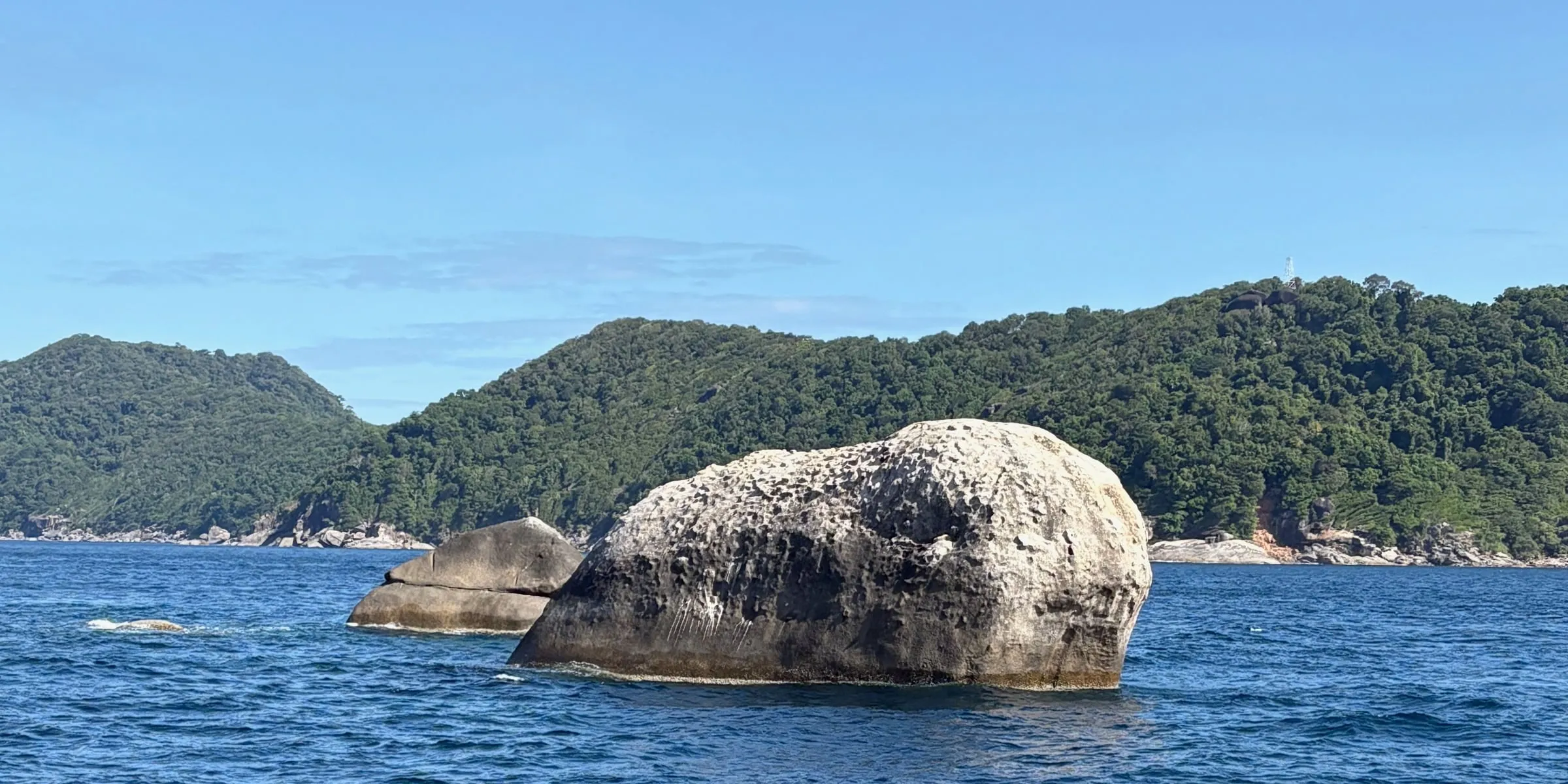
There is no single best month to dive everywhere. Each destination has its own window, and the one in which big marine life shows up is not always the easiest. For 11 destinations, this page cross-checks water temperature, monsoons, cyclones and park opening dates, each time from a dated primary source (a weather service, a park authority or a scientific body), re-read on 2 November 2026. Start from a month with the month-by-month guide, or from a destination with the calendar of the 11 destinations. If you have not yet chosen where to go, begin with the best dive sites in the world, ranked by explicit criteria.
Where to dive in December and January
Over these two months, Similan National Park is open and Socorro is in its scuba diving season. The Galápagos are in their warm season: the sea is calmer there, but the hammerhead season is the cool season, from June to November. The Maldives and Guadeloupe enter their dry season in January. These benchmarks sum up the tables and sections of this page, with no new facts.
- Thailand, Similan: park open from 15 October to 15 May; surface water at 29°C in December, 28°C in January. The author dived there on a liveaboard in December 2025.
- Maldives: December is a transition month; the north-east monsoon, the dry season, runs from January to March. Water at 28°C near Malé.
- Galápagos: warm season from December to May, with a calmer sea and water at 25°C on average over the season (Galápagos Conservancy); south of Santa Cruz, the surface normal is 23°C in December and 25°C in January. High season: December and January according to the Charles Darwin Foundation, mid-December to mid-January according to Galápagos Conservancy.
- Mexico, Socorro: scuba diving season from November to June; the Eastern Pacific cyclone season ends on 30 November.
- Guadeloupe: official cyclone season over on 30 November; the carême, the dry season, begins in January.
- Philippines: amihan, the north-east monsoon, from December to February.
- Red Sea: water at 25°C in December and 23°C in January off Hurghada. No official source on wind or swell.
- The opposite: December and January are the wettest months in the Society Islands, in French Polynesia. In the Mediterranean, the water drops to 15°C in December and 13°C in January off Port-Cros.
This winter, a strong to very strong El Niño is expected to last until January-March 2027: the averages are less reliable than usual (see the next section). The details are in where to dive in December, where to dive in January and the calendar of the 11 destinations. On site, the operator and the dive manager decide every day according to the sea and your level.
2026-2027 season: a strong El Niño may shift the calendars
Situation on 2 November 2026: the averages on this page cover 1991-2020, and this season may depart from them.
- NOAA. On 8 October 2026, the Climate Prediction Center maintained its “El Niño Advisory”: a “strong to very strong” episode is likely to last until January-March 2027, with a probability above 83%. In September, the surface of the eastern equatorial Pacific, where the Galápagos lie, was in places more than 4°C above normal.
- Indonesia. For the BMKG, the episode is “very strong” (22 September 2026): the 2026-2027 rainy season would arrive later than average over 61.08% of the land area, and would be shorter over 51.90%.
- Philippines. On 21 October 2026, PAGASA described a “strong to very strong” El Niño, expected to last until the first quarter of 2027. In November 2025, it reported La Niña.
- Antilles. On 2 June 2026, Météo-France forecast an Atlantic cyclone season below normal, because of El Niño, while recalling that a single cyclone is enough to hit a territory hard.
None of these sources forecasts visibility or marine life: ask the operator what they are seeing right now. For corals, check the bleaching alerts from NOAA Coral Reef Watch, calculated every day by region.
How to read this calendar
A window is favourable when four criteria coincide. This calendar documents three of them.
1. Sea and weather. Monsoons, rain and cyclones come from national weather services and, for Atlantic and Eastern Pacific cyclones, from the US National Hurricane Center (NHC).
2. Water. A single dataset: NOAA’s OISST v2.1 analysis, which combines satellites, ships, buoys and Argo floats on a quarter-degree grid. We took the 1991-2020 normal at a sea point close to each dive area, rounded to the nearest degree. It is a surface temperature: at depth, the water can be colder.
3. Visibility and marine life. We found no official month-by-month visibility source. Marine life is mentioned only when a park or a scientific body talks about it.
4. Access. Some parks close for part of the year or restrict scuba diving to one season. These dates are rules, not averages.
Price, crowds and school holidays are not part of this calendar, for lack of a source that is comparable from one destination to the next. And a thirty-year average is not a forecast: any given year can depart from it.
The calendar of the 11 destinations
Two tables: seasons and access, then water temperature.
Seasons and access, month by month. Key: open or closed, park opening dates; season or off season, period when scuba diving is allowed; NE and SW, north-east or south-west monsoon; amihan and habagat, the Philippine names for these two monsoons; cyclones, official cyclone season (storms sometimes form before and after); warm and cool, seasons named by the source; —, month that the source does not place in any season.
| Destination | Jan | Feb | Mar | Apr | May | Jun | Jul | Aug | Sep | Oct | Nov | Dec | Source |
|---|---|---|---|---|---|---|---|---|---|---|---|---|---|
| Thailand, Similan Islands | open | open | open | open | open until 15th | closed | closed | closed | closed | open from 15th | open | open | Thai government (PRD) for 2025; Siam Rath republished by the ONEP for 2026 |
| Maldives | NE | NE | NE | transition | SW from mid-May | SW | SW | SW | SW | SW | SW | transition | Maldives Meteorological Service |
| Philippines | amihan | amihan | summer | summer | summer | habagat | habagat | habagat | transition | transition | transition | amihan | PAGASA |
| Polynesia, Society Islands | warm | warm | warm | warm | cool | cool | cool | cool | cool | cool | warm | warm | Météo-France French Polynesia |
| Galápagos | warm | warm | warm | warm | warm | cool | cool | cool | cool | cool | cool | warm | Charles Darwin Foundation, Galápagos Conservancy |
| Mexico, Socorro | season | season | season | season | season, cyclones from 15th | season, cyclones | off season, cyclones | off season, cyclones | off season, cyclones | off season, cyclones | season, cyclones | season | CONANP, NHC |
| Guadeloupe | carême | carême | carême | carême | — | cyclones | cyclones | cyclones | cyclones, peak on 10th | cyclones | cyclones | — | Météo-France, NHC |
There is no row here for the Mediterranean, the Red Sea and Indonesia: we did not find an official average seasonal calendar for them. Their window can be read in the water temperature, completed for Indonesia by the BMKG’s 2026-2027 forecast.
Average surface water temperature, in °C (1991-2020 normals).
| Destination (measurement point) | Jan | Feb | Mar | Apr | May | Jun | Jul | Aug | Sep | Oct | Nov | Dec |
|---|---|---|---|---|---|---|---|---|---|---|---|---|
| Mediterranean (off Port-Cros, Var) | 13 | 13 | 13 | 14 | 17 | 20 | 23 | 24 | 21 | 19 | 17 | 15 |
| Red Sea (off Hurghada) | 23 | 22 | 22 | 23 | 25 | 26 | 28 | 29 | 28 | 28 | 26 | 25 |
| Maldives (near Malé) | 28 | 28 | 29 | 30 | 30 | 29 | 29 | 29 | 29 | 29 | 29 | 28 |
| Thailand (Similan Islands) | 28 | 29 | 29 | 30 | 30 | 29 | 29 | 29 | 29 | 28 | 29 | 29 |
| Philippines (Bohol Sea) | 27 | 27 | 27 | 28 | 29 | 29 | 29 | 29 | 29 | 29 | 29 | 28 |
| Indonesia, Raja Ampat (Dampier Strait) | 29 | 29 | 29 | 29 | 29 | 29 | 29 | 29 | 29 | 29 | 29 | 29 |
| Indonesia, Bali (south of Nusa Penida) | 29 | 29 | 29 | 29 | 28 | 28 | 27 | 26 | 27 | 27 | 28 | 29 |
| Polynesia (Tahiti and Moorea) | 28 | 29 | 29 | 29 | 28 | 28 | 27 | 26 | 26 | 27 | 28 | 28 |
| Galápagos (south of Santa Cruz) | 25 | 26 | 27 | 26 | 25 | 24 | 23 | 22 | 22 | 22 | 23 | 23 |
| Mexico (near Socorro Island) | 25 | 24 | 24 | 24 | 25 | 25 | 27 | 28 | 28 | 28 | 27 | 26 |
| Guadeloupe (off Bouillante) | 27 | 27 | 27 | 27 | 28 | 28 | 28 | 29 | 29 | 29 | 29 | 28 |
Source: NOAA, OISST v2.1 analysis, monthly means 1991-2020, data provided by NOAA PSL, Boulder (Colorado, United States), psl.noaa.gov. Values read on 2 November 2026 from one 0.25° cell per point, rounded to the nearest degree. Centre of each cell (latitude, longitude): Port-Cros 42.88° N, 6.38° E; Hurghada 27.13° N, 33.88° E; Malé 4.13° N, 73.38° E; Similan 8.63° N, 97.63° E; Bohol Sea 9.38° N, 124.13° E; Dampier Strait 0.63° S, 130.63° E; Nusa Penida 8.88° S, 115.63° E; Tahiti and Moorea 17.38° S, 149.63° W; Santa Cruz 0.88° S, 90.38° W; Socorro 18.88° N, 110.88° W; Bouillante 16.13° N, 61.88° W. Points quoted in the text: Gulf of Valinco 41.63° N, 8.63° E; Marsa Alam 25.13° N, 35.13° E; Anilao 13.63° N, 120.88° E; Komodo 8.63° S, 119.38° E; Darwin and Wolf 1.63° N, 91.88° W. These two tables are reviewed every year and whenever the El Niño status changes.
Mediterranean (France, Corsica included)
The French Mediterranean has no monsoon and no cyclone season: its window can be read in the water temperature. Off Port-Cros, the surface normal stays at 13 or 14°C from January to April, reaches at least 19°C from June to October and peaks at 24°C in August. In Corse-du-Sud, off the Gulf of Valinco, it rises to 25°C in August and keeps 23°C in September. We found no official month-by-month source on visibility or plankton: ask the club, which also knows the temperature at depth. For the Moroccan Mediterranean, see diving in Morocco: season by coast, water and prices and diving in Belyounech, month by month.
Outside France, three guides detail the season on site: diving in Malta and Gozo, diving in Croatia and diving in the Canary Islands.
Red Sea (Egypt)
Off Hurghada, the surface normal drops to 22°C in February and March, and rises to 29°C in August. Further south, off Marsa Alam, it ranges from 23 to 30°C. We found no page from the Egyptian weather service on sea seasons: this calendar therefore says nothing about wind or swell.
To compare itineraries, see the best liveaboard diving destinations by level. See also diving in the Red Sea in winter: Hurghada or Marsa Alam.
Maldives
The Maldives Meteorological Service distinguishes the north-east monsoon, its dry season, from January to March, and the south-west monsoon, wet, from mid-May to November; December and April are the transition. It rains more in the south (2,218 mm a year on average) than in the north (1,779 mm). Near Malé, surface water stays between 28 and 30°C all year. See also a Maldives liveaboard: the dry season.
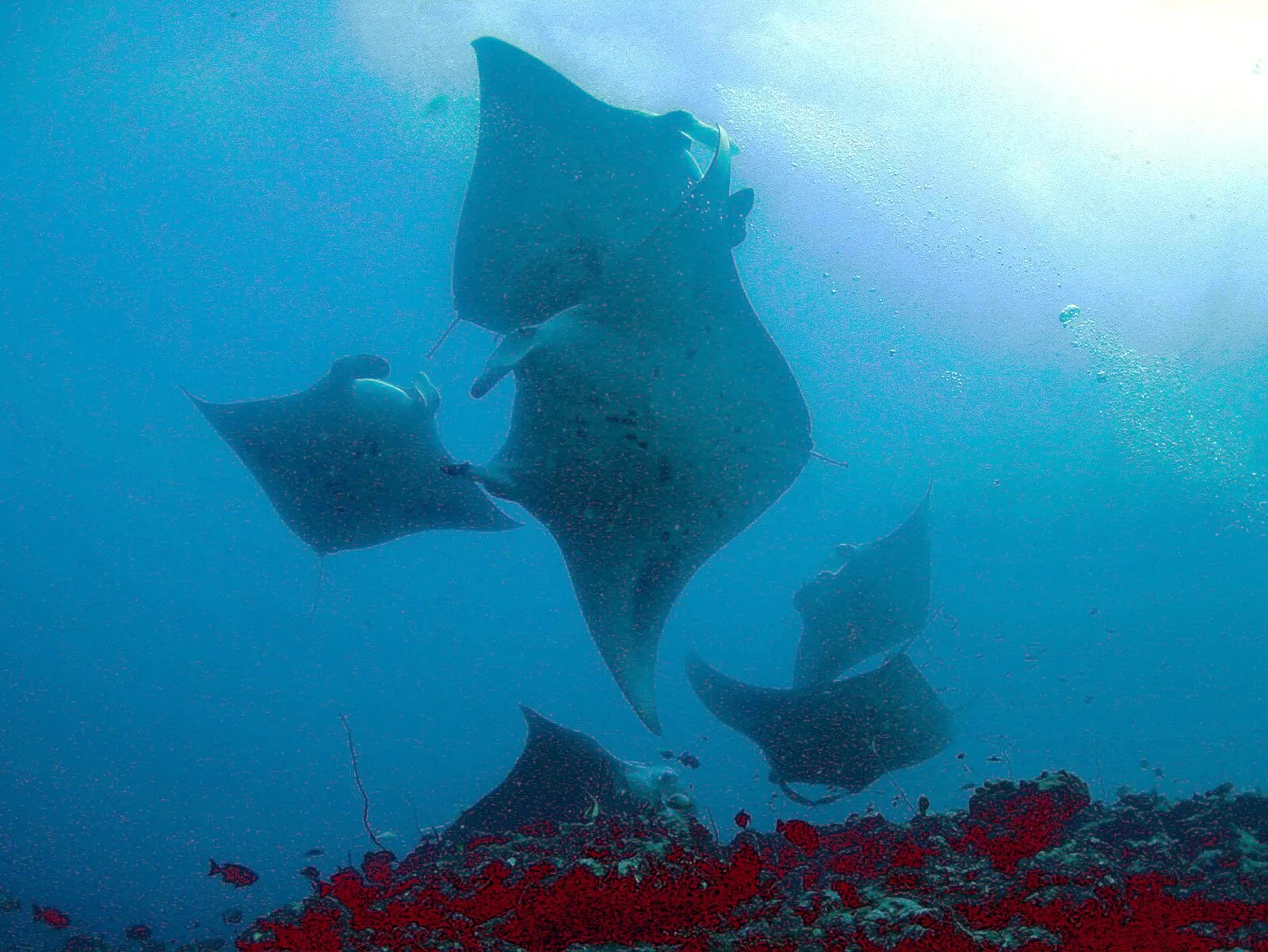
The wet season is the season of the manta rays at Hanifaru Bay, in Baa Atoll. According to a 2016 factsheet from the Convention on Migratory Species (CMS), which places this monsoon from May to December, strong currents then push plankton in, which attracts manta rays and whale sharks. According to this factsheet, the protected area’s rules ban scuba diving: people go snorkelling, with a Hanifaru-certified guide, and the number of boats and visitors present at the same time is limited. Check the rule in force with the operator before you leave.
Thailand, Andaman Sea (Similan, Richelieu Rock)
Mu Ko Similan National Park is open from 15 October to 15 May and closed from 16 May to 14 October, every year: the closure covers the south-west monsoon in the Andaman Sea and lets the marine ecosystem rest (Siam Rath, republished by the ONEP, 22 May 2026). The Thai weather service places this monsoon from May to October. The park can also close for a few days during its opening season: in October 2022, day trips were suspended from 16 to 20 October, because of heavy rain and waves of more than 2 metres linked to Storm Nesat. It reopened on 15 October 2026 and restates its rule: use sunscreen free of substances harmful to corals. For the dates, see opening and closing of Similan National Park.
The author dived there on a liveaboard in December 2025: boarding at Khao Lak on 4 December, Similan Islands, Koh Bon, then Richelieu Rock on 8 December. His surface photos show a calm sea and a clear sky, which remains the observation of a few days. The detail by coast, Koh Tao included, is in our guide to diving in Thailand: Similan, Richelieu Rock and Koh Tao.
Philippines
PAGASA, the Philippine weather service, splits the year in four: amihan (north-east monsoon) from December to February, summer from March to May, habagat (south-west monsoon) from June to August, transition from September to November. The actual dates change every year and PAGASA declares them: in 2025, end of the habagat on 6 October and start of the amihan on 27 October; in 2026, start of the habagat declared on 30 May. On average, 20 tropical cyclones a year form in its area of responsibility or cross it. In the Bohol Sea, surface water ranges from 27 to 29°C; near Anilao, on Luzon, it drops to 26°C in February.
Indonesia: Raja Ampat, then Bali and Komodo
Two rows, because the water does not follow the same rhythm there. At Raja Ampat, in the Dampier Strait, the surface normal stays at 29°C all year. South of Nusa Penida, near Bali, it drops to 26°C in August; near Komodo, to 27°C.
For rainfall, we quote the 2026-2027 forecast of the BMKG, the Indonesian weather service (22 September 2026). In Bali, the rainy season would begin in November or December depending on the area, with a peak in February 2027 for most of the island and for East Nusa Tenggara province, where Komodo lies. In western Southwest Papua, the province Raja Ampat belongs to, the peak is forecast for December 2026; the press release does not name the archipelago.
French Polynesia
Météo-France French Polynesia distinguishes a warm and wetter season, from November to April, and a cool season, from May to October. In the Society Islands, the rains run from November to April, and December and January are the wettest months; in the Tuamotu, the rainy season covers the same months. The Marquesas are an exception: warm and wet season from January to August, cool from September to December. Near Tahiti and Moorea, surface water varies from 26°C (August and September) to 29°C (February to April).
Galápagos
The Charles Darwin Foundation and Galápagos Conservancy describe two seasons. From December to May, the warm season: calmer sea, water at 25°C on average (Galápagos Conservancy). From June to November, the cool season: the Humboldt Current brings water at 22°C on average, under an often overcast sky and drizzle, the garúa. The Foundation sees it as the best time to meet abundant marine life, including hammerhead sharks and whale sharks; Galápagos Conservancy calls it the preferred season of experienced divers, and notes that it brings stronger winds and a slightly choppier sea. South of Santa Cruz, the surface normal ranges from 22 to 27°C; further north, near Darwin and Wolf islands, it is about 3°C warmer from August to October. Only certain operators have the National Park Directorate’s authorisation for diving: check that yours is one of them (Galápagos Conservancy).
Mexico: Socorro (Revillagigedo)
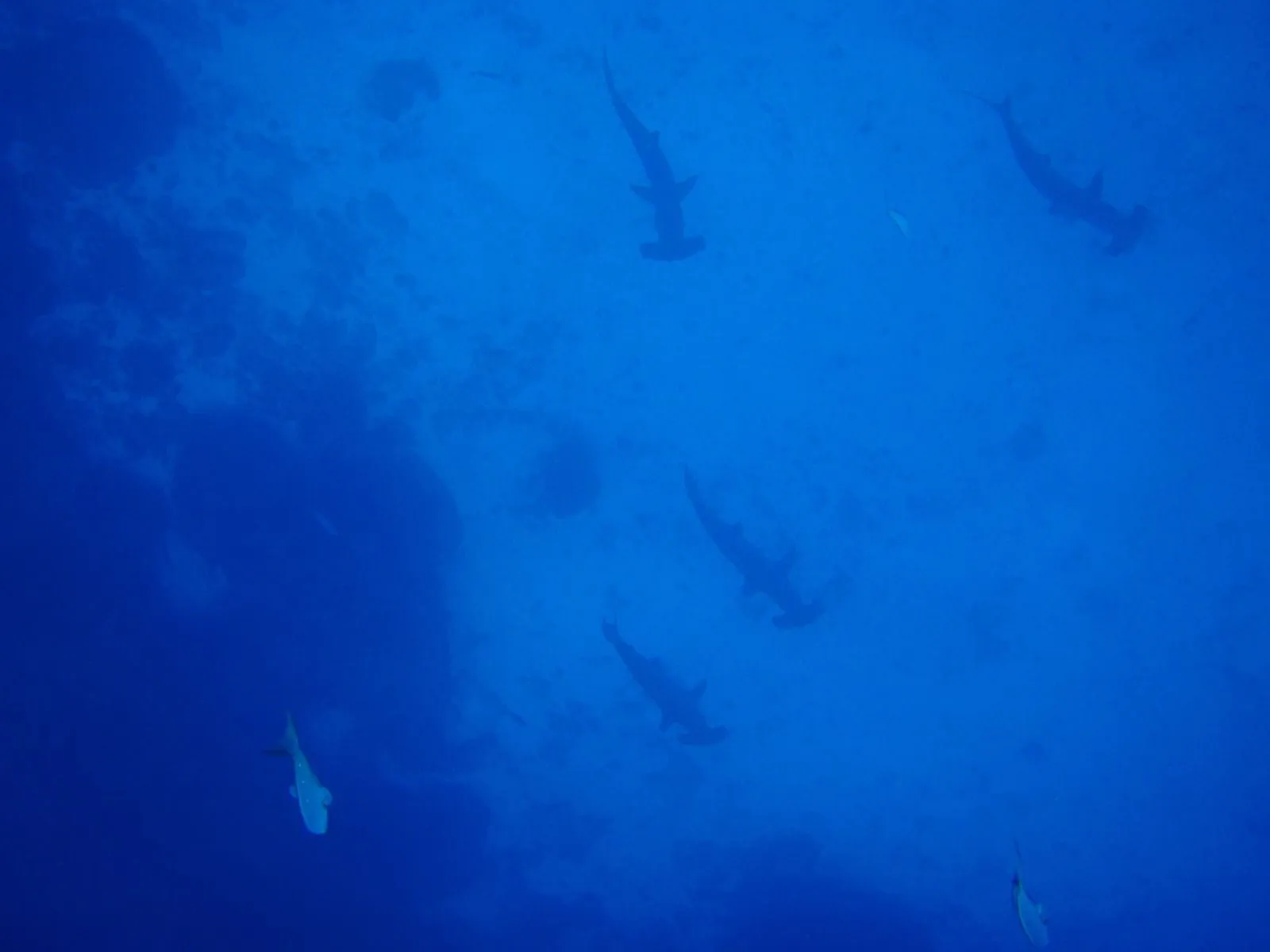
In Revillagigedo National Park, the CONANP, the Mexican protected-areas authority, sets the tourist scuba diving season from November to June, from 7 am to 6 pm Diving is from operators’ boats, about 36 hours at sea from Cabo San Lucas; the same sheet lists the giant manta ray and the humpback whale among the park’s species. May, June and November combine the diving season and the Eastern Pacific cyclone season, from 15 May to 30 November (NHC). At Cozumel, on the Caribbean side, the Atlantic cyclone season applies, described below.
French Antilles (Guadeloupe)
For Météo-France, Guadeloupe has a dry season, the carême, from January to April, and a wet season, the hivernage, from June to November, when the cyclone risk is highest; in Martinique, the carême runs from February to April and the hivernage from July to October. The official Atlantic cyclone season runs from 1 June to 30 November, with a peak on 10 September and most of the activity from mid-August to mid-October. Over 1991-2020, it averages 14 named storms, 7 of them hurricanes, and cyclones sometimes form outside these dates (NHC). Météo-France adds that there is no strong relationship between the number of cyclones in the basin and their impacts on the Antilles arc.
On site, see diving in Guadeloupe or Martinique: sites, level and prices, snorkelling in Guadeloupe and the Malendure turtles and where to snorkel in Martinique.
Where to dive by month
These benchmarks sum up the two tables, with no new facts.
Where to dive in January?
Similan and Socorro open. North-east monsoon, the dry season, in the Maldives; carême in Guadeloupe; amihan in the Philippines; warm season in the Galápagos and in Polynesia, where it is the wettest. Water: 13°C off Port-Cros, 23°C off Hurghada.
Where to dive in February?
Like January: Similan and Socorro open, north-east monsoon in the Maldives, carême in Guadeloupe, warm season in the Galápagos. The water is at its lowest in the Mediterranean (13°C off Port-Cros) and at 22°C off Hurghada.
Where to dive in March?
Last month of the north-east monsoon in the Maldives; summer in the Philippines. Similan, Socorro and the Guadeloupe carême continue. In the Galápagos, the water reaches its maximum, 27°C south of Santa Cruz; it stays at 13°C off Port-Cros.
Where to dive in April?
Transition in the Maldives. Similan and Socorro open, summer in the Philippines, last month of the carême in Guadeloupe. The water reaches 30°C at Similan and near Malé, against 14°C off Port-Cros.
Where to dive in May?
A pivotal month: Similan National Park closes on 16 May, the south-west monsoon arrives in the Maldives in mid-May, and the Eastern Pacific cyclone season opens on 15 May, in the middle of the diving season at Socorro. Polynesia moves into the cool season. Water: 17°C off Port-Cros.
Where to dive in June?
Similan closed, south-west monsoon in the Maldives, habagat in the Philippines. The Atlantic cyclone season opens on 1 June, in Guadeloupe as at Cozumel. Last month of the diving season at Socorro; cool season in the Galápagos. Water: 20°C off Port-Cros.
Where to dive in July?
Similan closed, Socorro off season, south-west monsoon in the Maldives, habagat in the Philippines, cyclone season in the Atlantic and the Eastern Pacific. Cool season in the Galápagos and in Polynesia. Water: 23°C off Port-Cros, 28°C off Hurghada.
Where to dive in August?
The Mediterranean is at its warmest: 24°C off Port-Cros, 25°C in Corse-du-Sud; the Red Sea reaches 29°C. Similan closed, Socorro off season, south-west monsoon in the Maldives (with the Hanifaru manta rays, by snorkelling), Atlantic cyclone activity rising from mid-August.
Where to dive in September?
Peak of the Atlantic cyclone season on 10 September. Similan closed, Socorro off season, south-west monsoon in the Maldives, cool season in the Galápagos (22°C south of Santa Cruz). Water: 21°C off Port-Cros, 23°C in Corse-du-Sud.
Where to dive in October?
Similan National Park reopens on 15 October. Most of the Atlantic cyclone activity ends around mid-October, but the official season runs until 30 November. Socorro remains off season. Water: 19°C off Port-Cros, 28°C off Hurghada.
Where to dive in November?
Similan open. The diving season restarts at Socorro, while the Eastern Pacific and Atlantic cyclone seasons run until 30 November. Last month of the south-west monsoon in the Maldives; Polynesia moves into the warm season. Water: 17°C off Port-Cros.
Where to dive in December?
Similan open: it is the month in which the author dived there, in 2025. Diving season at Socorro, transition in the Maldives, amihan in the Philippines, official cyclone season over in the Antilles, warm season in the Galápagos. Water: 15°C off Port-Cros.
Best period or best experience? Four profiles
The window richest in marine life is not always the easiest. Current, swell, colder water or reduced visibility can come with the gatherings of big animals: at Hanifaru, it is strong currents that bring in the plankton; in the Galápagos, the hammerhead season is the one with the coolest water.
| Profile | Priority | Sourced examples | To check |
|---|---|---|---|
| Recently certified diver | calm sea, warm water | Galápagos from December to May: calmer sea than in the cool season, water at 25°C on average (Galápagos Conservancy). Maldives from January to March, dry season. A calmer sea is not a sea without current: none of these sources says that these destinations suit a recently certified diver. | level, number of dives and currents required by the operator, to be confirmed with your instructor |
| Experienced diver looking for big pelagics | marine life season | Hanifaru: manta rays and whale sharks during the south-west monsoon, by snorkelling (CMS). Galápagos from June to November: hammerhead sharks and whale sharks, water at 22°C on average. | current, swell, thermal protection |
| Photographer | visibility | no official month-by-month source | the operator’s recent observations |
| Traveller sensitive to crowds and price | avoid high season | Galápagos: high season from June to August and from December to January according to the Charles Darwin Foundation, from mid-June to early September and from mid-December to mid-January according to Galápagos Conservancy | price for the month chosen |
The Divers Alert Network (DAN) reminds divers not to dive in a current of more than one knot without suitable training and experience (article of 26 February 2021). The level required for a site is found on the operator’s sheet and is discussed with your instructor: an operator’s requirement is not a general rule. To know what your certification allows, see what each dive level allows, PADI, SSI or FFESSM.
Before you book: five checks by season
- Is the park open on your dates? Similan: from 15 October to 15 May. Revillagigedo: scuba diving from November to June. Plan no dives outside these periods, and keep some margin: Similan National Park has already suspended its day trips for a few days during its opening season, because of a storm (October 2022).
- What happens in case of a cyclone or bad weather? Read the cancellation terms of the operator and of your contract before paying, and see how to choose dive insurance before a trip. In case of an alert, follow local instructions and the travel advice of the French Ministry for Europe and Foreign Affairs.
- Level, currents and your last dive. Compare the operator’s requirements with your logbook. If your last dive was a long time ago, read our guide to getting back into diving before a trip.
- Thermal protection. The tables give an average surface temperature; at depth, the water can be colder. See what gear to buy or rent according to the water.
- On a liveaboard, the boat and the budget. Check the boat’s safety with our guide to choosing a dive liveaboard: safety, boat, itinerary, and the cost by season with the real budget of a dive liveaboard, extras included. To compare destinations, see the best liveaboard diving destinations by level.
Finally, think about the gap between your last dive and the flight home: ask your instructor or your doctor before fixing your dates.
To go further, find all our dive destination guides.
PDF guide
Liveaboard Diving Guide: Choose, Budget, Book
10-chapter PDF guide and spreadsheet to choose the boat, destination and season, work out the real budget and book a dive liveaboard without surprises.
€49
See the guideFrequently asked questions
What is the best time to go diving in the Maldives?
It depends on what you are looking for. The Maldives Meteorological Service places the north-east monsoon, its dry season, from January to March, and the south-west monsoon, the wet one, from mid-May to November. Yet it is during the south-west monsoon that manta rays and whale sharks gather at Hanifaru Bay, where the rules ban scuba diving (CMS factsheet, 2016). Level and currents are something to check with the operator.
When is the best time to dive in Thailand?
On the Andaman Sea side, Similan Islands National Park is open from 15 October to 15 May and closed from 16 May to 14 October, during the south-west monsoon and to let the reef rest (Siam Rath, republished by the ONEP, 2026). Surface water there stays between 28 and 30°C on average. The author dived there on a liveaboard in December 2025. For Koh Tao, see our guide to diving in Thailand.
Why is it not recommended to go to the Maldives?
The question mixes several reasons. For safety and health, the reference is the Maldives page of the French Ministry for Europe and Foreign Affairs travel advice: on 2 November 2026, it flagged in particular a dengue alert (posted on 6 May 2026), a regional alert about rising measles cases (13 March 2026) and a call for vigilance linked to El Niño (2 November 2026). For diving, the south-west monsoon, from mid-May to November, is the wet season. Read the ministry's page again before you leave.
When is the best time to dive in Egypt, in the Red Sea?
We found no official Egyptian source on sea seasons, so nothing reliable on wind or swell. The water itself is measured: off Hurghada, the 1991-2020 normal runs from 22°C in February and March to 29°C in August (NOAA). On a liveaboard, read the British safety bulletin of February 2025, which advises booking with a reputable seller able to guarantee the boat's safety standards.
Where can you dive in November or in winter?
In November, Similan National Park has been open since 15 October and the diving season restarts at Socorro (Mexico), where the cyclone season nonetheless runs until 30 November. From December to February, the Maldives (north-east monsoon from January), Guadeloupe (dry season, the carême, from January) and the Galápagos (warm season) are added. In the French Mediterranean, surface water drops to 13 to 15°C.
Where can you dive in August, in Europe or elsewhere?
In the French Mediterranean, August is the warmest month: 24°C on average at the surface off Port-Cros, 25°C in Corse-du-Sud. The Red Sea reaches 29°C off Hurghada. On the other hand, Similan National Park is closed, the Maldives are in the south-west monsoon and the Atlantic cyclone season is in full swing, with a peak on 10 September according to the NHC.
Sources
- NOAA Climate Prediction Center, ENSO Diagnostic Discussion of 8 October 2026 (El Niño Advisory), accessed
- BMKG, press release of 22 September 2026: very strong El Niño, 2026-2027 rainy season later than usual (in Indonesian), accessed
- PAGASA, El Niño and La Niña monitoring (updated 21 October 2026), accessed
- PAGASA, Monthly Climate Assessment and Outlook of 5 November 2025 (PDF), accessed
- PAGASA, press release "Start of the Southwest Monsoon" of 30 May 2026 (PDF), accessed
- PAGASA, Climate Change in the Philippines: seasons and tropical cyclones (undated page), accessed
- Météo-France Guadeloupe, summary of the 2026 cyclone season activity forecasts (2 June 2026, in French), accessed
- Météo-France, Climates in the French overseas territories (24 February 2020, in French), accessed
- Météo-France French Polynesia, Climate (undated page, in French), accessed
- NOAA National Hurricane Center, Tropical Cyclone Climatology (undated page), accessed
- Maldives Meteorological Service, Climate of Maldives (copy archived by the Wayback Machine on 9 September 2026; as of 15 November 2026, the original address redirects to the service's new site), accessed
- Thai Meteorological Department, national report to the WMO (March 2019, PDF), accessed
- ONEP (Thai Ministry of Natural Resources), Siam Rath article republished on its site: annual closure of Similan National Park from 16 May to 14 October (22 May 2026, in Thai), accessed
- Government Public Relations Department (Thailand), Similan and Surin Islands closed from 16 May to 14 Oct 2025 (15 May 2025), accessed
- DNP, temporary closure of Similan National Park after Storm Nesat (18 October 2022, in Thai), accessed
- DNP, opening of the 2026-2027 tourist season at Similan National Park (16 October 2026, in Thai), accessed
- CONANP, Parque Nacional Revillagigedo (undated fact sheet, in Spanish), accessed
- CMS (Convention on Migratory Species), Baa Atoll and Hanifaru Bay factsheet, 2016 (PDF), accessed
- Charles Darwin Foundation, Travel tips for Galápagos (undated page), accessed
- Galápagos Conservancy, Planning a trip (undated page), accessed
- NOAA NCEI, Optimum Interpolation Sea Surface Temperature (OISST) v2.1, accessed
- NOAA PSL, OISST v2.1, monthly means 1991-2020 (file sst.mon.ltm.1991-2020.nc), accessed
- NOAA Coral Reef Watch, home page and bleaching alerts, accessed
- NOAA Coral Reef Watch, regional virtual stations (5 km, daily), accessed
- DAN, Alert Diver, "Current Dives", Jim Gunderson (26 February 2021), accessed
- MAIB, Safety Bulletin 1/2025: dive liveaboards in the Red Sea (summary page, 6 February 2025), accessed
- MAIB, Safety Bulletin 1/2025, Red Sea Dive Boats (February 2025, PDF), accessed
- French Ministry for Europe and Foreign Affairs, travel advice for the Maldives: latest news and alerts (updated 2 November 2026, in French), accessed