Canary Islands diving in winter: which island, water, prices
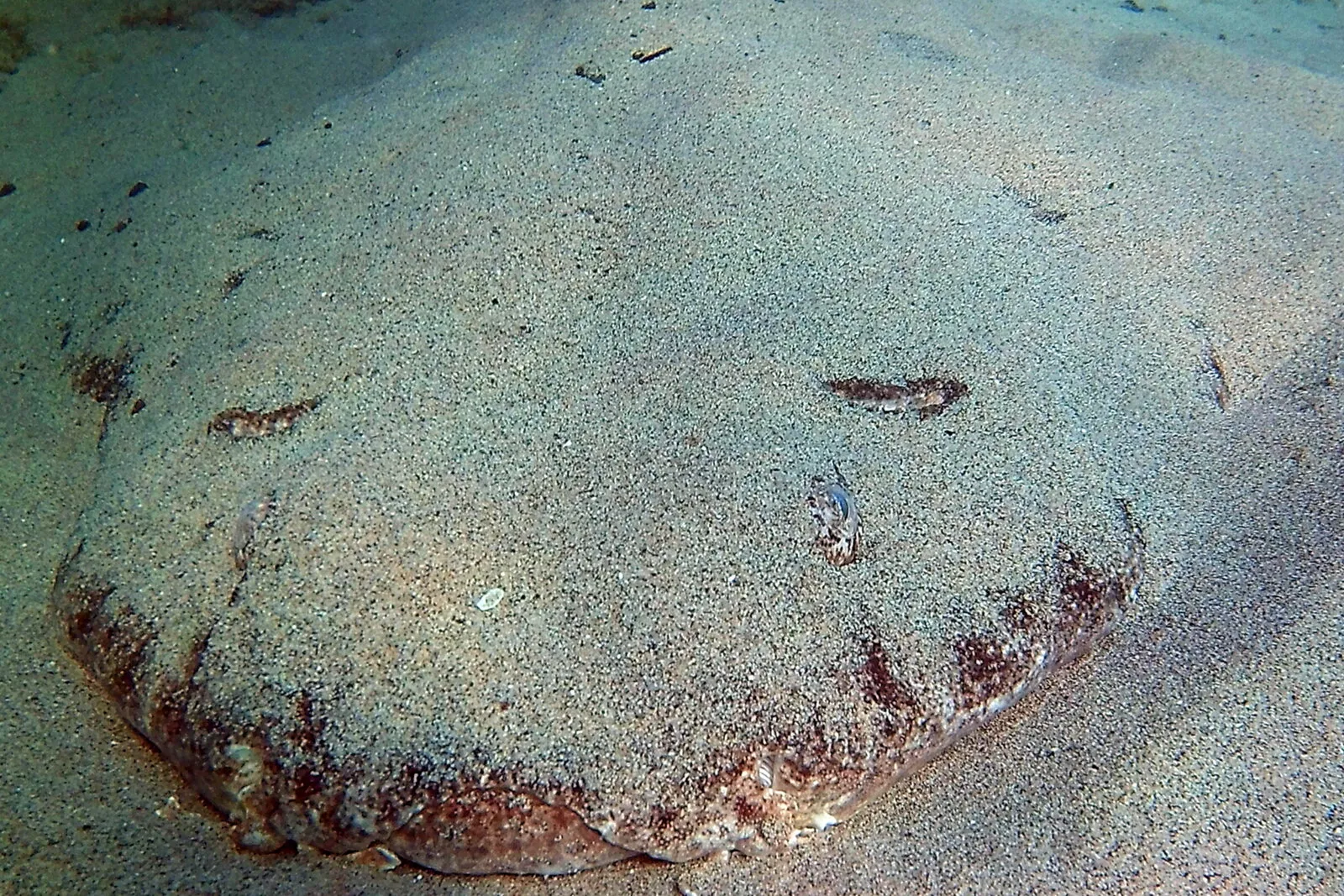
In the Canary Islands, the sea stays at 18 to 20 °C at the surface in the depths of winter, against 13 °C off Marseille. Lanzarote has the Museo Atlántico, El Hierro the La Restinga marine reserve, and Tenerife, Gran Canaria and Fuerteventura have sites for every level. On 20 November 2026, a dive for certified divers was listed at €45 to €65 by the four centres out of seven that publish a single-dive price.
The author of this site has never dived in the Canary Islands. Everything below comes from dated sources, checked on 20 November 2026: weather and oceanographic services, official Spanish texts, the Canary Islands tourist board, and the centres’ own pages for their prices.
Winter diving in Europe: why the Canary Islands
If you want to dive in Europe between December and March without leaving the European Union, look at the Canary Islands: the water there stays much warmer than in the French Mediterranean. The archipelago is part of Spain, and therefore of the European Union, and 112 works there as it does everywhere in the Union.
The February sea-surface normal ranges from 18 °C off Lanzarote and Fuerteventura to 20 °C off El Hierro (NOAA, OISST v2.1, 1991-2020). Off Marseille, the same February normal is 13 °C. In the air, the mean daily maximum in January ranges from 20.6 °C at Fuerteventura airport to 21.7 °C at Tenerife South (AEMET, 1981-2010 normals).
Water at 18 °C is still cool for an hour-long dive: your wetsuit and your weighting will not be the ones you use on a Red Sea trip. See changing your exposure suit means changing your weighting, and set both with an instructor on site.
Which Canary Island to choose for diving
Choose the island by your level and your plan: a well-known site (the Museo Atlántico), a marine reserve (La Restinga), or easy shore dives. This table uses the site pages of the Canary Islands tourist board (Turismo de Canarias, read on 20 November 2026). The depths and levels are the ones it publishes, not a rule: the centre and your certification set your limit.
| Island | Site | Published depth | Level or conditions (site page text) [“Difficulty level” field] |
|---|---|---|---|
| Tenerife | Montaña Amarilla (Las Galletas) | 15 m on average, 25 m maximum | various levels, weak currents [Baja] |
| Tenerife | El Condesito wreck (Los Cristianos) | 20 m canyon | currents can raise the difficulty to medium [Baja] |
| Tenerife | San Miguel (Punta de Rasca) | 45 m maximum, 28 m descent along a cable | experienced divers, strong currents; 45 m exceeds the 40 m limit on air or nitrox under Spanish law: ask the centre for the planned profile [Media] |
| Tenerife | El Peñón wreck (Tabaiba) | 32 m maximum | moderately difficult, wreck experience [Baja] |
| Lanzarote | Museo Atlántico (Playa Blanca) | 12 m (Turespaña), 14 m (artist’s website) | certification to 15 m (Turespaña) |
| Lanzarote | Playa Chica (Puerto del Carmen) | 10 m maximum | introduction to night diving, shore access [Baja] |
| Lanzarote | Veril de Playa Chica (Puerto del Carmen) | drop-off from 15 to 40 m, wreck at 30 m | beginners on the sand platform, wreck for experienced divers [Baja] |
| Lanzarote | Puerto del Carmen wrecks | 12 to 40 m | fairly experienced divers, by boat [Media] |
| Gran Canaria | El Cabrón (Arinaga) | rock platform to 9 m, sand at 23 m | 10 routes, chosen by experience and conditions [Baja] |
| Gran Canaria | Sardina (Sardina del Norte) | not published | all levels, no current [Baja] |
| Gran Canaria | Tufia | cave at about 6 or 7 m | beginners, beach access [Baja] |
| Fuerteventura | El Jablito (La Oliva) | 15 m maximum | beginners, sheltered from currents [Baja] |
| Fuerteventura | Bajón del Río (Corralejo) | sand at 18 m | all levels, only with the right current and tide [Media] |
| Fuerteventura | La Caleta (Caleta de Fuste) | not published | little current [Baja] |
| El Hierro | El Bajón (La Restinga) | peaks at 6 and 9 m, walls to 100 m in places | to be chosen on days with weak currents [Media] |
| El Hierro | La Restinga quay | 8.5 to 16 m | all levels, also at night [Baja] |
| El Hierro | Punta Restinga | 11 m descent | no level in the text [Baja] |
Each site page also shows a difficulty field (Baja or Media) that sometimes contradicts its own text, for example “Baja” for the El Peñón wreck at 32 m, which the text calls moderately difficult: the centre and your certification decide.
A wall that drops to 100 m does not mean you may go there: in Spain, recreational diving on air or nitrox is limited to 40 m (article 18.1 of Real Decreto 550/2020); beyond that, the text requires you to be over 18 and to carry specific equipment (article 18.3), and your certification often sets a lower limit.
Tenerife
The south of the island has most of the sites on the official pages: Montaña Amarilla, which the tourist board says can be reached from the shore but is more convenient from the Las Galletas marina; El Condesito, 3.7 nautical miles from the port of Los Cristianos; and San Miguel, for experienced divers. In the north-east, the El Peñón wreck, 35 m long, was sunk at Tabaiba in 2006 as an artificial reef.
Lanzarote and the Museo Atlántico
The Museo Atlántico lies off Playa Blanca, near Las Coloradas. Turespaña says it opened in 2016, with ten underwater installations by the artist Jason deCaires Taylor; the artist’s website mentions installation in 2016, an official opening in January 2017 and over 300 life-size casts across 50 m by 50 m, while Turespaña speaks of about 100 m² of sandy seabed. The published depths differ: 12 m for Turespaña, 14 m for the artist’s website and for Rubicón Diving, 12 to 15 m for Safari Diving. Turespaña states that visits go through the island’s dive centres and that you need a certification to 15 m.
Puerto del Carmen, on the south-east coast, offers shore dives at Playa Chica and on the Veril, and a group of six wrecks near the harbour, from 12 to 40 m, by boat. In the north, the marine reserve of La Graciosa and the islets north of Lanzarote covers 70,700 ha (MAPA); diving there requires an authorisation (see the rules).
Gran Canaria
El Cabrón, near Arinaga, is presented by the tourist board as the best site on the island, with a rock platform to 9 m and a sandy bottom at 23 m. Davy Jones Diving calls El Cabrón a “marine reserve”; the site is not among the three Canary Islands marine reserves listed by MAPA (La Graciosa, La Palma and La Restinga). In the north-west, near Gáldar, Sardina is dived from the village jetty, by day and by night. Tufia is recommended for beginners, with entry and exit from the beach.
Fuerteventura
In the north, Bajón del Río lies in the strait between Fuerteventura and the islet of Lobos, five minutes by boat from the port of Corralejo. Punta Amanay, in Corralejo, lists sites around Lobos from 6 m to more than 40 m (beyond the 40 m limit on air or nitrox under Spanish law), with an advanced level required for some dives. On the east coast, El Jablito is described as diveable all year round thanks to its sheltered position, and La Caleta is a short boat ride from the Caleta de Fuste pier.
El Hierro and the La Restinga reserve
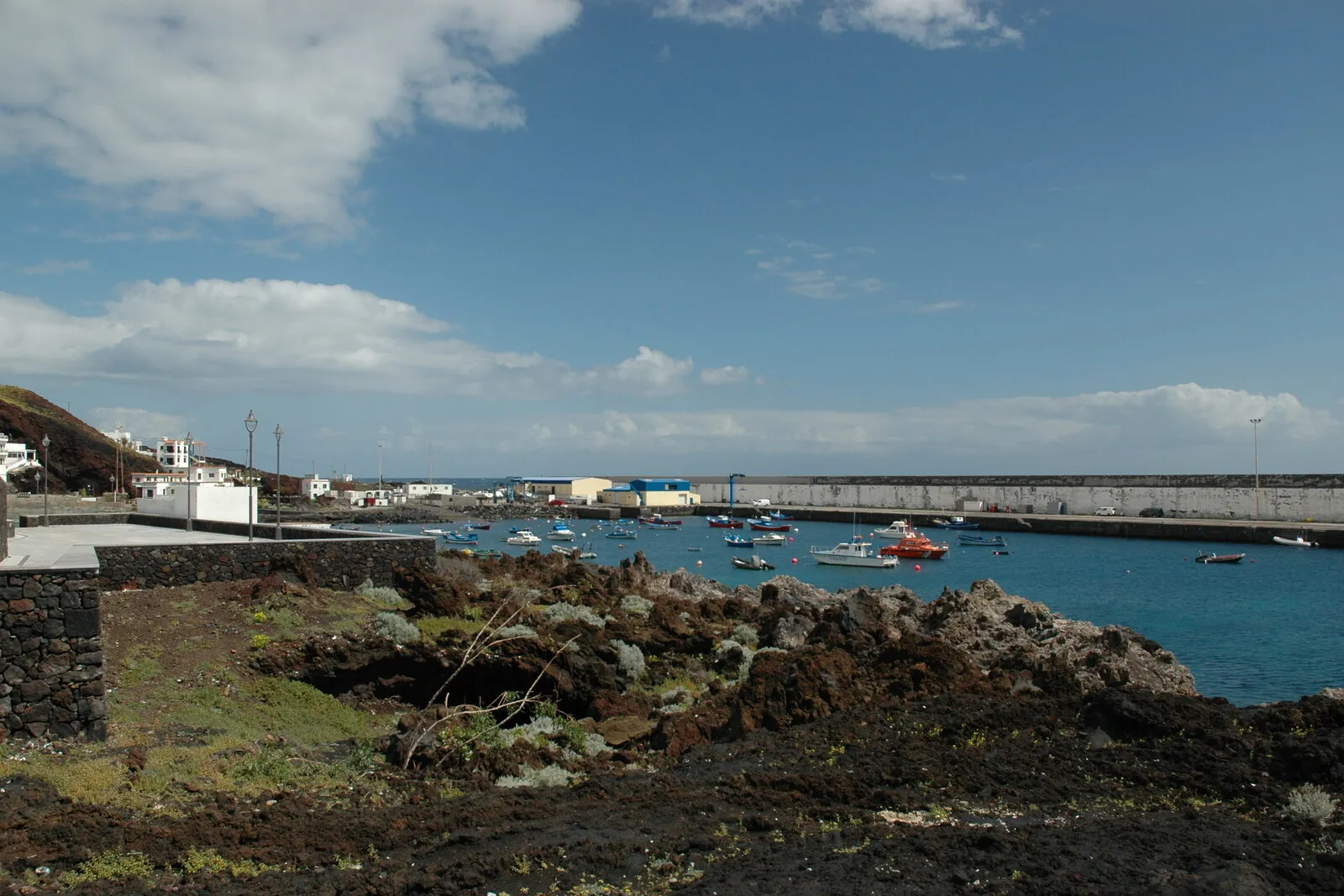
The Punta de La Restinga - Mar de las Calmas marine reserve, in the south-west of the island, covers 1,180 ha according to MAPA’s data sheet, and 750 ha according to the introduction on the same page. It was created in 1996 and includes a no-take zone off the bay of Naos, between the Roque de Naos and La Herradura beach, marked by buoys. MAPA describes steep rocky bottoms there, with drop-offs, caves, tunnels and shoals, including El Bajón and Punta de los Saltos. The Canary Islands tourist board credits El Hierro with more than 40 dive sites and visibility of up to 30 m.
Canary Islands water temperature, month by month
The water is coolest in February and March, at 18 to 20 °C depending on the island, and warmest in September and October, at 23 or 24 °C. This table gives the 1991-2020 sea-surface normal at a sea point near each area, rounded to the degree (NOAA, OISST v2.1, read on 20 November 2026).
| Month | Tenerife, south | Lanzarote, Playa Blanca | Gran Canaria, Arinaga | Fuerteventura, Corralejo and Lobos | El Hierro, La Restinga |
|---|---|---|---|---|---|
| January | 20 °C | 19 °C | 19 °C | 19 °C | 20 °C |
| February | 19 °C | 18 °C | 19 °C | 18 °C | 20 °C |
| March | 19 °C | 18 °C | 19 °C | 18 °C | 19 °C |
| April | 19 °C | 19 °C | 19 °C | 19 °C | 20 °C |
| May | 20 °C | 20 °C | 20 °C | 20 °C | 21 °C |
| June | 21 °C | 21 °C | 21 °C | 21 °C | 22 °C |
| July | 22 °C | 22 °C | 22 °C | 22 °C | 23 °C |
| August | 23 °C | 22 °C | 23 °C | 22 °C | 23 °C |
| September | 24 °C | 23 °C | 23 °C | 23 °C | 24 °C |
| October | 24 °C | 23 °C | 23 °C | 23 °C | 24 °C |
| November | 22 °C | 22 °C | 22 °C | 22 °C | 23 °C |
| December | 21 °C | 20 °C | 21 °C | 20 °C | 21 °C |
Grid cell centres (quarter-degree grid): Tenerife 27.875° N, 16.625° W; Lanzarote 28.875° N, 13.875° W; Gran Canaria 27.875° N, 15.375° W; Fuerteventura 28.625° N, 13.875° W; El Hierro 27.625° N, 17.875° W.
Read this table with two caveats. It is a thirty-year average, not the water of a given week. And it is the surface of an offshore grid cell, not the bottom of the site: the water can be colder at depth. The tourist board writes that the water is “always” about 20 °C, which the normal qualifies as 18 to 24 °C depending on the month and the island. To compare with other destinations, see where to dive by month, destination by destination.
Visibility, currents and marine life: what the sources say
Expect good visibility, but not a sea that is always calm. The Canary Islands tourist board describes clear water “down as far as 30 metres” for the archipelago (page of 18 November 2020), and horizontal visibility that can reach 30 m in Lanzarote. These are promotional descriptions, not measurements.
Currents depend on the site and the day. The official pages report strong currents at San Miguel, currents that can make El Condesito a medium-difficulty dive, and recommend El Bajón, on El Hierro, on days with weak currents. By contrast, Montaña Amarilla, Sardina, El Jablito and La Caleta are described with little or no current. Bajón del Río is only dived with the right current and tide.
For marine life, the pages mention groupers, barracudas, rays, morays, parrotfish and garden eels. The angel shark (Squatina squatina, angelote in Spanish) is mentioned at the Puerto del Carmen wrecks, at night at Sardina, and at La Caleta, which the tourist board says is often visited by angel sharks in winter. In Spain, the angel shark has been listed as “in danger of extinction” since June 2019 (MITECO, 5 June 2019). In the La Restinga reserve, MAPA reports visits by open-ocean species such as the whale shark and the manta ray, and frequent sightings of sea turtles and dolphins.
Diving in the Canary Islands: certifications, insurance and rules
The Canary Islands apply Spanish diving law: Real Decreto 550/2020, amended by Real Decreto 1188/2025 (BOE, consolidated text published on 30 December 2025). It does not replace your agency’s rules or the level the centre requires; it comes on top of them.
| Topic | What the Spanish text says (Real Decreto 550/2020) |
|---|---|
| Depth | 40 m maximum on air or nitrox, with direct access to the surface; no planned decompression stops; minimum team: a buddy pair; no overhead dives without light with more than 30 m of penetration (article 18.1). Beyond 40 m or with other gas mixes: over 18 and the equipment in annex III (article 18.3) |
| Insurance | accident and third-party liability insurance compulsory for every recreational diver (article 18.4) |
| Health | health declaration required by the centre, introductory dives included; if it reveals a condition that could affect diving, an annual medical examination is required (article 8) |
| Age | 8 years minimum; 6 m from 8 to 9 years, 12 m from 10 to 11 years, 21 m from 12 to 15 years, 40 m from 16 to 18 years (article 7) |
| Introductory dives | one instructor per participant, who supervises only one student at a time (article 9.3, in force since 31 December 2025); no introductory dives at night, in bad weather or in a dangerous environment (article 13.4) |
| Certifications | recognition of qualifications that meet international safety standards and are certified or validated by bodies recognised at international and European level (first transitional provision) |
The change for introductory dives shows at the centres: La Voz de Lanzarote (15 January 2026) announced the end of group introductory dives, and Punta Amanay writes that it can no longer offer its “Double Try Dive” following a change in the regulations.
La Restinga marine reserve. Diving is allowed outside the no-take zone, from a support boat, at the marked points, with an authorisation from MAPA for outer waters and from the Viceconsejería de Pesca of the Canary Islands government for inner waters. Orden APA/89/2005 sets four dive points, El Bajón, La Bocana, El Rincón and La Herradura, with a quota of 2,300 divers a year for each. It bans entry from the shore, anchoring except in an emergency, feeding the animals and night diving, except at the “Bocana del Puerto” point with an authorisation. Each boat carries 10 divers at most, not counting the instructor. Centres apply for an authorisation per calendar year, individuals per one-month period. The tourist board describes a dive at La Restinga quay from the quay steps: it does not say whether this point is inside the reserve, so ask the centre.
La Graciosa marine reserve. Diving is allowed with an authorisation, outside the no-take zone (a one-mile circle around the Roque del Este). For outer waters, MAPA sets a quota of 24 dives a day on weekdays and 36 at weekends and on public holidays in high season, 12 a day in low season, and three boats a day at most.
To place your certification against these rules, see the equivalence between PADI, SSI and FFESSM levels. If you have not dived for more than a year, see getting back into diving after a year or more.
Diving in the Canary Islands: prices checked on 20 November 2026
A dive for certified divers costs €45 to €65 at the four centres that list a single-dive price, and a 10-dive package €335 to €475. These are the prices on the centres’ own pages, read on 20 November 2026. They are examples, not recommendations, and none of the links is an affiliate link.
| Centre, island | Dive | 10 dives | Open Water | Rental | Nitrox |
|---|---|---|---|---|---|
| Aqua-Marina, Los Cristianos (Tenerife), PADI | €50 (one dive, no boat supplement) | €360 (5 days) | €396 (“everything related to diving” included) | €12 per day (full kit) | €10 per day |
| Safari Diving, Puerto del Carmen (Lanzarote), PADI and BSAC | €45 (tank and weights, boat or shore) | €350 | €470 (online theory included) | €10 per dive | course €119 (no dives) |
| Rubicón Diving, Playa Blanca (Lanzarote), SSI | €65 | €475 | €525 | €12 per dive | €7 per tank; course €150 |
| Davy Jones Diving, Arinaga (Gran Canaria), PADI | €100 for the 2 dives of one day | €335 (5 days) | €445 | €25 per day | not listed |
| Zeus Dive Center, Playa del Inglés (Gran Canaria), SSI and PADI | “desde 120 €” per person, number of dives not stated | not listed | €450 “+ extras” | not listed | not listed |
| Punta Amanay, Corralejo (Fuerteventura), SSI | from €50 (boat, air or nitrox tank, weights, guide) | not listed | from €460 (4 dives at Lobos) | not included, price not listed | nitrox tank included; course from €180 |
| Centro de Buceo El Hierro, La Restinga, PADI, FEDAS and ESA | from €85 for 2 dives | from €340 | from €399 (PADI) | not listed | PADI course from €125 (no dives) |
Four points before you compare. Davy Jones Diving shows its prices as “From 1/01/2023”: ask for confirmation. Rubicón Diving’s list is an undated PDF whose file name contains 2025, created on 11 January 2025 and still linked from its website on 20 November 2026. Centro de Buceo El Hierro presents its packages as an offer that requires a €50 deposit paid 30 days in advance. And what is included varies: at Safari Diving, the price includes the tank and weights, not the equipment; at Punta Amanay, rental and insurance are not included. Aqua-Marina points out that insurance is compulsory and sells it at €9 per day if you do not have your own.
At the Museo Atlántico. Safari Diving adds €7 per dive for the museum or a night dive. For certified divers, Rubicón Diving lists an afternoon dive at the museum from €65 and 2 morning dives, including the museum, from €115; for beginners, its “Día en el Museo” day, which combines training and a dive at the museum, costs from €175. Safari Diving sells beginners a try dive at €75, then a boat dive to the museum at €79.
To compare with France, see the price of a diving course, item by item.
Getting there and island-hopping
Each of the five islands in this guide has an airport run by Aena: Tenerife Norte and Tenerife Sur, Gran Canaria, César Manrique-Lanzarote, Fuerteventura and El Hierro. Between the islands, Fred. Olsen Express links Los Cristianos (Tenerife) with La Estaca (El Hierro) every day, in 2 hours 20 minutes, and Playa Blanca (Lanzarote) with Corralejo (Fuerteventura) in 25 or 35 minutes. Check the timetables on the company’s website before you book your dives.
You will almost always fly home. Plan the interval between your last dive and the flight: see flying after diving: what the sources say. For checking in your gear, see flying with your diving equipment.
Safety and emergencies
In an emergency, call 112. The European Commission presents it as the free emergency number, available everywhere in the Union from a landline or a mobile phone.
Hyperbaric chamber. Diario de Avisos (31 May 2026) reports that the Canary Islands health department and the management of the Hospital Universitario de Canarias (HUC), on Tenerife, have highlighted its hyperbaric medicine unit. The newspaper describes it as “un recurso único en Canarias, operativo las 24 horas”, used in particular for diving accidents. The same article reports a warning from the SATSE nurses’ union about a shortage of trained staff during on-call shifts. In May 2024, a diver with decompression sickness was airlifted from the port of La Restinga to the HUC (Canarian Weekly, 25 May 2024). In 2023, PLOCAN also mentioned chambers on Gran Canaria and Lanzarote, without naming them. No source we read says how a diver is admitted to these in an emergency: before you pay, ask the centre which chamber it calls and how it evacuates.
Insurance. Accident and third-party liability insurance is compulsory in Spain for recreational diving. Also check that your policy covers evacuation and the chamber: see how to choose diving insurance.
Where to start: three profiles
- You are certified and travelling in winter. Look at El Hierro, where the February normal is the highest (20 °C), then Tenerife and Gran Canaria (19 °C). For La Restinga, book with a centre authorised in the reserve, since entry from the shore is banned there.
- You want to see the Museo Atlántico. Choose a centre that goes there by boat, with a certification to 15 m. Without a certification, ask for the beginner option and how it runs, in writing.
- You want to take your Open Water. The centres checked list it at €396 to €525. Ask how many open-water dives are planned, and whether e-learning, equipment and the card are included.
Further reading
PDF guide
Flying with Scuba Gear: 9 Airlines Checked, Count Your Wh
PDF guide with 11 chapters, 8 worksheets, 6 checklists and 4 messages: baggage, batteries, checks and breakage, with 9 airlines' rules as of 12 November 2026.
€15
See the guideFrequently asked questions
Which Canary Island is best for diving?
It depends on your level and what you want to see. Lanzarote has the Museo Atlántico, at 12 or 14 m depending on the source, and shore dives at Puerto del Carmen. El Hierro has the La Restinga marine reserve, dived only from a boat and with an authorisation. Tenerife, Gran Canaria and Fuerteventura have beginner sites described by the tourist board, such as Montaña Amarilla, Tufia or El Jablito.
Can you dive in the Canary Islands in winter?
Yes. The NOAA 1991-2020 sea-surface normal gives 18 to 20 °C in February around the five islands, against 13 °C off Marseille. In January, the mean daily maximum air temperature ranges from 20.6 to 21.7 °C at the airports of the five islands (AEMET, 1981-2010). These are surface values: the water can be colder at depth.
How much does a dive cost in the Canary Islands?
On 20 November 2026, a dive for certified divers was listed at €45 to €65 by the four centres that publish a single-dive price, and two others sold 2 dives for €85 to €100. A 10-dive package ranged from €335 to €475 at the centres that publish one. An Open Water course ranged from €396 to €525. Check what is included: at several centres, equipment rental comes on top, at €10 to €25 per dive or per day.
Do you need a certification to dive the Museo Atlántico?
Turespaña states that you need a certification allowing you to dive to 15 m, and that visits go through the island's dive centres. Some centres also offer a beginner option: Safari Diving lists a boat dive to the museum at €79 after a try dive at €75, and Rubicón Diving a “Día en el Museo” day, training included, from €175.
Do you need insurance or a medical certificate to dive in the Canary Islands?
Real Decreto 550/2020 requires every recreational diver to hold accident and third-party liability insurance. It also requires the centre to have you fill in a health declaration; if it reveals a condition that could affect diving, an annual medical examination is required. To dive in the La Restinga reserve, MAPA requires a certification issued, recognised or approved by an autonomous community, insurance and a valid medical examination.
Where is the nearest hyperbaric chamber in the Canary Islands?
The chamber cited most often is the hyperbaric medicine unit of the Hospital Universitario de Canarias (HUC), on Tenerife, which Diario de Avisos describes as “un recurso único en Canarias, operativo las 24 horas” (31 May 2026). In 2023, PLOCAN also mentioned chambers on Gran Canaria and Lanzarote, without saying how a diver is admitted there in an emergency. In May 2024, a diver who had left from La Restinga was airlifted to the HUC. In an emergency, call 112, and ask the centre for its evacuation plan before you dive.
Sources
- NOAA PSL, OISST v2.1, monthly means 1991-2020 (file sst.mon.ltm.1991-2020.nc): grid cells 27.875° N 16.625° W; 28.875° N 13.875° W; 27.875° N 15.375° W; 28.625° N 13.875° W; 27.625° N 17.875° W; 43.125° N 5.375° E, accessed
- AEMET, climate normals 1981-2010, Tenerife Sur Aeropuerto (C429I), accessed
- AEMET, climate normals 1981-2010, Lanzarote Aeropuerto (C029O), accessed
- AEMET, climate normals 1981-2010, Gran Canaria Aeropuerto (C649I), accessed
- AEMET, climate normals 1981-2010, Fuerteventura Aeropuerto (C249I), accessed
- AEMET, climate normals 1981-2010, Hierro Aeropuerto (C929I), accessed
- BOE, Real Decreto 550/2020 of 2 June 2020, safety conditions for diving activities, consolidated text (last update published on 30 December 2025), accessed
- BOE, Real Decreto 1188/2025 of 26 December 2025 (amends, among others, Real Decreto 550/2020), published on 30 December 2025, accessed
- MAPA, Punta de La Restinga - Mar de las Calmas marine reserve, characteristics (undated page), accessed
- MAPA, Punta de La Restinga - Mar de las Calmas marine reserve, useful information and permits (undated page), accessed
- BOE, Orden APA/89/2005 of 25 January 2005, underwater activities in the La Restinga marine reserve, consolidated text (last update published on 28 January 2005), accessed
- MAPA, marine reserve of La Graciosa island and the islets north of Lanzarote, characteristics (undated page), accessed
- MAPA, list of Spain's marine reserves (undated page), accessed
- MITECO, press release “El Gobierno aumenta el nivel de protección legal de 27 especies”, 5 June 2019 (angel sharks listed as in danger of extinction), accessed
- Turismo de Canarias (Hello Canary Islands), dive sites, general overview (page of 18 November 2020), accessed
- Turismo de Canarias, dive sites on El Hierro (page of 16 June 2023), accessed
- Turismo de Canarias, diving for the first time in Lanzarote (page of 7 August 2020), accessed
- Turismo de Canarias, Montaña Amarilla dive site, Tenerife (metadata: datePublished 23 February 2026, the same value on every site page), accessed
- Turismo de Canarias, El Condesito wreck, Tenerife (metadata: datePublished 23 February 2026, the same value on every site page), accessed
- Turismo de Canarias, San Miguel dive site, Tenerife (metadata: datePublished 23 February 2026, the same value on every site page), accessed
- Turismo de Canarias, Tabaiba wreck, Tenerife (metadata: datePublished 23 February 2026, the same value on every site page), accessed
- Turismo de Canarias, Veril de Playa Chica dive site, Lanzarote (metadata: datePublished 23 February 2026, the same value on every site page), accessed
- Turismo de Canarias, Playa Chica dive site, Lanzarote (metadata: datePublished 23 February 2026, the same value on every site page), accessed
- Turismo de Canarias, Puerto del Carmen wrecks, Lanzarote (metadata: datePublished 23 February 2026, the same value on every site page), accessed
- Turismo de Canarias, El Cabrón dive site, Gran Canaria (metadata: datePublished 23 February 2026, the same value on every site page), accessed
- Turismo de Canarias, Sardina dive site, Gran Canaria (metadata: datePublished 23 February 2026, the same value on every site page), accessed
- Turismo de Canarias, Tufia dive site, Gran Canaria (metadata: datePublished 23 February 2026, the same value on every site page), accessed
- Turismo de Canarias, El Jablito dive site, Fuerteventura (metadata: datePublished 23 February 2026, the same value on every site page), accessed
- Turismo de Canarias, Bajón del Río dive site, Fuerteventura (metadata: datePublished 23 February 2026, the same value on every site page), accessed
- Turismo de Canarias, La Caleta dive site, Fuerteventura (metadata: datePublished 23 February 2026, the same value on every site page), accessed
- Turismo de Canarias, El Bajón dive site, El Hierro (metadata: datePublished 23 February 2026, the same value on every site page), accessed
- Turismo de Canarias, La Restinga quay dive site, El Hierro (metadata: datePublished 23 February 2026, the same value on every site page), accessed
- Turismo de Canarias, Punta Restinga dive site, El Hierro (metadata: datePublished 23 February 2026, the same value on every site page), accessed
- Turespaña (spain.info), Museo Atlántico de Lanzarote (undated), accessed
- Jason deCaires Taylor (artist's website), Museo Atlántico, Lanzarote (undated), accessed
- Aena, El Hierro airport, list of Aena airports (undated), accessed
- Fred. Olsen Express, El Hierro destination page (undated), accessed
- Fred. Olsen Express, Fuerteventura destination page (undated), accessed
- European Commission, 112, the European emergency number (undated), accessed
- Diario de Avisos, the HUC hyperbaric unit and a warning from the SATSE union, 31 May 2026, accessed
- PLOCAN, meeting on a hyperbaric chamber for La Palma, 4 April 2023, accessed
- Canarian Weekly, diver evacuated from El Hierro to the HUC, 25 May 2024, accessed
- La Voz de Lanzarote, introductory dives and Real Decreto 1188/2025, 15 January 2026, accessed
- Price check: Aqua-Marina (Los Cristianos, Tenerife), dives and rental (page modified on 7 September 2025), accessed
- Price check: Aqua-Marina (Los Cristianos, Tenerife), PADI courses (page modified on 7 September 2025), accessed
- Price check: Safari Diving (Puerto del Carmen, Lanzarote), prices (page modified on 23 January 2025), accessed
- Safari Diving (Puerto del Carmen, Lanzarote), Museo Atlántico, accessed
- Price check: Rubicón Diving (Playa Blanca, Lanzarote), PDF price list (file created on 11 January 2025, “2025” in the file name, linked from the home page on 20 November 2026), accessed
- Price check: Rubicón Diving (Playa Blanca, Lanzarote), diving at the Museo Atlántico, accessed
- Price check: Davy Jones Diving (Arinaga, Gran Canaria), prices (shown as “From 1/01/2023”), accessed
- Price check: Zeus Dive Center (Playa del Inglés, Gran Canaria), home page, accessed
- Price check: Zeus Dive Center, courses (page modified on 15 October 2026), accessed
- Price check: Punta Amanay (Corralejo, Fuerteventura), dives around Lobos, accessed
- Price check: Punta Amanay (Corralejo, Fuerteventura), beginner courses, accessed
- Punta Amanay, home page (“Official SSI Dive Center”), accessed
- European Commission, outermost regions (Article 349 TFEU), including the Canary Islands, accessed
- Price check: Centro de Buceo El Hierro (La Restinga), dive packages (page modified on 10 September 2025), accessed
- Price check: Centro de Buceo El Hierro (La Restinga), courses (page modified on 21 September 2026), accessed