Flying After Diving: 12, 18 or 24 Hours, Which Wait?
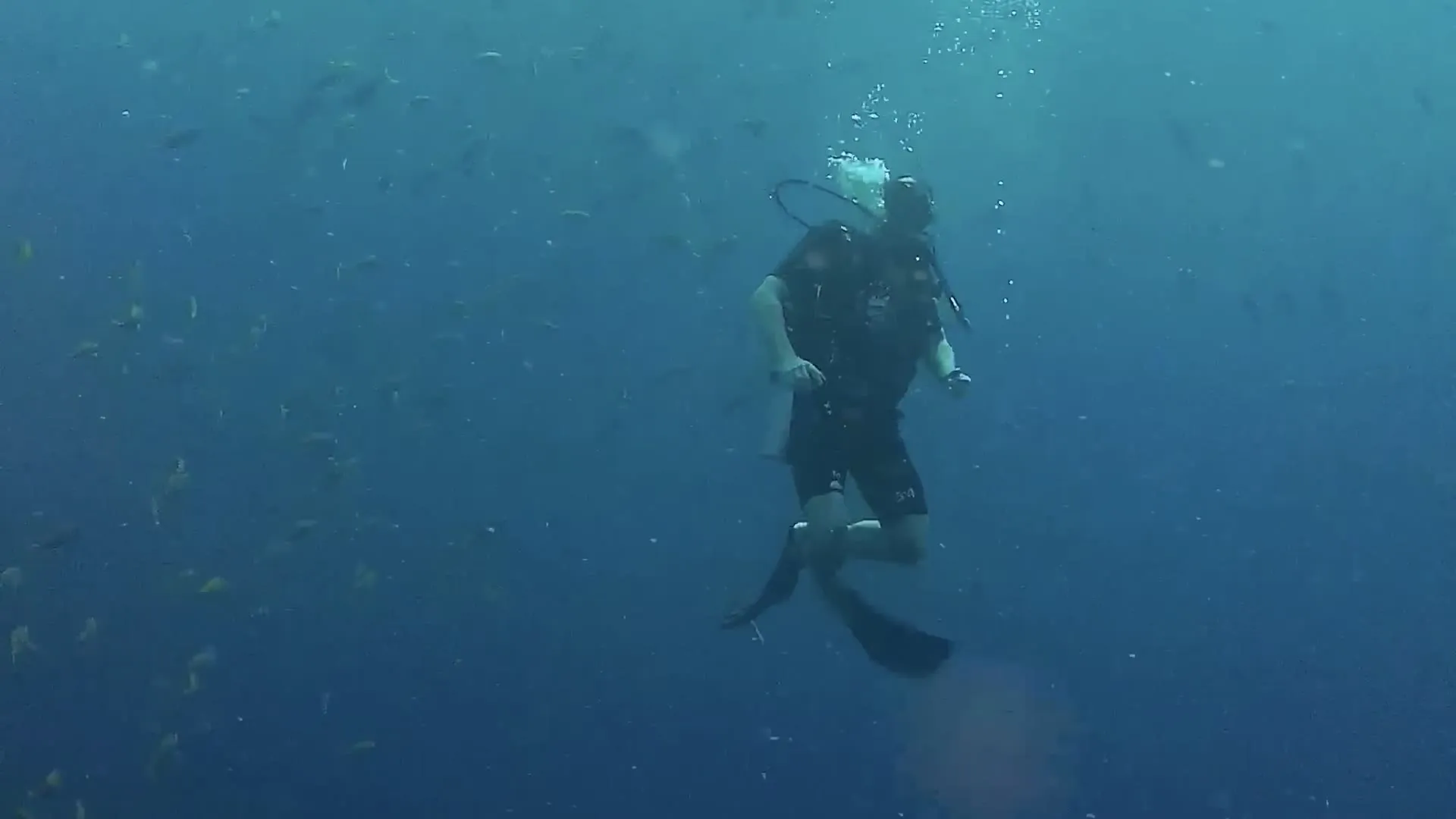
Divers Alert Network (DAN), the diver safety organisation, advises at least 12 hours between a single no-stop dive and take-off, and at least 18 hours after repeated dives. DAN itself calls these recommendations provisional, and they date from a workshop held in 2002. Other sources publish 24 hours, or even 48 hours in some cases: your computer and your operator come before any generic figure. All the pages cited were reread on 5 November 2026.
The published delays, source by source
The figures do not agree. The table gives them as each source publishes them, without rounding.
| Source and date | Dive concerned | Delay published before the flight | Context |
|---|---|---|---|
| DAN, “Flying After Diving” and “Guidelines for Flying After Diving” pages (undated; 2002 workshop, proceedings published in 2004) | single no-stop dive | at least 12 h | air dives, cabin altitude of 610 to 2,438 m, diver with no symptoms; DAN calls them provisional recommendations |
| DAN (same pages) | several dives a day or several days | at least 18 h | same conditions |
| DAN (same pages) | dives with mandatory stops, or on heliox or trimix | “well over 18 h”, no figure | DAN notes there are few data for this case |
| Alert Diver, DAN Europe (15 July 2009) | same cases as DAN | 12 h, 18 h, over 18 h | adds that DAN had proposed 24 h after any dive, which the profession rejected |
| Alert Diver, DAN Europe, Flying Bubbles (15 January 2013) | single no-stop dive; series of dives or a stop | 12 h; 24 h | article presenting a research project, with no source cited for these figures |
| PADI blog (18 July 2019, updated 17 December 2023) | general rule | 24 h | also repeats DAN’s 12 h and 18 h, and writes “at least 24 hours” after stops |
| SSI blog (undated, machine-translated) | one dive; two or more dives | 12 h; 18 h | 24 h if the no-stop limits were exceeded or a safety stop was missed |
| Suunto, D4i help page (undated) | computer no-fly time | at least 12 h, or the desaturation time if it is longer; 48 h if the computer goes into error after a missed stop | relays the UHMS: 24 h in general, 12 h under 2 h of cumulative diving in 48 h, at least 24 h and if possible 48 h after a decompression stop |
| FFESSM, leaflet “Plongée scaphandre, en apnée ou en pêche sous-marine” (Mediterranean, 2019 edition, with the Ministry of Sports and the maritime prefecture) | any dive | “within 24 h”: avoid flying and any travel to altitude | general-public advice, with no distinction by dive; same instruction on the poster “Quelques conseils pour plonger en sécurité” (Ministry in charge of Sports and FFESSM); no delay found on medical.ffessm.fr |
| Thai tourism office, Diving page (undated, © 2026) | last dive | at least 24 h | tourism page, with no distinction by dive |
| Maldives: Maldives Recreational Diving Regulation, Ministry of Tourism (2003, unofficial translation); press (Edition.mv, 28 September 2024) | any dive | 2003 text: diving prohibited less than 12 h before a flight on a pressurised aircraft; 2024 press: flying allowed 24 h after a dive, according to a 1991 regulation | the two sources differ; a reform has been announced since 2024; we did not find the text in force in November 2026: ask your centre for the rule |
Where they differ
- After several dives: 18 h at DAN and at SSI (the PADI blog repeats DAN’s 18 h); 24 h in the PADI blog’s general rule, in the FFESSM leaflet, in the 2013 Flying Bubbles article and at the UHMS as relayed by Suunto (12 h only with less than 2 h of cumulative diving in 48 h).
- After mandatory stops: DAN gives no figure and says “well over 18 h”. The PADI blog writes “at least 24 hours” while presenting these lines as DAN’s. Suunto relays 24 h, and 48 h if possible.
- The dates: among the dated pages that publish a delay, the most recent is the Edition.mv article (28 September 2024), which cites a Maldivian regulation; among diving organisations, it is the PADI blog (17 December 2023). The FFESSM leaflet dates from 2019. The DAN pages carry no date, but their figures go back to the 2002 workshop.
We do not choose between these sources. The delay that applies to you is the longest of those that apply to your situation.
Why a delay: nitrogen and cabin pressure
After a dive, dissolved nitrogen remains in the tissues. On a plane, pressure drops further. DAN explains that at a cabin altitude of 8,000 feet, any bubble already present immediately grows by a third. It then keeps growing as dissolved nitrogen from neighbouring tissues diffuses into it (Alert Diver, Richard Vann, 2011). For DAN, going up to altitude after a dive increases the risk of decompression sickness, because of this additional drop in atmospheric pressure, and the risk rises with altitude. An airliner cabin is pressurised to an equivalent altitude of generally 1,829 to 2,438 m (6,000 to 8,000 feet), depending on the type of aircraft. At the 8,000-foot ceiling, the pressure is about 0.75 atmosphere absolute (DAN).
The recommendations rest on chamber trials. DAN points out their limit: they were run over a single day, with divers dry and at rest. The delays might need to be longer for divers who have been immersed and have exerted themselves, as in a real dive.
The Flying Bubbles project
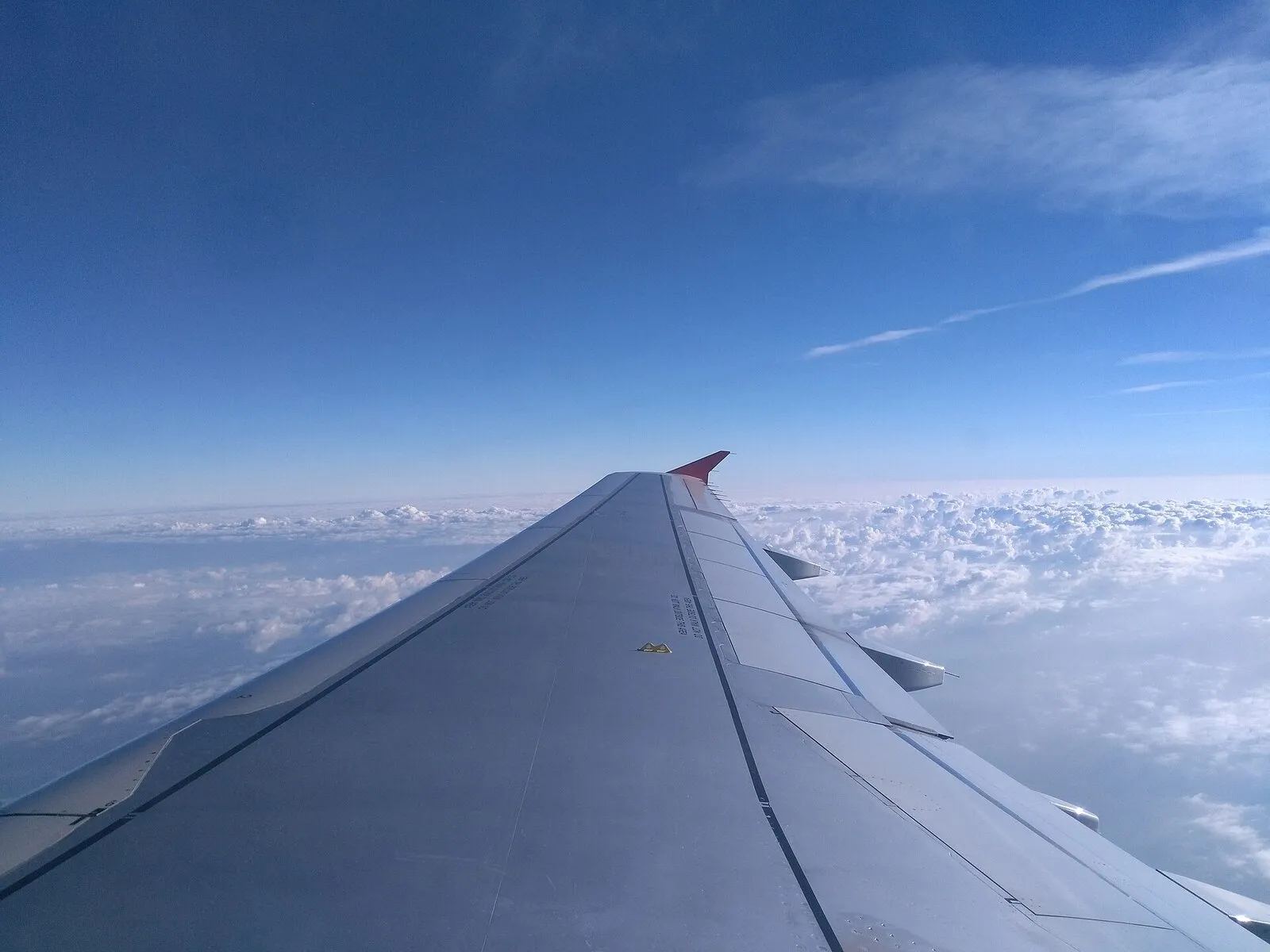
DAN Europe launched this project in 2013: researchers used ultrasound to examine divers on board commercial flights (Alert Diver, 2013). The study published in 2014 followed 32 divers after a week-long diving liveaboard; the flight home left 24 h after the last dive, an interval set by the protocol. At the check before the flight, none had bubbles; in flight, 6 of the 32 did, those who were already producing bubbles after each dive (Cialoni et al., 2014). The Alert Diver report (2015), which places the flight on the return from the Maldives, reports no decompression sickness and suggests that these “bubble-prone” divers wait more than 24 h.
What the study does not allow us to conclude: it tested an interval of 24 h, not a shorter one. Nor does it tell you whether you are one of the “bubble-prone” divers. Finally, it is a research study, not a new recommendation.
What to do with your computer’s “no-fly time”
If your computer shows a countdown before the flight, its calculation rule depends on the model: read the manual for yours. We only reread the help page of one Suunto model here.
On the Suunto D4i, the no-fly time lasts at least 12 h, or the desaturation time when it exceeds 12 h. If the computer goes into error because a stop was missed, it is set to 48 h. When desaturation lasts less than 70 minutes, the no-fly time is not displayed. A blank screen therefore does not release you from the published guidelines. Suunto recommends avoiding any flight during the countdown, and until the DAN and UHMS guidelines have all been met.
List the delays that concern you: the computer’s, the operator’s, your instructor’s, and your insurer’s if it sets one. Use the longest. Never shorten a delay because another source gives a shorter one. To choose a model suited to travel, see how to choose a dive computer. For cover in case of an accident abroad, see how to choose dive insurance.
Liveaboard and holiday: timing the flight home
Count the delay from the moment your last dive ends, when you leave the water, to the time of take-off. On a liveaboard, the dives follow one another: on the author’s cruise to the Similan Islands in December 2025, the whiteboard on day three announced five. So you are at the very least in the “several dives a day or several days” line of the table, and in the mandatory-stops line if you made any.
Before booking the flight home:
- Ask the operator for the last day’s schedule: the time of the last dive, the time of disembarkation, and the delay it requires before flying.
- Place the flight after the longest of the delays in the table that apply to you. If the gap is too short, give up the last dive or plan a night ashore.
- Cost the hotel night: the budget for a diving liveaboard, with the hotel night before the flight home, takes it into account.
- Reread how the end of a cruise unfolds in our guide to choosing a diving liveaboard, down to the last day.
On a shore-based stay, the logic is the same: departure day is not a diving day. In Thailand, the tourism office asks for 24 h; see also our guide to diving in Thailand.
For a stay in Europe or the Canary Islands, the flight home is covered in our guides to diving in Malta and Gozo, diving in Croatia and diving in the Canary Islands.
Special cases
- Dives with mandatory stops. DAN: “well over 18 h”. PADI blog: at least 24 h. Suunto, citing the UHMS: at least 24 h, 48 h if possible.
- Missed safety stop or no-stop limits exceeded. SSI: 24 h. Decompression stop omitted: the Suunto D4i goes into error and sets the no-fly time at 48 h. In both cases, talk to your instructor; at the slightest symptom, call the emergency services and ask for a hyperbaric doctor.
- Deep dives. None of the sources read publishes a figure by depth for an air dive. Alert Diver (DAN Europe, 2009) does report, from a case-control study, that the risk rises with the maximum depth of the dives on the last day before the flight: after a dive to 40 m followed by a 12 h interval, it is 7 times higher than after a dive to 18 m followed by 24 h. DAN places heliox and trimix dives in the “well over 18 h” line. If your last day includes a deep dive, ask your instructor whether the delay should be extended.
- Nitrox. DAN’s guidelines cover air dives. DAN’s page on the 2002 workshop notes that diving on nitrox and breathing oxygen before the flight reduce the risk. It still publishes no shorter delay for nitrox, and we found none elsewhere. So do not shorten the delays in the table: set the computer to the mix you breathed and follow its no-fly time.
- Introductory dive. It is usually a single dive: at DAN, the 12 h line; at PADI (general rule) and in the FFESSM leaflet, 24 h. See also how an introductory dive works.
- Short flight or lower cabin. DAN’s guidelines apply to a cabin between 610 and 2,438 m. DAN Southern Africa (2019) notes that a lower cabin would in theory allow a slightly shorter delay, but advises following the tried and tested guidelines. The length of the flight is not covered in any of the sources read.
- Mountain road or altitude. The PADI blog judges that reaching a 3,000 m summit by car or on foot carries the same risk as flying. It advises a sufficient interval, ideally 24 h, or another route, if the way home goes through altitude. The SSI blog advises avoiding going above 300 m (1,000 feet) within 24 h (original English version).
- After chamber treatment. The delay most often recommended is three days, and it is judged insufficient if symptoms persist (Alert Diver, 2009). The hyperbaric doctor decides. After decompression sickness, the advice on resuming diving published on the website of the FFESSM medical commission asks for a safety delay of 24 h before any climb to altitude, once diving has resumed.
And flying before diving?
None of the sources read (DAN, PADI, SSI, FFESSM) sets a figure between landing and the first dive. The federal magazine Subaqua (11 May 2026) covers it from the angle of fatigue. After a transoceanic flight with jet lag, the body is tired and has lost some adaptations. It considers a readaptation dive desirable, for example for the first dive of a tropical liveaboard. The FFESSM leaflet (2019) also asks you to avoid any dive if you feel tired. Tell the guide if you arrive the same morning.
Symptoms after a flight
DAN recommends seeking medical advice rather than flying if there is any sign of decompression sickness. The 2009 Alert Diver article reports that divers who had flown with symptoms had a 2.7 times higher risk of after-effects than divers who had not.
PDF guide
Liveaboard Diving Guide: Choose, Budget, Book
10-chapter PDF guide and spreadsheet to choose the boat, destination and season, work out the real budget and book a dive liveaboard without surprises.
€49
See the guideFrequently asked questions
How long should you wait before flying after a dive?
The sources do not publish the same figure. DAN advises at least 12 h after a single no-stop dive and at least 18 h after several dives a day or several days of diving (2002 workshop). The PADI blog (updated December 2023) gives 24 h as a general rule, as does the FFESSM leaflet (2019) after any dive. Use the longest of the delays that apply to you, including the one on your dive computer.
How many hours after a diving liveaboard can you fly?
A liveaboard strings dives together over several days: at DAN, that is the repetitive-dive line, at least 18 h. The PADI blog gives 24 h as a general rule, as do the FFESSM and the Thai tourism office. If you made mandatory decompression stops, the delay is longer. Fix the date of the flight with the operator before you book it.
Can you fly the day after a dive with a decompression stop?
It depends on the time of the dive, the time of the flight and the source you follow. After mandatory decompression stops, DAN considers it prudent to wait "well over 18 h", with no precise figure. The PADI blog says at least 24 h, and Suunto relays the UHMS: at least 24 h, 48 h if possible. Ask your instructor, and a hyperbaric doctor if in doubt.
My computer shows a shorter no-fly time than DAN: which one should I follow?
The longer one. Suunto itself recommends not flying until the DAN and UHMS guidelines and the computer's no-fly time have all been met. On the Suunto D4i, the no-fly time is not displayed when desaturation lasts less than 70 minutes: that does not allow you to fly earlier than the published guidelines.
Can you dive just before or just after a flight?
Just before a flight, no: every source read for this page asks for at least 12 h between the last dive and take-off. For diving after a flight, we found no figure from DAN, PADI, SSI or the FFESSM. The federal magazine Subaqua (May 2026) advises a readaptation dive after a long flight with jet lag.
After an introductory dive, do you need to wait before flying?
Yes. An introductory dive is usually a single dive: at DAN, that is the "single no-stop dive" line, at least 12 h. At PADI (general rule) and in the FFESSM leaflet, 24 h. So do not book your introductory dive on the day of your flight home, and ask the instructor looking after you.
Sources
- DAN, Flying After Diving (undated page; "Provisional Flying-After-Diving Guidelines" from the 2002 workshop; air dives, cabin altitude of 610 to 2,438 m), accessed
- DAN, Guidelines for Flying After Diving (workshop summary, proceedings published in 2004; undated page), accessed
- Alert Diver (DAN Europe), Air travel after diving (in French), DAN Europe Staff (15 July 2009), accessed
- Alert Diver (DAN Europe), DAN Research takes off with the Flying Bubbles project (in French), Cristian Pellegrini (15 January 2013), accessed
- Alert Diver (DAN Europe), Flying After Diving: Finally the Facts, Not Just Theory, Stefano Ruia (27 July 2015), accessed
- DAN Southern Africa, Guidelines for Flying After Diving, DAN Research and Medicine (13 June 2019), accessed
- PADI Blog, 10 things never to do immediately after diving (in French), Megan Denny (18 July 2019, updated 17 December 2023), accessed
- SSI Blog, 4 things you should avoid after scuba diving (undated page, machine-translated French version), accessed
- Suunto, Suunto D4i support: Surface and no fly time (undated page; cites DAN and the UHMS), accessed
- FFESSM medical commission, Ma pratique en sécurité (7 March 2021; page in French): no delay before flying found on the site, accessed
- Thailand national tourism office (French-language site), Diving page (undated, © 2026), accessed
- Edition.mv (Maldivian press), the 1991 recreational diving regulation and the proposed reform (28 September 2024), accessed
- Maldives Ministry of Tourism, Maldives Recreational Diving Regulation (2003, unofficial translation), accessed
- FFESSM, French Ministry of Sports, Mediterranean maritime prefecture and maritime gendarmerie, leaflet "Plongée scaphandre, en apnée ou en pêche sous-marine" (scuba, freediving and spearfishing; FFESSM edition 2019; in French), accessed
- French ministry in charge of Sports and FFESSM, poster "Quelques conseils pour plonger en sécurité" (a few tips for diving safely; undated; in French), accessed
- FFESSM medical commission, Conseils de reprise de plongée en cas d'ADD ou d'OPI (advice on resuming diving after DCS or immersion pulmonary oedema; PDF, undated on screen; in French), accessed
- SSI Blog, original English version of article 1269 (undated page), accessed
- Alert Diver (DAN), Altitude and Decompression Sickness, Richard Vann (1 August 2011), accessed
- Cialoni D., Pieri M., Balestra C., Marroni A., Flying After Diving: In-Flight Echocardiography After a Scuba Diving Week, Aviation, Space, and Environmental Medicine, vol. 85, no. 10 (October 2014), DOI 10.3357/ASEM.3805.2014, accessed
- Subaqua (FFESSM magazine), La plongée de réadaptation (readaptation diving), Frédéric Di Meglio (11 May 2026; in French), accessed
- Service-public.gouv.fr, Emergency numbers (checked on 25 August 2026; in French), accessed