How to Choose a Liveaboard: Safety, Boat, Itinerary
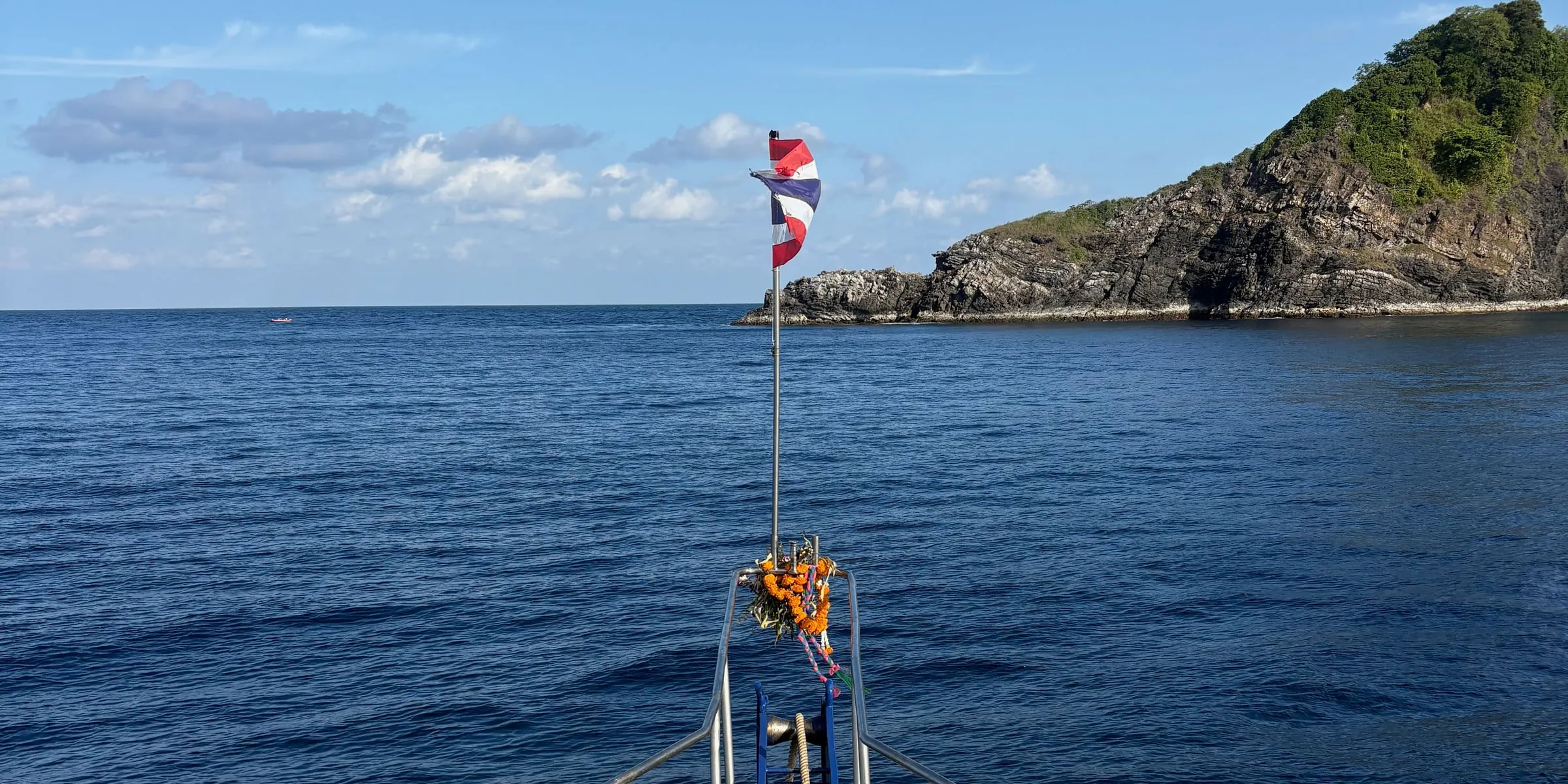
To choose your liveaboard, decide in this order: the format (liveaboard or land-based trip), your level, the safety of the boat, then the itinerary. The level required is set by the operator, itinerary by itinerary: ask for its rule in writing. Before paying, ask the 10 safety questions on this page: oxygen, trained crew, communications, evacuation plan, briefing, the exact boat.
This guide follows that order, through to the contract. The figures come from primary sources (the British maritime accident investigator, DAN, PADI, the French Tourism Code, Thai authorities), all re-read on 2 November 2026. The first-hand examples come from my liveaboard in the Similan Islands, in Thailand, in December 2025.
Liveaboard or land-based trip: choose the format first
Choose a liveaboard if you want to dive a lot, at sites that day boats do not reach, and if you can stand several days at sea. Otherwise, a land-based trip with day outings will give you more flexibility.
A liveaboard lasts 7 nights on average, according to the PADI blog and PADI Travel; shorter and longer ones exist. Mine, in the Similans, ran from 4 to 9 December 2025, departing from Khao Lak. See also this worked example, in the Similans: day trip or multi-day liveaboard.
| Criterion | Liveaboard | Land-based trip |
|---|---|---|
| Dives per day | 3 to 4 on average, sometimes 5 (PADI blog, 2024); at least 3, often 5 (PADI Travel); up to 3 in the Maldives (Alert Diver, DAN Europe, 2017) | 3 at most as a rule, 4 in rare cases (PADI Travel) |
| Sites reachable | a wider area, including sites far from the coast (PADI Travel) | the sites within reach of the centre’s boats (PADI Travel) |
| Accommodation and life on board | 12 to 30 divers as a rule (PADI); cabin with private or shared bathroom depending on the boat (PADI blog) | a room ashore, of your choice |
| Seasickness | little respite when you stay at sea for several days (PADI blog) | limited to the boat trips |
| Flexibility | you can skip a dive, but the boat follows its programme; a non-diving companion stays on board during the dives | rest days and activities ashore; simpler with a non-diver |
| Weather, cancellation and evacuation | the captain changes the itinerary according to the weather (PADI blog); evacuation from a remote boat takes longer and costs more (Alert Diver, 2016) | depends on the distance between the sites and the coast |
Sources: PADI blog (24 February 2024), PADI Travel (undated page), Alert Diver (DAN Europe, 2016 and 2017), re-read on 2 November 2026. The sources do not give the same number of dives per day: we cite each one, without settling on an average.
On my liveaboard, the whiteboard for the third day scheduled five dives, numbered 9 to 13. Plan for this pace in your preparation.
Who a liveaboard is not right for
- You get seasick. “There is little respite when you are at sea for days,” warns the PADI blog. PADI Travel reminds you that in bad weather, you may pitch about all week.
- You need calm and space. The PADI blog also cites life in a group, creaking and things sliding about when the boat moves, and limited luggage space.
- You are travelling with a non-diver. They will spend their days on board while you dive.
- You have few dives. Alert Diver (2016) considers solid experience “not negligible”, on top of full training. A liveaboard calls for good buoyancy control, and may include drift dives, deep reefs, wrecks and night dives.
Are you ready: level, fitness, last dive
The level required is set by the operator, according to the itinerary and its sites, not by your federation. Ask for its rule in writing before paying.
According to the PADI blog (February 2024), some itineraries suit beginners, and some boats even offer the Open Water course on board. Others require an Advanced Open Water or a minimum number of logged dives. Alert Diver (2016) is more cautious: in most cases, you cannot take a beginner course on board. If this is your first trip, see your first liveaboard: what to expect on board.
Your request to the operator comes down to four points:
- the minimum certification, and the maximum depth allowed with your certification;
- the minimum number of logged dives;
- the experience required of current, depth and night diving;
- the equipment required, for example a dive computer.
If your card comes from another agency, check the equivalence between PADI, SSI and FFESSM levels. Our guide to diving in Thailand gives an example of a rule recorded from a liveaboard operator. For current and night diving, see drift diving explained and the level required for night diving.
Your last dive
A liveaboard strings together several dives a day, several days in a row. If your last dive was more than a year ago, take stock before booking, not on the boat. Read getting back to diving after a long break, then compare the refresher options before a departure.
Your health
In an FFESSM club in France, the licence requires a medical certificate stating no contraindication (FFESSM, page of 14 June 2026). An operator abroad sets its own requirements: ask which medical document it expects.
On board, a doctor is not guaranteed: “there is not always a doctor on board,” writes Alert Diver (2016), which advises setting off in good health, with your medication. See also going on a liveaboard with a cold.
Safety: 10 questions to ask before you pay
Put these questions to the seller in writing before paying, then check the answers when you embark. A vague answer, or no answer, is already information.
What the British maritime accident investigator says about Red Sea boats
The MAIB, the UK’s Marine Accident Investigation Branch, published a safety bulletin in February 2025 on the Egyptian diving liveaboards that sail in the Red Sea. According to this bulletin, 16 diving liveaboards were lost in the Red Sea in 5 years, 7 of them in the last 21 months; three of these losses caused many deaths. The investigations are led by Egypt; the United Kingdom is involved. The MAIB’s announcement calls for “extreme caution” in choosing a boat.
The problems the MAIB found on the boats concerned:
- poorly built boats, often modified or lengthened, hence insufficient stability for some;
- defective, out-of-date or sometimes missing lifesaving equipment;
- inadequate fire protection, with fire detectors and extinguishers missing or defective;
- escape routes that went through lockable doors, with no emergency lighting or signage;
- poor or non-existent safety briefings;
- poorly trained crews who knew their boat badly.
The MAIB adds that online ratings and reviews do not guarantee safety, and that customers have been transferred to another boat on arrival in Egypt. Its advice: book through a reputable seller able to guarantee the boat’s safety standards, and ask the crew for a full safety briefing before departure. The FCDO, the British foreign ministry, repeats this advice and notes that safety standards among Red Sea operators vary widely.
This bulletin concerns Egyptian boats in the Red Sea. It does not say that other destinations are safe, nor that every Red Sea boat is dangerous. The 10 questions below apply everywhere.
The 10 questions
| Question | Why ask it | Expected answer | Source |
|---|---|---|---|
| 1. Where is the oxygen, and can I see the kit? | DAN advises asking to inspect the oxygen kit. | Yes. All components present and in working order, cylinder full. No source consulted sets a minimum quantity: ask how long the supply lasts until help arrives. | DAN, 2024 |
| 2. Who in the crew is trained in first aid, oxygen, the defibrillator, emergency communications and firefighting? | The MAIB found poorly trained crews. DAN advises asking whether the crew trains regularly. | Specific roles, certified training, regular drills. | DAN, 2024; MAIB, 2025 |
| 3. How does the boat call for help and reach its office ashore? | A simple radio may be enough; far from the coast, DAN advises asking how the crew reaches the operator’s office. | Radio, and according to Alert Diver (2016) radar and GPS; a link with the operator’s office. | DAN, 2024; Alert Diver, 2016 |
| 4. What is the written plan in case of a diving accident: which recompression chamber, how far, by what means of evacuation, and who pays? | DAN recommends a written plan for every emergency. Evacuation from a remote boat takes longer and costs more (Alert Diver, 2016). In Egypt, rescue services set out only once payment is guaranteed (FCDO). | A plan you can read, the name of the chamber, the means of evacuation and what your insurance covers. | DAN, 2024; Alert Diver, 2016; FCDO |
| 5. Will there be a safety briefing before departure? | The MAIB found poor or missing briefings. | Yes, before the boat leaves: alarm signal, escape routes, muster points, location and use of safety equipment, abandon-ship procedure. | MAIB, 2025; FCDO |
| 6. How many life jackets, liferafts, extinguishers and smoke detectors are there, and where are they? | The MAIB found defective or missing lifesaving and fire equipment. | At least one accessible life jacket per person on board and extinguishers throughout the boat (DAN); liferafts or lifesaving craft and smoke detectors (Alert Diver, 2016). | DAN, 2024; Alert Diver, 2016; MAIB, 2025 |
| 7. Has the boat been modified or lengthened? When was it inspected, and by which authority? | The MAIB links modifications to insufficient stability. | A precise, dated answer. An inspection document does not in itself prove the boat is safe. | MAIB, 2025 |
| 8. Which exact boat have I booked, and what happens if it is replaced? | Customers have been transferred to another boat on arrival (MAIB). | The name of the boat in the contract, and what the contract provides in case of a change. | MAIB, 2025 |
| 9. How are the dives organised: how many divers per guide, what depth and time limits, how many dives a day, night dives, from the boat or from a tender? Is a surface marker buoy needed? | Alert Diver (2016) advises asking for the maximum number of dives a day and the limits on time, depth and reserve pressure. | Written figures, compatible with your level. No source consulted sets a number of divers per guide: judge the answer with your instructor. | Alert Diver, 2016 |
| 10. Who decides to change the itinerary or cancel in bad weather, and what is refunded? | The captain watches the weather and replaces sites if needed (PADI blog). | The captain decides; the contract says what is refunded, or not. | PADI blog, 2024 |
Sources for the table: DAN, Alert Diver, “What To Look for on a Dive Boat” (9 October 2024); Alert Diver (DAN Europe), 26 January 2016; MAIB bulletin SB1/2025; FCDO, Egypt page; PADI blog (24 February 2024). Pages re-read on 2 November 2026.
Add a question about the compressor: is it on deck or below, and where is its air intake? Alert Diver (2016) points out the risk of the compressor drawing in contaminated air.
Judging the answers, without relying on reviews
- Demand written answers from the seller, before paying. According to the MAIB, online ratings and reviews do not guarantee a boat’s safety.
- When you embark, check. Attend the safety briefing and ask for it if it does not take place (MAIB). Locate your life jacket, the extinguishers and the escape routes. Ask to see the oxygen kit (DAN).
- Learn the alarms. DAN reminds us that you do not react the same way to an abandon-ship alarm and a man-overboard alarm.
- No liveaboard is risk-free. According to DAN, these measures do not necessarily prevent an incident, but they can change how serious it is.
Choosing the boat
Once safety is checked, compare the size of the boat, the cabins, the layout of the dive deck, the equipment and nitrox, then the cancellation policy.
- Size. Boats generally take 12 to 30 divers, according to the PADI blog and PADI Travel. This is an agency benchmark, not a standard.
- Cabins. Private or shared bathroom depending on the boat; air conditioning matters in hot regions (PADI blog). The blog advises a small extension lead, because sockets are often badly placed.
- Dive deck. Alert Diver (2016) advises a well-organised space, attachment points for equipment and a large dive platform at the stern.
- Platform or tender. According to the PADI blog, most liveaboards put divers in the water from small tenders; some small boats dive straight from their platform.
- Equipment. Nothing can be bought at sea: bring spare parts (Alert Diver, 2016). Ask what can be rented on board and at what price, and read our guide to buying or renting your equipment. If the operator requires a computer, see how to choose your dive computer.
- Nitrox. According to PADI, enriched air contains less nitrogen than air: you can make longer dives and shorter surface intervals. PADI teaches it in a specialty course, Enriched Air Diver: ask the operator which certification it requires, whether nitrox is available and whether it is included in the price. For setting your computer, see your instructor.
- Cancellation. Read the cancellation policy before paying (see the Booking section).
Choosing the itinerary
Read an itinerary using eight criteria: the length, the season, the currents and the level required, the type of sites (reef, wreck, big animals), the port of embarkation, the distance to the recompression chamber, the marine park and its entry fees, and the programme for the last day. For the season, see where to dive by month; for the sites, the world’s best dive sites. See also an example in the Maldives: level, season, green tax.
Example: the Similans and Richelieu Rock from Khao Lak
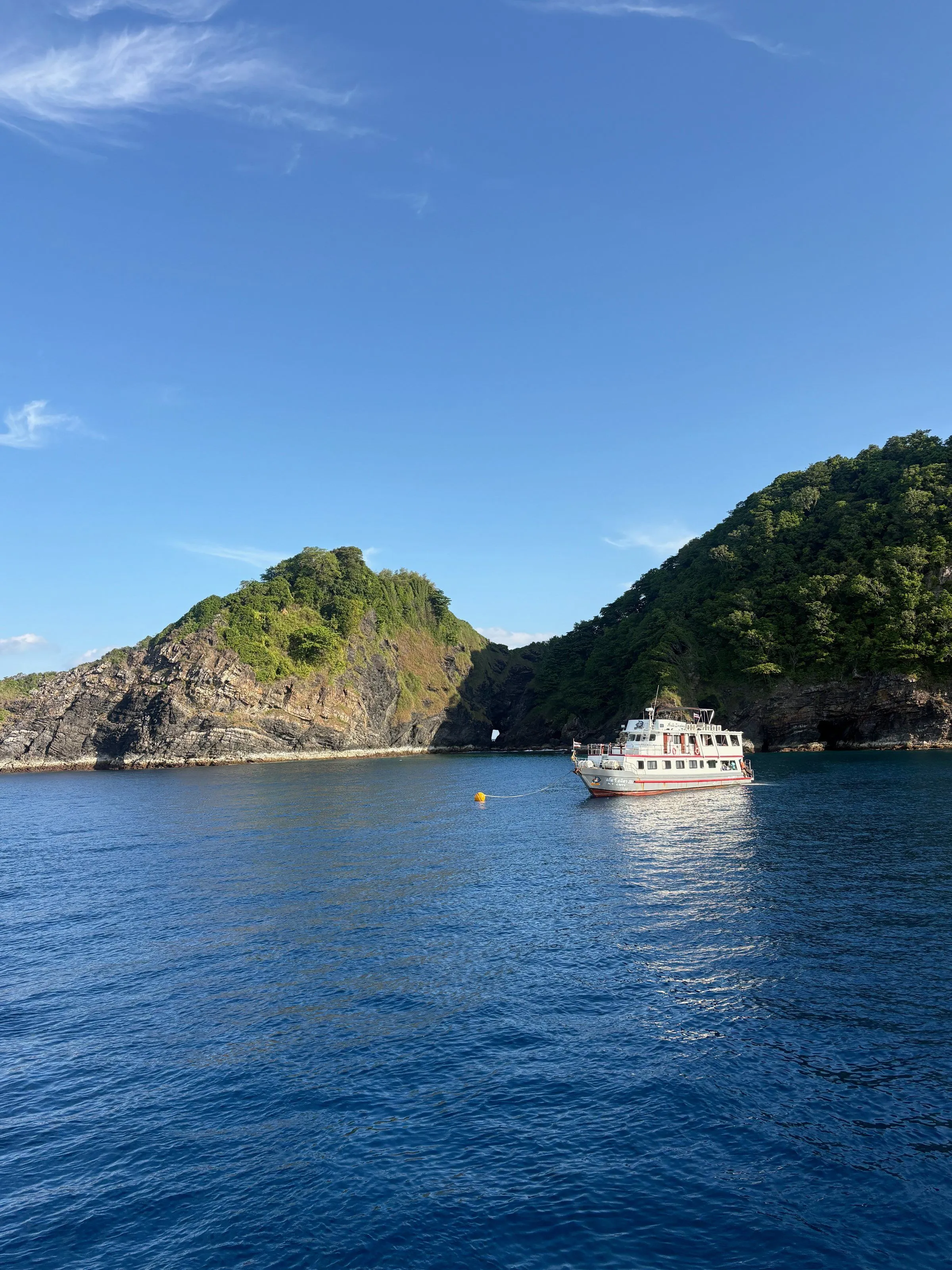
My December 2025 itinerary left from Khao Lak, in Thailand. It took in the Similans (briefings for Deep Six, West of Eden, Elephant Head Rock, Three Trees and North Point), then Koh Bon, Koh Tachai and Richelieu Rock.
What to check on this kind of itinerary:
- The season. The Similan national park closes every year during the monsoon, for about five months. In 2025, the closure ran from 16 May to 14 October (Thai government notice of 15 May 2025), and the park reopened on 15 October 2026 (Tourism Authority of Thailand, 20 October 2026). Check the dates for the year of your departure. See the Similan park calendar.
- Park entry. The Similan park has sold electronic tickets since October 2025 (Tourism Authority of Thailand). The official sources consulted do not give the amount of the entry fees: ask the operator and add it to the real budget of a liveaboard, extras included.
- The level and the chamber. Ask for the level required for each site, and the name of the nearest recompression chamber. The guide to diving in Thailand, from the Similans to Richelieu Rock details the season, the level and the emergency services on site.
Red Sea: read the travel advice first
Before booking a liveaboard in the Red Sea, read the Egypt page of the French foreign ministry. On 2 November 2026, its Latest news section shows an alert titled “Maritime safety in the Red Sea and the Bab-el-Mandeb Strait” (updated 4 March 2026), which concerns leisure sailing. Its Safety section (updated 21 September 2026) devotes a paragraph to diving. It asks you to judge the professionalism of the supervision and the reliability of the equipment, to have diving insurance but also medical and repatriation insurance, to check on a liveaboard that the boat and its passengers are covered by an insurance policy, and to make sure a recompression chamber is nearby. Also read the MAIB bulletin cited above. To choose your base in the Red Sea, compare Hurghada and Marsa Alam. For any other country, consult its page in the France Diplomatie travel advice (in French).
The last day: think about the flight
Do not fly on the day of your last dive. DAN recommends at least 18 h after repetitive dives over several days and clearly more than 18 h after dives with compulsory decompression stops; it specifies that longer waits may be needed after an immersion and exertion, and other benchmarks go further. Check the programme for the last day and your computer’s indication, ask your instructor for advice, and see how many hours to wait before flying according to each source.
Booking: contract, cancellation, insurance
Before paying, know which contract you are signing, what it provides in case of cancellation and what your insurance covers.
Package or not
Ask the seller in writing whether your contract is a package within the meaning of the French Tourism Code (Code du tourisme). Article L211-2 calls a package the combination of at least two types of travel services (transport, accommodation, car rental or another tourist service), for the same trip of more than 24 hours or including an overnight stay, sold under certain conditions: by a single trader, at an all-inclusive price or under the name “package”, for example. These are rules specific to France.
For a package, article L211-14 provides that:
- you may terminate the contract at any time before departure, for “appropriate and justifiable” termination fees;
- you may terminate it free of charge, with a full refund, if exceptional and unavoidable circumstances arise at the destination or in its immediate vicinity and have significant consequences for the performance of the contract or for your transport to the destination;
- the organiser may cancel it with a full refund if the minimum number of participants set in the contract is not reached (at the latest 20 days before departure for a trip of more than six days), or in case of exceptional and unavoidable circumstances.
If you book directly with an operator abroad, ask which law applies and read its cancellation terms before paying. See also cancelling a diving liveaboard: deposit and fees.
Insurance
Check these points:
- Evacuation and rescue. In Egypt, the FCDO states that an air or sea rescue can cost more than US$4,000 an hour, and that the authorities launch rescues only once payment is guaranteed.
- The recompression chamber. The PADI blog considers suitable diving insurance essential on a liveaboard, covering medical evacuation, even from a remote site, and decompression treatment, which is expensive.
- The maximum depth. According to the FCDO, diving beyond the depth set by your policy voids your cover.
- The dives covered. Check that diving on a liveaboard, abroad, falls within the cover.
- The boat’s insurance. On a liveaboard in Egypt, France Diplomatie advises checking that the boat and its passengers are covered by an insurance policy.
To compare policies, read how to choose diving insurance. To cost your liveaboard item by item, the Liveaboard Diving Guide offers a spreadsheet to fill in; it is an option, not a prerequisite.
Checklist before booking
| To do | Done |
|---|---|
| Format chosen: liveaboard or land-based trip, seasickness and companion taken into account | ☐ |
| Operator’s level rule received in writing | ☐ |
| Last dive less than a year ago, or a refresher planned | ☐ |
| Medical opinion up to date, document required by the operator ready | ☐ |
| Written answers to the 10 safety questions | ☐ |
| Exact name of the boat written in the contract | ☐ |
| Name of the nearest recompression chamber and evacuation plan known | ☐ |
| Season and marine park entry fees checked | ☐ |
| Country’s travel advice read | ☐ |
| Contract: package or not, cancellation terms read | ☐ |
| Insurance: evacuation, chamber, maximum depth | ☐ |
| Return flight compatible with the last dive | ☐ |
For luggage, see what to pack for a liveaboard.
To go further: the best liveaboard destinations by level, or all the pages in the Liveaboards section.
PDF guide
Liveaboard Diving Guide: Choose, Budget, Book
10-chapter PDF guide and spreadsheet to choose the boat, destination and season, work out the real budget and book a dive liveaboard without surprises.
€49
See the guideFrequently asked questions
Is a liveaboard suitable for a beginner?
Sometimes. According to the PADI blog (February 2024), some itineraries suit beginners, while others require an Advanced Open Water or a minimum number of logged dives. Alert Diver (DAN Europe, 2016) specifies that in most cases you cannot take a beginner course on board, and that you need good buoyancy control for drift dives or night dives. Ask for the operator's rule in writing.
Liveaboard or land-based diving trip: which should I choose?
A liveaboard gives access to more remote sites and more dives: 3 to 4 a day on average according to the PADI blog (2024), against 3 at most as a rule for a shore-based centre according to PADI Travel. A land-based trip suits you better if you get seasick, if you travel with a non-diver or if you want rest days.
How many dives a day on a liveaboard?
Sources differ. The PADI blog (February 2024) cites 3 to 4 dives a day on average, sometimes 5. PADI Travel writes at least 3, often 5. An Alert Diver article (DAN Europe, 2017) about the Maldives says up to 3. On my liveaboard in the Similans in December 2025, the programme for the third day had five.
Is nitrox compulsory or included?
It is not compulsory. According to PADI, enriched air contains less nitrogen than air: you can make longer dives and shorter surface intervals. PADI teaches it in a specialty course, Enriched Air Diver. Ask the operator which certification it requires, whether nitrox is available on board and whether it is included in the price, then add it to your budget.
What happens in case of a diving accident on board?
Everything depends on the boat's emergency plan: oxygen, communications, evacuation to a recompression chamber. DAN advises asking to see the oxygen kit and the written emergency plan. There is not always a doctor on board (Alert Diver, 2016). Check that your insurance covers evacuation: in Egypt, according to the British FCDO, a rescue can cost more than US$4,000 an hour.
Can I fly at the end of the liveaboard?
Not on the day of your last dive. DAN recommends at least 12 h after a single dive with no decompression stop, 18 h after repetitive dives over several days, and clearly more than 18 h after dives with decompression stops (recommendations published in 2004). DAN previously suggested 24 h after any recreational dive. Also check your computer and ask your instructor for advice.
Sources
- MAIB (Marine Accident Investigation Branch, United Kingdom), Safety Bulletin SB1/2025: Safety issues on Egyptian liveaboard dive boats operating in the Red Sea (February 2025, PDF), accessed
- GOV.UK, Safety Bulletin 1/2025 published (MAIB announcement, 6 February 2025), accessed
- FCDO (United Kingdom), Egypt travel advice: Safety and security, sections Watersports and cruises and Insurance for adventure activities (no date shown), accessed
- France Diplomatie (French Ministry for Europe and Foreign Affairs), Travel advice: Egypt, in French (last updated 10 September 2026; maritime safety alert for the Red Sea and the Bab-el-Mandeb Strait, updated 4 March 2026), accessed
- France Diplomatie, Egypt: travel advice, Safety section, paragraph on scuba diving, in French (updated 21 September 2026), accessed
- France Diplomatie, Travel advice: country index, in French, accessed
- DAN World, Alert Diver (Q3 2024), What To Look for on a Dive Boat (9 October 2024), accessed
- Alert Diver (DAN Europe), 6 tips for safe dive safaris and liveaboards, in French, Caren Liebscher (26 January 2016), accessed
- Alert Diver (DAN Europe), 20 reasons to choose a liveaboard in the Maldives, in French, Cristian Pellegrini (23 August 2017), accessed
- DAN, Guidelines for Flying After Diving (recommendations from the Flying After Diving workshop, proceedings published in 2004), accessed
- Alert Diver (DAN Europe), Flying after diving, in French (15 July 2009; recommendations from the 2002 DAN seminar, published in 2004), accessed
- PADI, official blog: FAQs on liveaboards, in French, Sarah Morlock (24 February 2024), accessed
- PADI Travel, Liveaboard diving: your guide, in French (undated page), accessed
- PADI, Enriched Air Diver course: official page, accessed
- FFESSM, The medical certificate, in French (page of 14 June 2026), accessed
- French Tourism Code (Code du tourisme), article L211-2 (definition of a package), in force since 1 July 2018, Légifrance, accessed
- French Tourism Code (Code du tourisme), article L211-14 (termination of the contract before departure), in force since 1 July 2018, Légifrance, accessed
- Government of Thailand (PRD), Similan Islands and Surin Islands to be temporarily closed from 16 May to 14 Oct 2025 (15 May 2025), accessed
- TAT Newsroom (Tourism Authority of Thailand), The Andaman Opens Its Doors Again (20 October 2026), accessed