How to start scuba diving: steps, costs and levels
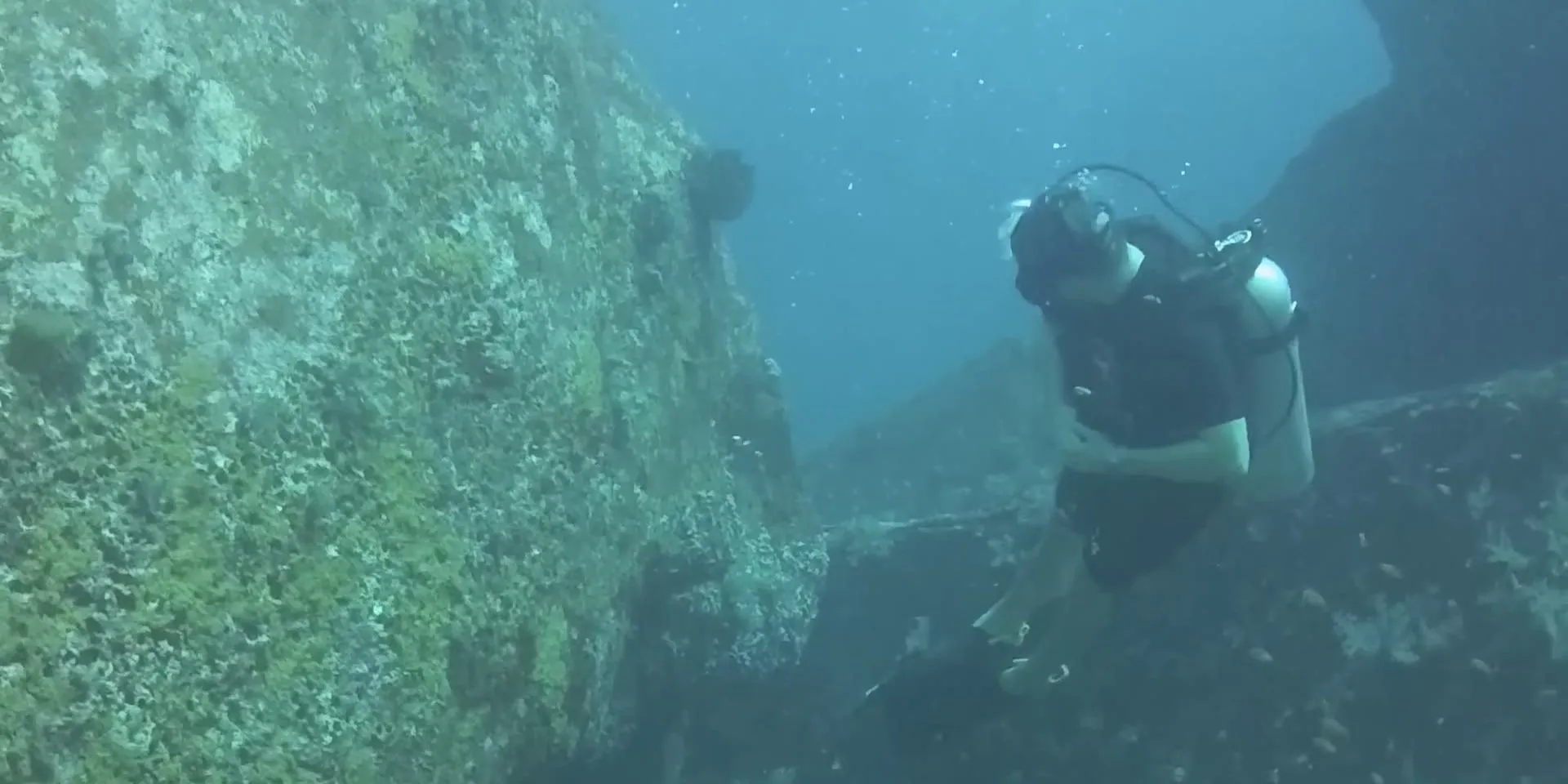
To start scuba diving, you need a medical certificate, a training structure (a non-profit club or a centre) and a first certification: Level 1 of the FFESSM (the French federation), or the Open Water of PADI or SSI. The course takes a few days in a centre, or is prepared over the sports year in a club. On two rate cards published for 2026, the budget runs from €290 (a club’s annual membership, licence included) to €475 not including any certification fees (a package of five dives in a centre, plus the licence), before the medical certificate and small equipment. The first certification opens supervised dives down to 18 or 20 m depending on the pathway.
This guide covers scuba diving (with a tank). Starting freediving is a different discipline, which it does not cover.
The pathway in 5 steps
Five steps lead from zero to your first dives as a certified diver. Only the first is optional.
| Step | How long | How much (surveyed in November 2026) | Who decides |
|---|---|---|---|
| 1. Try dive (optional) | one dive | see our try dive page | the structure that welcomes you |
| 2. Medical certificate | one consultation | the price of the consultation | the doctor |
| 3. Choosing your structure and organisation | at your own pace | adult FFESSM licence: €50 (federation pathway) | you |
| 4. Course: theory, pool or protected water, dives in open water | 2 to 4 days at the very least (PADI), over the sports year in a club | €290 to €475 on our two examples, not including any certification fees | the instructor signs off the skills; the structure issues the certification |
| 5. First dives, then next level | at your own pace | example: €40 per dive, not including equipment and tank filling | the dive director organises; the leader conducts the dive |
For step 3, read our page to compare FFESSM, PADI and SSI before choosing. For step 4 with the FFESSM, all the skills must be acquired within the 15 months following the first one signed off. The certification is issued by an affiliated club or an approved commercial structure: by its president or manager, or by an instructor of E3 level at least with their authorisation. There is no written exam: skills are assessed continuously, and the theory orally, during practical scenarios (training manual, December 2025 version).
For the theory, the FFESSM offers Level 1 training videos as e-learning, accessible from your personal FFESSM account (federation news item of 14 November 2025).
Do you need a try dive first?
Not necessarily as a separate step, with the FFESSM. The Level 1 training manual (December 2025 version) lists the try dive among the entry conditions, but builds it into the course: the first scuba immersion of the course is a try dive, unless you have already done one. A separate try dive, before enrolling, is therefore not required.
A standalone try dive stays useful if you are hesitating: it lets you try before committing the price of a course. With PADI, the equivalent is called Discover Scuba Diving: from age 10, 12 m at most, and no right to dive once the experience is over (PADI blog, 27 February 2024).
For how it works, the price and the age, see the try dive: how it works, price and age. See also how to give a try dive to a loved one.
The conditions to start: age, swimming, health
Minimum age
The minimum age runs from 10 to 12 depending on the organisation, with depth limits for the youngest.
| Organisation and certification | Minimum age | Limits for young people | Source |
|---|---|---|---|
| FFESSM, Level 1 | 12 years at the start of the course and when the certification is issued | legal guardian’s authorisation for minors | Level 1 training manual, December 2025 version |
| PADI, Open Water Diver | 10 years | from 10 to 14, Junior certification, converted to Open Water at 15; 10-11 years: 12 m, with a PADI professional or a certified parent; 12-14 years: 18 m, with a certified adult | PADI course page and PADI blog of 27 February 2024 |
| SSI, Open Water Diver | 10 years | not detailed on the course page | divessi.com |
Sources re-read on 1 November 2026. The Level 1 sheet on the federation’s website, dated 2022, adds the agreement of the head of the structure below age 14: check with yours before enrolling a teenager. The detail is in children’s diving: courses by age and by agency. For a younger child, at the surface, see snorkelling for children: age and equipment.
Can you dive without knowing how to swim?
Not to get a first certification: each organisation checks that you can swim, in its own way:
- PADI: swim 200 m without stopping, with no time limit, or 300 m with mask, fins and snorkel, and float or tread water for 10 minutes without help.
- SSI: be “fit to swim”, with no distance given on the course page.
- FFESSM: the Level 1 manual sets no swimming test among its entry conditions. During the course, it assesses surface swims of about 100 m with fins, mask and snorkel and 50 m equipped, untimed. A club may ask for one: the diving section of the Levallois Sporting Club requires swimming 50 m without stopping or support, and reserves the right to test it at the first session.
If water worries you, tell the instructor before you enrol: they adapt the progression. To discover the environment at the surface, see also snorkelling, without a tank.
Medical certificate
With the FFESSM, the licence and scuba diving require a medical certificate of no contraindication (CACI), every year, whatever the age. The try dive, the PE12, the Pass Découverte, the Pass Apnée and the 1st étoile de mer are done without a licence or CACI (medical regulations, art. 8-8; 2025 federation table). The CACI must be less than a year old when the licence is issued (art. 8-1) and it is valid for one year (art. 8). The 2025 federation table, which predates these regulations, also asks that it be less than a year old on the day of the dive or of a certification test. The health questionnaire that replaces the CACI for minors concerns other federation disciplines, not scuba diving.
Who signs it? As a general rule, any doctor authorised to practise. A federation doctor, a sports doctor or a doctor qualified in underwater medicine becomes compulsory in a few cases, such as resuming after a diving accident. With a condition marked with an asterisk in the indicative list of the medical commission (June 2025), the certificate “can only be issued by a specific doctor”. For any other chronic condition or long-term treatment, we also advise a federation or diving doctor. The FFESSM offers a 2026 CACI template for your doctor to fill in. For the detail, see the diving CACI: who signs it and for how long.
What it commits. The CACI commits the responsibility of the doctor who issues it. If your health changes or after a diving accident, the medical regulations say it lapses (art. 8) and its validity is suspended (art. 8-8).
The federation’s medical commission publishes the list of conditions and individual cases to be assessed and a directory to find a federation doctor. With PADI, you fill in a medical questionnaire; if an answer calls for it, a doctor’s approval is needed before you enter the water.
The three starting pathways
This guide compares three first certifications: Level 1 of the FFESSM, the PADI Open Water Diver and the SSI one. They differ mainly in entry age, depth and how you dive afterwards.
| FFESSM, Level 1 (PE20) | PADI, Open Water Diver | SSI, Open Water Diver | |
|---|---|---|---|
| Minimum age | 12 years | 10 years (Junior up to 14) | 10 years |
| Depth | 20 m, in a group with a leader | 18 m (12 m for 10-11-year-olds) | 18 m, maximum training depth |
| Course content | skills signed off continuously; about 5 open water dives suggested | 5 to 10 h e-learning, pool, 4 open water dives | 6 theory sessions, 6 in a pool or protected water, 4 dives in open water |
| Announced duration | 15 months at most to sign off everything | 2 to 4 days at the very least | 16 to 32, unit not specified by SSI |
| Prerequisites | federation licence, CACI | swimming and flotation, medical questionnaire | fit to swim, medical questionnaire (a doctor’s opinion if needed) |
| Recognition | dual FFESSM and CMAS 1-star certification | PADI card | SSI card |
Sources: FFESSM Level 1 manual (December 2025) and federation sheet for Level 1; official PADI and SSI course pages, re-read on 1 November 2026. With the FFESSM, a certification taken in an artificial environment (pool, pit) must be followed by at least 4 dives in open water within twelve months, recorded in the logbook. See how to keep your logbook from the first dive. Other organisations exist; this guide sticks to these three pathways.
To find out what your card is worth from one agency to another, see the equivalence between PADI, SSI and FFESSM levels.
Club or centre: where to train
The non-profit club suits you if you can train every week near home; the centre, if you want a certification in a few days.
The non-profit club. According to the FFESSM, training sessions are generally held in a pool, once or twice a week, with volunteer instructors. Your subscription and your licence make you a member of the club and of the federation for a year. Example: at Levallois, the 2026-2027 season runs from 8 September to 24 June, and beginners join the diving pit from January or February.
The approved commercial centre (SCA). Instructors are paid there, the offer is regular, sometimes all year round, and the schedule is flexible. The FFESSM warns that the cost of a course there is not the same as in a club. Example of a centre, whose FFESSM approval we could not verify: the École de plongée des Issambres (Var), which announces FFESSM and ANMP courses, offers a Level 1 in 5 open water dives, from a boat.
Five traps before you pay
- Buying your equipment too early. The Levallois club only asks for mask, fins and snorkel; the Issambres centre supplies training equipment. Before any purchase, ask the structure what is supplied, then see what to buy, and what is better to rent, to get started.
- Paying for a package without knowing what it includes. Ask whether the licence, the certification card, the boat, the equipment and the theory are included. With PADI as with SSI, the online module covers only the theory: the practical part is paid separately, at the centre.
- Choosing a structure that is neither affiliated nor approved. Only an affiliated club or an approved structure issues FFESSM Level 1: check it in the federation’s directory of structures. PADI and SSI each have a dive centre locator on their website.
- Accepting a course with no open water dives. Ask how many dives at sea or in a lake are included, and when.
- Forgetting the date of your medical certificate. With the FFESSM, it is valid for one year (medical regulations, art. 8), and the 2025 federation table asks that it be less than a year old on the day of the dive or of a certification test, not only at enrolment.
What it really costs (2026)
On two rate cards published for 2026, a first level costs €290 to €475 not including any certification fees, before the medical certificate and small equipment. These are two examples, not an average.
| Item | Amount | Source and date |
|---|---|---|
| FFESSM adult licence (16 and over) | €50.00 | FFESSM, 2026/2027 season |
| FFESSM young person’s licence (12 to under 16) | €31.50 | FFESSM, 2026/2027 season |
| Creation of the certification card | €16.00 | FFESSM, 2026/2027 season |
| Individual accident insurance (additional) | €25 (Loisir 1) to €51 (Loisir 3) | FFESSM, 2026/2027 season |
| Medical certificate | price of the consultation | your doctor |
| Annual club membership, licence included | €290 (adult), €190 (young person born between 2010 and 2012) | Levallois Sporting Club, 2026-2027 |
| Mask, fins, snorkel | about €80 | estimate by the same club |
| Level 1 package in a centre, 5 dives (organisation issuing the certification to be asked of the centre) | €420 | Club de Plongée les Issambres, 2026 rates |
| SSI Open Water in a centre | €495 (6 dives and digital kit; SSI digital certification fee of €45 listed separately in the same rate card) | same centre |
| FFESSM licence charged by this centre | €55 | same centre |
All FFESSM licence holders benefit from the third-party liability insurance and legal assistance taken out by the federation; individual accident insurance is taken out on top. To compare contracts, read our guide to choosing your diving insurance.
Club scenario (Levallois, adult, 2026-2027). €290 membership, licence included, and about €80 for mask, fins and snorkel. The rate card gives neither the price of the certification card nor that of any dives at sea. Add the medical consultation.
Centre scenario (Issambres, 2026). €420 for 5 dives, equipment and tank filling included according to the centre’s rate card, plus €55 for the FFESSM licence. The rate card lists certification fees separately (€40 for an ANMP card, €45 for a digital SSI certification), but none for an FFESSM card: ask the centre which organisation issues the Level 1 and whether the card is included. Add the medical consultation.
A dive computer does not appear in this table. Before buying one, ask your structure whether it lends them, then see how to choose a dive computer.
For prices by region and by organisation, see the price of a diving course in 2026, item by item. The 2026/2027 federation rate card has applied since 1 September 2026: check the one in force.
What your first level allows (and does not allow)
FFESSM Level 1 lets you dive down to 20 m, in a group, with a dive group leader who conducts the dive. These dives take place in an organisation set up by a dive director, according to the rules of the Code du sport (the French Sports Code; training manual, December 2025 version). Level 1 therefore does not allow you to dive without supervision.
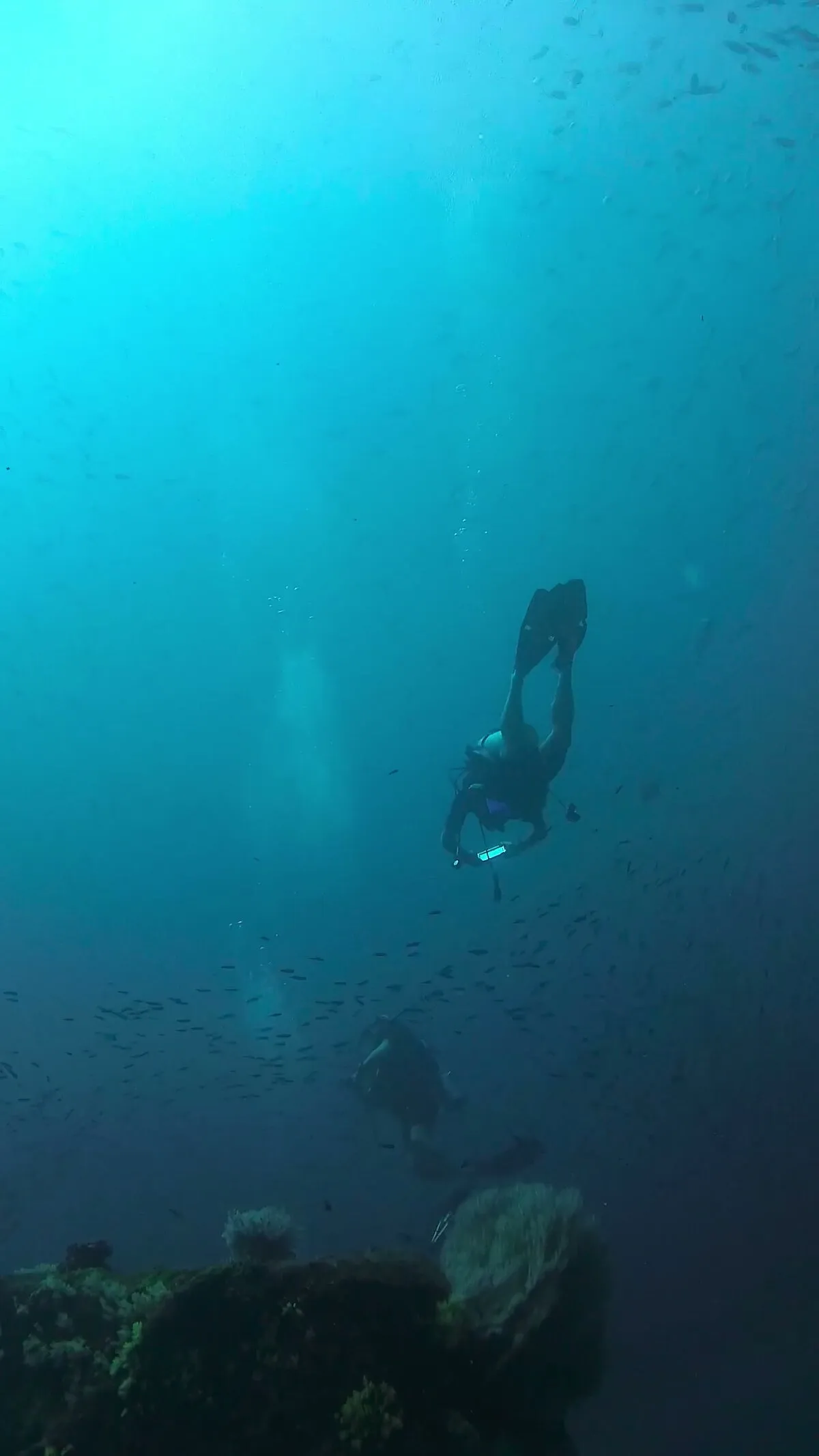
With PADI, the Open Water gives, according to the agency, the freedom to dive with a buddy or with a professional, down to 18 m for an adult. With SSI, the course page states 18 m as the maximum training depth. In France, ask the structure that welcomes you what your card allows you to do with them.
These depths are limits, not goals. The federation’s Level 1 sheet lists among the targeted skills: understanding your supervisor’s briefing. On the author’s cruise to the Similan Islands (Thailand) in December 2025, the dive sites were presented on board on a screen, during the briefing.
Abroad, the FFESSM states that the dual FFESSM and CMAS certification lets you dive in more than 100 countries. Before choosing a destination, compare the announced depth with your certification: our page on the best dive sites in the world and what they ask of a first level helps you with that.
And after? Level 2 is not the only next step. The FFESSM offers two intermediate qualifications, which together make up Level 2: the PE40, to dive deeper while staying accompanied by a leader, and the PA20, to dive with other divers without systematic supervision (federation news item of 14 October 2026). See FFESSM Level 2: PE40, PA20 and prerequisites.
PDF guide
First scuba certification: €210 to €750 by offer
13-chapter PDF guide: club, centre or holiday, three quotes costed line by line, 15 questions to ask before paying and 12 worksheets to fill in.
€24
See the guideFrequently asked questions
What is the minimum age to start scuba diving?
It depends on the organisation. With the FFESSM, Level 1 is open from age 12, with a legal guardian's authorisation for minors (training manual, December 2025 version). PADI and SSI open the Open Water from age 10; with PADI, 10 to 14-year-olds get a Junior certification, limited to 12 m before age 12 and to 18 m from 12 to 14. Talk to the instructor before enrolling a child.
How long does it take to get your Level 1?
There is no fixed duration. With the FFESSM, all the Level 1 skills must be acquired within the 15 months following the first one signed off (training manual, December 2025 version). At Levallois, for example, the club handles the Level 1 during its sports year, from 8 September 2026 to 24 June 2027, and beginners join the diving pit from January or February; with PADI, the Open Water takes 2 to 4 days at the very least. The instructor signs off each skill, at your pace.
Is it possible to dive without knowing how to swim?
Not to get a first certification: each organisation checks that you can swim, in its own way. PADI asks you to swim 200 m without stopping, or 300 m with mask, fins and snorkel, and to float for 10 minutes; SSI asks you to be “fit to swim”. The FFESSM Level 1 manual sets no swimming test at entry, but a club may require one: the Levallois club asks for 50 m without stopping. If water worries you, tell the instructor before you start.
Is it possible to dive without a certification?
Yes, but only to discover diving, and accompanied: that is the try dive (baptême) with the FFESSM, or the Discover Scuba Diving with PADI (from age 10, 12 m at most). According to PADI, this experience gives no right to dive once it is over. To dive regularly, you need a certification. With the FFESSM, the first dive of the Level 1 course counts as a try dive if you have never done one.
Do you need a medical certificate to start scuba diving?
Yes to train with the FFESSM: the licence requires a certificate of no contraindication (CACI) less than a year old, for adults and minors alike, and the 2025 federation table also asks for it on the day of a certification test. As a general rule, any doctor can sign it, with exceptions such as resuming after a diving accident or a condition marked with an asterisk in the June 2025 indicative list, which reserves the certificate for a “specific doctor”; for any other chronic condition or long-term treatment, we also advise a federation or diving doctor. With PADI and SSI, a medical questionnaire is enough as long as no answer calls for a doctor's opinion. If in doubt about your health, see a doctor, ideally a federation or hyperbaric doctor.
Is it possible to dive alone as a beginner?
No. FFESSM Level 1 divers dive in a group (palanquée), with a dive group leader, within an organisation set up by a dive director. PADI presents the Open Water as a certification for diving with a buddy or with a professional. To gain autonomy, the FFESSM then offers the PA20 qualification, one of the two components of Level 2.
Sources
- FFESSM, technical training manual, Diver Level 1 (PE20), December 2025 version (in French), accessed
- FFESSM, Diver Level 1 (page of 24 February 2022, in French), accessed
- FFESSM, Rates for the 2026/2027 season, valid from 1 September 2026 (in French), accessed
- FFESSM, The medical certificate (page of 14 June 2026, in French), accessed
- FFESSM, CACI template 2026 (June 2026 version, in French), accessed
- FFESSM, CACI summary table 2025 (in French), accessed
- FFESSM, Medical regulations, validated by the national steering committee of October 2025: articles 8, 8-1 and 8-8 (PDF, in French), accessed
- FFESSM medical commission, Contraindications to scuba diving, indicative list, June 2025 version (PDF, in French), accessed
- FFESSM medical commission, Medical certificate and practice of the activity (24 February 2025, in French), accessed
- FFESSM, Practising in a non-profit structure (in French), accessed
- FFESSM, Practising in an approved commercial structure (in French), accessed
- FFESSM, N1, N2, N3... What if you chose your own pathway? (14 October 2026, in French), accessed
- FFESSM, The FFESSM Level 1 e-learning gets a makeover (14 November 2025, in French), accessed
- PADI, Open Water Diver: official course page, accessed
- PADI, Scuba Certification FAQ (swimming requirements), accessed
- PADI, official blog: PADI Diving Restrictions (27 February 2024), accessed
- SSI, Open Water Diver: official course page, accessed
- Levallois Sporting Club, diving section: rates and conditions 2026-2027 (in French), accessed
- Club de Plongée les Issambres, 2026 rates (in French), accessed
- Côte d'Azur France (official tourism site), Level 1 diving course at Les Issambres (in French), accessed