Snorkelling for beginners: gear, full-face masks, safety
Snorkelling means swimming at the surface, face in the water, breathing through a snorkel. It needs neither a cylinder nor a certification. In Australia, the main risk did not come from the equipment: among the 91 deaths studied from 2014 to 2018, 64 were alone at the time of the accident and about two thirds were inexperienced (Lippmann, 2023). The author of this site has done none of the trails cited here; everything that follows comes from dated sources, re-read on 20 November 2026.
Snorkelling, randonnée palmée, PMT: what is it?
It is the same activity under three names. “Snorkelling” is the English word. The FFESSM, the French federation of underwater sports, says “Randosub”, “randonnée subaquatique” or “randonnée palmée”. PMT (palmes, masque, tuba) stands for the equipment: fins, mask and snorkel.
The federation defines it as “a surface walk, equipped with fins, mask and snorkel (PMT), punctuated where appropriate by short, shallow breath-hold dives” (advice sheet no. 4, May 2025). It describes it as “for the general public, for families, with no need for prior training”.
Two ways to do it, according to the same sheet:
- Supervised: a Randosub guide leads the group, preferably with no more than eight beginner hikers per outing. For an occasional participant, neither a licence nor a medical certificate.
- Autonomous, in an FFESSM club: licence and underwater hiker certificate, which also requires a medical certificate (page of 19 April 2024). A minor aged 16 or over can be placed in autonomy; below that, one of their legal representatives must be in the group.
| Snorkelling (randonnée palmée) | Freediving | Scuba diving | |
|---|---|---|---|
| What you breathe | surface air, through the snorkel | nothing underwater: you hold your breath | air from a cylinder, through a regulator |
| Where you are | at the surface, with short shallow dives | below the surface, for the length of a held breath | underwater, within the limit of your certification |
| To start | no training required of an occasional participant (FFESSM) | never alone (FFESSM) | an introductory dive or a course, with an instructor |
For scuba diving, see getting started in scuba diving and the introductory dive.
People often say “freediving” to mean snorkelling. The difference matters for safety. In Australia, a third of the victims from 2014 to 2018 were probably doing some breath-holding, and the study’s author writes that hypoxia from prolonged breath-holds remains a problem (Lippmann, 2023). The FFESSM stresses that freediving is never done alone.
What gear do you need to start?
A mask, a snorkel and fins, plus something to stay warm and afloat. Ask the club or the hire shop what it lends before you buy. For buying and prices, see the first purchase: mask, fins, snorkel and booties; this page does not repeat them.
| Item | What to know | Source |
|---|---|---|
| Mask | The European standard EN 16805 sets the requirements for diving masks. It excludes full-face masks. | EVS-EN 16805:2015 |
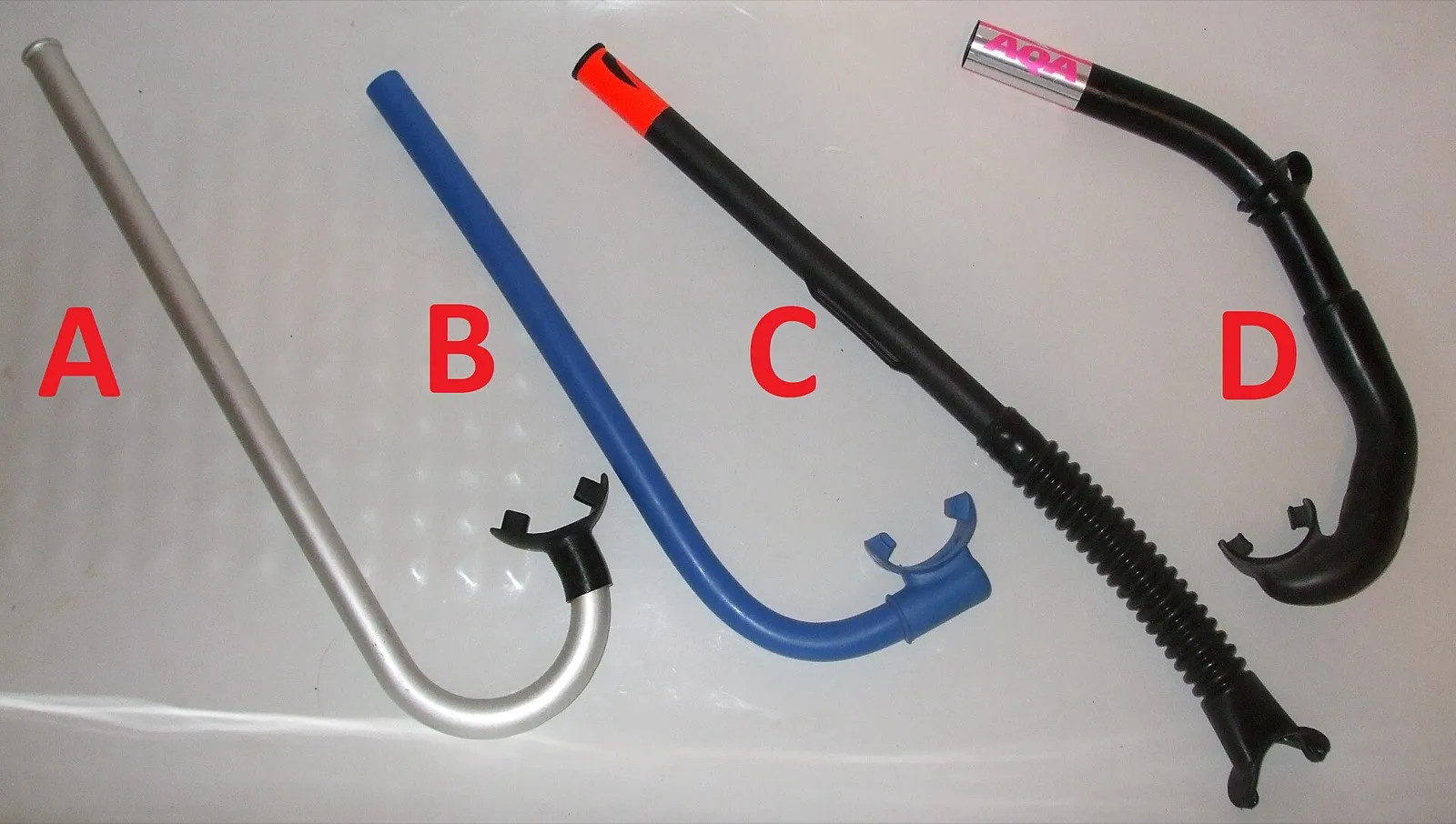
| Snorkel | EN 1972 covers snorkels, but not those that open into a full-face mask. According to DAN Europe, it limits the internal volume to 230 ml for an adult and 150 ml for a child. | EVS-EN 1972:2015; DAN Europe, 16 July 2020 |
| Fins | Full-foot, or adjustable with booties: the choice depends on where you start from (beach, rocks, boat). | see the gear page |
| Protection | A neoprene garment suited to the conditions, otherwise a T-shirt. | FFESSM, sheet no. 4 |
| Buoyancy | A suitable buoyancy vest, if no neoprene. Weighting is “strongly discouraged” on a supervised outing. | FFESSM, sheet no. 4 |
Of the 91 Australian victims, 64 had no buoyancy aid beyond their equipment, and at least 12 wore one (Lippmann, 2023). That does not prove a vest would have saved them, but most were swimming without one.
Full-face masks: which dangers are documented?
No text we read proves that the full-face mask causes drownings, or that it is safe. The full-face mask covers the eyes, nose and mouth, and the snorkel connects to it: you breathe through the nose as well as the mouth.
What is established
- Outside the European standards for masks and snorkels. The EN 16805 (masks) and EN 1972 (snorkels) standards both exclude full-face masks. A dedicated British standard has existed since 29 October 2024: BS 8647, which sets safety requirements and test methods for these masks (BSI). We have not read its text, which is paid.
- Two studies with opposite results.
- At Duke University, with DAN, ten volunteers tested commercial full-face masks. The authors find “no conclusive “smoking gun”” to explain the deaths. Two of the three design types did not work as advertised, and some models became harder to breathe through when water got in (Farrell et al., 2022).
- In Auckland, with 20 volunteers, trials with a full-face mask were stopped more often for excess CO2 than with a classic snorkel. The authors noted signs of rebreathing in every full-face mask wearer (Grundemann et al., 2023).
- The two protocols differ, and neither study was done at sea.
- Official warnings outside Europe.
- The CPSC, the US product safety agency, asked for OUSPT masks to be taken out of use on 5 March 2026. It received reports from five users who had had trouble breathing, felt dizzy or lost consciousness; a lawsuit alleges a drowning.
- It did the same for certain Qing Song masks on 12 November 2026, after eight reports of acute breathing difficulty, dizziness or loss of consciousness, including one hospitalisation.
- Health Canada had the Easybreath children’s mask recalled on 8 September 2023: the failure or loss of a valve “leads to the inability to breathe”. No incident had been reported in Canada.
- In France, no recall found. In the RappelConso dataset, at 20 November 2026, our searches for “snorkel”, “tuba”, “easybreath” and “masque de plongée” return no snorkel mask.
What remains a hypothesis
- Rebreathed CO2. DAN Europe writes that accumulated CO2 could lead to loss of consciousness, then drowning, if the mask is poorly designed (16 July 2020). The Auckland study measures more CO2; the Duke one does not. Neither established that it explains real deaths.
- Immersion pulmonary oedema. A Hawaii report, cited by Lippmann (2023), estimates that this oedema, fluid entering the lungs during immersion, causes “some, possibly most” snorkelling drownings. The Australian data do not confirm it: Lippmann finds cardiac causes often more convincing (2023).
- Full-face masks in Hawaii. Many Hawaii victims were wearing a full-face mask, according to Lippmann. Among the survivors interviewed for the Hawaii report, 37% were wearing one. These figures show widespread use, not a cause.
DAN launched this study with Duke University after receiving reports of incidents linked to these masks; its page publishes no results and does not link to the 2022 article (read on 20 November 2026).
If you wear a full-face mask
- No breath-holding. Decathlon writes it for its Easybreath: it is “only a surface mask”. It also advises a “low-intensity” outing and a well-fitted size.
- Check the valves. DAN Europe advises checking that breathing is one-way, with valves in place in the snorkel and in the part covering the nose and mouth, and that this part seals against your face.
- Know how to take it off. The Hawaii safety study, funded by the state tourism office, notes that it does not come off easily in an emergency, even with a quick-release strap (summary published by Lifesaving Resources, 8 February 2021).
- At the first lack of air, lift your head out and take it off.
For a child, see snorkelling with a child.
Who dies snorkelling, and why?
Mostly middle-aged adults, alone, with little experience, often with a heart problem. In Australia, from 2014 to 2018, the 91 deaths include 78 men, a median age of 48, 51 tourists, and 52 of the 77 victims whose weight is known were overweight or obese; primary drowning is the probable cause in 39% of cases. In Hawaii, from 2009 to 2018, there were 206 deaths: mostly men, with an average age of 59, mostly tourists.
Source for both series: Lippmann, Diving and Hyperbaric Medicine, September 2023. He concludes that better health screening and closer supervision of beginners are needed. He also notes that a large group with no designated buddy gives a false sense of safety, even under supervision.
Safety rules before you enter the water
Never swim alone, and check that you are fit to do so. Then, be visible to boats.
Before
- A buddy, and a relative informed. Santé.fr advises telling a relative before swimming (22 May 2026). In a club, the FFESSM organises autonomous hikers in pairs.
- Your condition on the day. Postpone the outing if you are tired, unwell or shivering, do not overestimate your swimming level, and avoid alcohol beforehand (Santé.fr).
- The conditions. The Port-Cros National Park advises against bathing at La Palud on days of strong mistral. If you do not know the site, ask the club, the hire shop or the lifeguard post.
In the water
- Signalling yourself. Away from a marked trail, the FFESSM recommends a floating support to lean on or at least one signalling buoy per group. On the Étel estuary, an order from the Atlantic maritime prefect requires swimmers to signal their presence “by any appropriate means visible across the whole horizon” and bans swimming with fins at night there (order 2016/019): find out about the local rule.
- Boats. In the Mediterranean, every vessel is limited to 5 knots, about 9 km/h, within the 300 m band from the shore, marked or not (order no. 19/2018 of 14 March 2018 as amended, cited by the Maritime prefecture of the Mediterranean, fact sheets of July 2020). A lone diver signals with a red flag with a white diagonal; within a radius of 100 m, boats stay at 5 knots at most. A diving boat flies the Alpha flag. Do not count on a skipper seeing you: your snorkel barely rises above the water.
- Marked zones. Areas reserved for bathing are delimited by the mayor with yellow buoys (Maritime prefecture of the Mediterranean). Stay inside them where they exist.
- Breath-holding. Never alone, and never by forcing it: in Australia, victims were pushing their breath-hold limits, sometimes after hyperventilating (Lippmann, 2023).
Respecting the environment
Look without touching, without collecting and without feeding. In the Port-Cros park, it is forbidden to collect sea urchins, shells, sand or algae (La Palud fact sheet, 2021). In the Cerbère-Banyuls marine nature reserve, freediving is forbidden: outside the strengthened protection zone, the order authorises only scuba diving there, with authorisation. Authorised divers there touch neither the bottom nor the species, and do not feed the animals (order of the maritime prefect of 14 January 2022, art. 4). Stay at the surface.
On sunscreen, the Port-Cros National Park writes that layers of oils and creams form a screen on the surface of the sea, which blocks light and oxygen. It advises avoiding oils and creams and preferring lotions that are “environmentally friendly” (2024 booklet). A neoprene or Lycra garment also covers the skin.
Where to start: an underwater trail, then elsewhere
On a marked underwater trail, in calm water. These routes guide the swimmer from buoy to buoy, with signs describing what they see. The 2024 booklet of the Port-Cros National Park presents several in the Var:
| Trail | Town | What the park says |
|---|---|---|
| Plage de la Palud | Port-Cros (Hyères) | about 40 minutes, 6 buoys with submerged signs, free access for any autonomous swimmer with PMT; about 30 minutes’ walk from the port; bathing not advised in strong mistral |
| Anse Magaud | La Garde | June to September, in pairs or in a group (the park also allows going alone, which we advise against); free access; instructor possible in July and August; 8 m deep at most; lifeguarded beach in summer |
| Bonporteau | Cavalaire-sur-Mer | marked trail with 7 buoys |
| Pampelonne | Ramatuelle | 8 buoys, 2 m deep on average |
| Vignette-Niel | Hyères (Giens peninsula) | access reserved for people with disabilities and their companions, by registration with La Mer Autrement (UFOLEP 83); fin swim over 300 m in a zone closed to motorised craft, 3 inclusive viewing stations, PMT for hire on site; bathing forbidden in strong mistral |
The La Palud fact sheet presents this trail as the first underwater trail equipped with educational buoys created in France (National Park, 14 October 2021). In July and August, the park advises going at the weekend, as attendance peaks midweek. For the water temperature off Port-Cros, month by month, see the best time to dive.
Further afield:
- French West Indies: snorkelling in Martinique and snorkelling in Guadeloupe, with the rules for approaching turtles. For scuba diving, see diving in Guadeloupe or Martinique.
- Egypt: the turtles of Abu Dabbab, at Marsa Alam; see Marsa Alam or Hurghada.
- Maldives: a non-diver can join a diving liveaboard; see the Maldives diving liveaboard.
To go below the surface with a cylinder, the next step is the introductory dive. The other pages for getting started are in the Learn to dive section.
PDF guide
Snorkelling for Beginners with Children: PDF Guide
11-chapter PDF guide: choose and fit mask, snorkel and fins, documented full-face masks, reading the sea, children, where to start, sheets and checklists.
€15
See the guideFrequently asked questions
What is snorkelling?
It is a surface swim with fins, a mask and a snorkel (the French “PMT”), face in the water, with short breath-hold dives if needed. The FFESSM calls it Randosub, randonnée subaquatique or randonnée palmée (advice sheet no. 4, May 2025). An occasional participant needs neither a licence nor a medical certificate, but never swims alone.
Are full-face snorkel masks dangerous?
Nothing allows us to say that they kill, or that they are safe. A 2023 study measured more excess CO2 than with a snorkel, a 2022 study found no problematic gas, and the two European standards for masks and snorkels exclude these masks. In the United States, the CPSC asked in 2026 for two brands to be taken out of use after people felt unwell. If you wear one, swim slowly, without breath-holding, and take it off at the first lack of air.
Full-face mask or mask and snorkel: which to choose as a beginner?
The classic mask and snorkel are covered by two European standards (EN 16805 and EN 1972); both exclude the full-face mask. The maker of the Easybreath forbids breath-holding in it: it is “only a surface mask”. The Hawaii safety study, according to a summary published by Lifesaving Resources, notes that it does not come off easily in an emergency. If in doubt, ask a Randosub guide or an instructor to let you try a mask and snorkel in calm water.
What is the difference between snorkelling and freediving?
In snorkelling, you stay at the surface and breathe through the snorkel. In freediving, you go down holding your breath. Randonnée palmée can include short, shallow breath-holds (FFESSM). Freediving is never done alone: in Australia, drownings still follow blackouts after prolonged breath-holds (Lippmann, 2023).
Do you need to be able to swim to go snorkelling?
The FFESSM requires no swimming test of an occasional participant, but the Port-Cros trails are open to “any autonomous swimmer” equipped with fins, mask and snorkel (National Park, 2024). If you swim poorly, do not go alone: join an outing led by a Randosub guide and wear a buoyancy aid, as the FFESSM advises.
Where can a beginner go snorkelling in France?
On a marked underwater trail. The Port-Cros National Park lists several in the Var: Plage de la Palud at Port-Cros (6 buoys, about 40 minutes, free access), Bonporteau at Cavalaire, Pampelonne at Ramatuelle. In a strong mistral, the park advises against bathing at La Palud: avoid those days.
Sources
- FFESSM, Federal recommendations for organising Randosub, advice sheet no. 4 (PDF of 15 May 2025), accessed
- FFESSM, The autonomous underwater hiker (page of 19 April 2024), accessed
- Lippmann J., Snorkelling and breath-hold diving fatalities in Australian waters, 2014 to 2018, Diving and Hyperbaric Medicine 53(3), September 2023 (PDF), accessed
- Grundemann J. et al., Full-face snorkel masks increase the incidence of hypoxaemia and hypercapnia during simulated snorkelling compared to conventional snorkels, Diving and Hyperbaric Medicine 53(4), December 2023 (record and abstract, Europe PMC), accessed
- Farrell J. et al., Testing of full face snorkel masks to examine recreational snorkeler deaths, Undersea & Hyperbaric Medicine 49(1), January 2022 (Duke University), accessed
- DAN, Full-Face Snorkel Mask Safety Study (undated page), accessed
- DAN Europe, Alert Diver, Guy Thomas, Are Full Face Snorkeling Masks dangerous? (16 July 2020), accessed
- CPSC (United States), warning 26-311: OUSPT full-face masks (5 March 2026), accessed
- CPSC (United States), warning 27-080: Qing Song full-face masks (12 November 2026), accessed
- Health Canada, recall RA-74245: Subea Easybreath children's snorkel mask (8 September 2023), accessed
- RappelConso, product recall dataset (search for “snorkel”, “tuba”, “easybreath”, “masque de plongée”), accessed
- EVS-EN 16805:2015, Diving equipment, Diving mask, Requirements and test methods (scope), accessed
- EVS-EN 1972:2015, Diving equipment, Snorkels, Requirements and test methods (scope), accessed
- BSI, BS 8647:2024, Respiratory equipment, Full-face snorkel masks, Specification (published 29 October 2024), accessed
- Lifesaving Resources (Gerald M. Dworkin), Snorkel Safety Study Reveals Cause of Many Drownings, summary of the study funded by the Hawai'i Tourism Authority (8 February 2021, updated 9 May 2024; secondary source), accessed
- Decathlon, How to use your Easybreath mask (Comment utiliser son masque Easybreath ?) (undated page), accessed
- Maritime prefecture of the Mediterranean, Part 3, Fact sheets, chapter 1: bathing, navigation within 300 metres, diving (PDF, July 2020), accessed
- Maritime prefecture of the Atlantic, order no. 2016/019 of 4 March 2016 (Étel estuary), articles 11 and 12 (PDF), accessed
- Santé.fr, Bathing and water activities: beware of drowning! (22 May 2026), accessed
- Port-Cros National Park, 2024 booklet of underwater trails (PDF of July 2024), accessed
- Port-Cros National Park, fact sheet for the underwater trail at Plage de la Palud (14 October 2021, PDF), accessed
- Maritime prefecture of the Mediterranean, order no. 005/2022 of 14 January 2022, Cerbère-Banyuls marine nature reserve (copy from the Pyrénées-Orientales Department, PDF), accessed